I had no idea that Morocco has significant fossils from the Jurassic period. They are so plentiful that they are mined in quarries, and used in home decorating! We went to a site that finishes and polished the fossils, and some of the final products were breathtaking. I was sorely tempted to redecorate my bathrooms with a Jurassic theme.
My grandma always said that the women in our family were born wearing gypsy shoes, so it doesn’t surprise me that the love of travel has passed on to my children. I married a man who loves to wander, too, so in June of 2008, six of us from our blended family headed for Italy. After we visited Rome and Florence, we ended our 2 week trip with a few days on the beautiful Amalfi coast. My husband Craig and I, as well as our kids Angela, Jack, Sandra and Ian (in ascending order, ages 14-25) rented a manual transmission minivan as we were leaving Florence and headed south on the autostratas A1 and A3, into even more heat and sunshine than the country’s unusual heat wave had already afforded us.
The approach to Ravello.
After exiting the autostrata in Caiano, we found our Mapquest directions for Italy left something to be desired. Fortunately we knew that in order to reach our hotel in the little town of Ravello, we needed to head uphill. We climbed up and over the beautiful, steep and rugged Lattani Mountain range, second gear all the way, before we then began the descent to the seacoast. Twenty-five map steps and 40 kilometers later, after too many hairpin turns to count, terrorized by speeding Vespas and wood trucks loaded with logs for the ovens of the local trattorias, we finally crossed over the mountain range. Switchback curves aren’t nearly as fun in a minivan as they are in a sports car. Take my word for it. Although the greater size of the minivan, necessary to accommodate the 6 of us with luggage for two weeks, turned out to be an advantage, as its height also provided dizzying, terrifying and absolutely spectacular views over the guardrails.
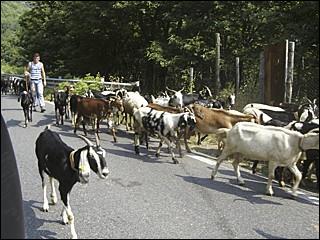
We knew we were getting close to our destination when we had to make a sudden stop in the middle of the road to yield to a herd of goats. Tourists that we are, we grabbed our cameras and hung out the windows to get the shot, while the goatherd gave us his best contemptuous stare over his designer sunglasses.
It’s very tough to choose just one pattern…
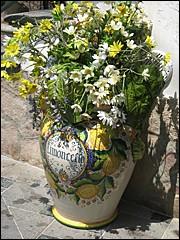
We had reserved rooms in Alborgo Torello, a lovely small hotel in Ravello. (http://www.alborgotorello.com – “Al Borgo Torello is a completely renovated building enchanting position where our guests can admire the incomparable view of the Amalfi Coast, from the peacefulness of our garden.”) Finding it online wasn’t nearly as challenging as finding it in real life. After several stops to ask for help, we ended up dead-ending on a very narrow farm road. The farmer, his daughter and son-in-law were nice enough to help us through a 15 point turn maneuver without landing us in a ditch, or crunching the fenders on that beast of a van. We finally found the entrance with the help of a local teenage girl, who simply looked up from where she was standing, pointed at the building on the hill right in front of us, and said, “There.” Oh, no wonder we didn’t recognize it! It really isn’t a hotel as such; it is a renovated home that dates back centuries, and it is now a 4 room inn with spectacular views of the coastal village of Minori. Roberto, the most congenial owner, has decorated the interior of his alborgo with beautiful ceramics from Ceramiche D’Arte, the business owned by his brother-in-law Pascal. If you go to one of their shops in Ravello and say, “Roberto sent me” you get a big welcome and a very fair deal on their gorgeous ceramics. Yes, of course we bought some! (Ravello Limoni Blue, in case you’re curious.) http://www.ceramichedarte.com/
After a day of hair-raising driving adventures, we were eager to get out of that van and into our hotel. Alas, in a simple parallel parking maneuver, Craig introduced the rear fender of the van to the neighbor’s stone wall. I then became the designated driver for the remainder of the trip, since I have been driving manual transmission vehicles since I was a pup. (Thanks, Dad.) The first order of business, after hauling our bags up the 18 irregular stone steps to the front door, was to cool off for a few minutes in the highly efficient air conditioning, and then head to the town center of Ravello, and the Piazza Duomo.
The piazza in Ravello.
We visited Ravello just days before the town’s famous Music Festival, and we were able to watch some of the preparations while avoiding the crowds. The soundstage was being erected at Villa Rufulo one night as we were having dinner at The Garden Hotel’s restaurant, an outdoor cafe that overlooked the concert site. The stage actually hung off the cliff, providing concert-goers with a fantastic visual backdrop of the Mediterranean Ocean to complement the music. We enjoyed a delightful dinner with lots of fresh seafood, and the waiter presented our check accompanied by glasses of limoncello liqueur for everyone. Don’t let the stuff fool you – it’s not the innocent glass of lemonade it seems. There was a lot of giggling at the table once we all polished off those drinks.
On other visits to the village, we strolled about the piazza mingling with the local families, and eavesdropped on brides planning destination weddings in Amalfi. We agonized over which ceramics pattern to buy. We explored every little alley, footpath, and stairway we could find, and were rewarded with spectacular views, hidden gardens, vineyards, and ancient churches.
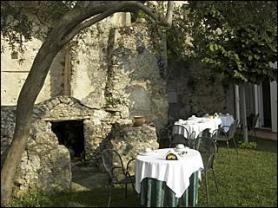
Each night we straggled back to the inn, a mere shadow of the enthusiastic party that had departed that morning. Then after a good night’s sleep, we reassembled in the garden for a fabulous breakfast, served by the unfailingly charming Roberto. He provided cup after cup of cappuccino, which was a delicious accompaniment to the fresh croissants, fruit, cheese, coffeecake, and yogurt unlike anything we had ever eaten in America. As we enjoyed our meal each morning, shaded by an ancient olive tree, we admired the view of the village of Torello, and the surrounding lemon groves.
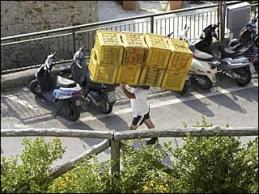
The breakfast spot was so beautiful, it was hard to leave!The crates for the lemons, being carried the old fashioned way.Donkey trains carrying construction debris.
We appreciated the fact that we were staying in a neighborhood, rather than a more touristy place, as it afforded us a chance to observe daily life. One morning the harvesters were out in full force, picking the huge lemons, piling them into large plastic crates, and then hauling them out of the groves on their backs with only pieces of foam to cushion their muscles. Another morning, we heard an odd clip-clopping sound, and hurried to the garden rail to discover its source. We were amazed to see a small mule train descending the steps on the hillside just below our garden. Each animal was carrying metal saddlebags loaded with renovation debris. The builders used mules since large construction vehicles would not have been able to pass through the narrow passageways. This struck us as such a contrast to the tower cranes being used to erect high-rise buildings, less than a mile away.
On our adventure trips back and forth to Amalfi, we quickly learned that the traffic signals seemingly without reason in the middle of nowhere indicated when the road became a one way. If the light turned red in our direction, that meant that several dozen compact cars, buses and scooters piloted by hell-bent-for-leather drivers were headed our way on the narrow road, so we needed to stay put until we got the green signal. This could take a while, as we learned when the truckful of workers in front of us unloaded, and stretched out on the grass for a cigarette and cellphone break.
“Due pagnotte di pane, per favore!”
Amalfi is a sparkling, very popular resort town, and 95 degree temperatures didn’t keep the crowds away. There were hordes of smiling tourists strolling, shopping, eating, lounging, sweating, picture-taking, sunbathing. We parked the kids at the beach for only 10 euros per person per day, umbrella and lounge chair included, and headed into town to explore. Craig is really good with directions, so I trudged along after him, whining and threatening heatstroke, as we hiked through streets filled with shops and churches. The side streets were purposely designed in convoluted configurations, in order to confuse invading pirates in centuries past. On one of these crooked little streets, I had to stop and ask myself what century I was in, as I watched an elderly woman lower a basket on a rope from her third story window, to the bread delivery person who stood waiting below.
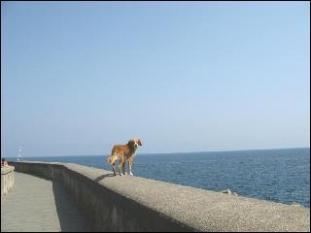
A few steps farther along, we came across a playful group of choirboys, looking angelic in their robes as they ran past. We were also joined in our walk by a friendly little dog-about-town, who kept us company for a while, graciously accepted a drink of water from the kids’ cupped hands, and escorted us back to our parking spot at the end of the afternoon.
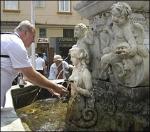
My husband’s favorite fountain.
Eventually we found ourselves in a small tunnel, which led under the Duomo di Sant’Andrea and out into the Piazza Duomo, with its many cafes and wonderful fountain. We quickly learned that fountains in Italy are meant to be used – everyone splashed some water on their faces, refilled their plastic drinking bottles, and paused for a few moments’ rest on the ledge. We drank the water from nearly every fountain we came upon, in Rome, Florence, and the Amalfi Coast, and experienced no problems with it whatsoever
Our agenda for day 3 included a boat ride. From Amalfi, one can ride the passenger ferry east to Salerno or west to Positano, Capri, and Sorrento. We opted for the half-hour ride to Positano. The short cruise offered us an opportunity to see the imposing coastline as the invaders did centuries ago. Ruins of ancient watchtowers still dot the coast, and the engineering feat of the archways and tunnels of the strada statale (state road) number 163 are visible in many places from the water.
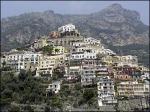
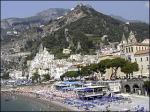
The ferry landing in Positano is in the center of town, next to the Spiaggia Grande. From the beach, the town quickly rises up the hillside. The peaks of the surrounding mountains are often hidden in the clouds.
The walking tour of each town begins in the Piazza Duomo – the cathedral plaza. Every town has one, and Positano was no exception. We quickly learned that Craig’s obsession with exploring every nook and cranny paid off in terms of finding lower prices the farther we traveled away from the beach.
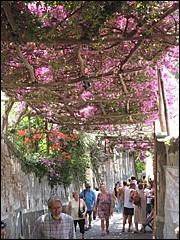
Via Del Mulini is the central shopping street in Positano, and it heads uphill, away from the beach. A lovely stretch of this narrow walled street is shaded by a trellis of bright pink bougainvillea, and both sides are lined with vendors selling handcrafted jewelry, artwork, and snacks.
We explored a side alley filled with restaurants, little clothing shops, and shoemaker stalls as small as closets. Here the leatherworkers sit out front, making the sandals according to the measurements they have just taken from the customer who was walking by. At the top of the lane, we refreshed ourselves with the best Italian ice in existence, purchased from a vendor with a pushcart, who made our treat fresh on the spot using the local lemons.
From this point, the faint of heart (or weary of feet) can catch a bus back to Amalfi, instead of the ferry. The bus stops briefly, so the tourist who hesitates is left behind.
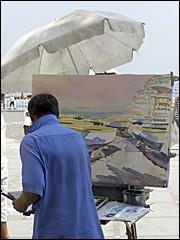
The beachfront is lined with outdoor restaurants, and the air is filled with delicious smells. Frequent refreshment stops are mandatory, especially when traveling with four young people. We enjoyed a fabulous seafood pizza, and the kids discovered the delight of caffe fredo, strong, sweet iced coffee. The beachfront is also a popular spot for local artists to set up their easels to capture the beautiful surroundings.
By mid-afternoon, our entire party was sweaty and exhausted, so we headed back to Amalfi. The ferry ride was refreshing, but it didn’t take much walking to get overheated again. So Jack and I decided to get the van, while the others stopped for a quick swim at the beach favored by the locals. This was a simple pebbly beach, without an admission charge, where you swam amidst the boats and luxury yachts moored in the harbor. Craig and a couple of the kids stayed behind at the beach, thereby missing the epic battle of the parking gate and the faulty token.
When we had arrived in Amalfi, we parked at the wharf area, in a pay parking lot. When we entered, we received a token. Upon exit, we needed to first drop the token into the payment machine, and pay the exorbitant fee demanded. We would then receive another token, to be deposited into the machine at the exit. This would signal the gate to rise, and we could then roll merrily along toward home. Except things didn’t go quite according to plan.
Maybe it was because the token sat in the hot car all day, and it was overcooked. Maybe it was because Jack dropped the token, and I had to move the car so he could retrieve it without melting his kneecaps. Whatever the reason, that payment machine deemed my particular token as unacceptable. No matter how many times we dropped it in the slot, no matter how much spin we put on it, or how hard we smacked it into that machine, it wouldn’t register. Instead of connecting with the inner workings that would then announce the precise total of arms and legs we owed for a day’s parking fee, my token instead fell uselessly into the coin return slot time and again.
Something that must be understood regarding small town life in Italy: every happening is a community event. Therefore, every passer-by or driver waiting to use the machine after us felt compelled to offer advice or condolences on our dilemma. Finally the two gentlemen seated just past the obstinately unmoving exit gate decided it was time for them to weigh in. They had nothing to do with the parking concession; they owned the little alimentari right next door. But they were clearly more experienced with this accursed machine than Jack and I were, so we let them have the obligatory seventeen tries at getting the token to perform properly. No luck.
They helpfully suggested that we call the help number posted on the machine. Great idea, except we had no cell phone. Besides, we doubted our conversational Italian would cover this particular topic. Reluctantly, our rescuers used their phone to make the call. Ah, someone would be along presently.
Twenty minutes later, our rescuers had not yet arrived. Craig and the girls had, however, wondering why we had failed to meet them as arranged. Craig’s refreshing swim was soon a distant memory as we continued to wait in the baking hot parking lot. Our heroes made another phone call to the rescue crew. Soon, soon. We continued to melt.
After another eternity, a couple of guys wearing municipal-logo shirts zoomed up on a scooter. They too tried their hand at the token game, and then after a lengthy discussion with our champions, the deli guys, who insisted we not be charged for parking because of the grievous inconvenience we had suffered in the parking inferno, the officials used their override gizmo to raise the gate, and waved us through with a flourish.
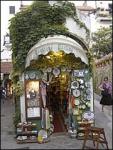
There are beautiful ceramics everywhere you turn.
Back to the alborgo, and the beds placed so invitingly in front of the air conditioners. Had we been at home, we would at this point have refused to budge from the comfort of our cool room and crisp sheets. But this was Italy – who could waste time resting? We could rest when we got old. Back into the van, back to the piazza in Ravello. There were parking machines to battle with, side streets to be explored, cafes at which to linger. La dolce vita awaited – andiamo!
Today brings our Moroccan sojourn to a close. For our final day in Marrakech, we decided to wander through the medina, and pay a last visit to the main square, Jemaa el-Fna. For color, sights, sounds and oddities, it didn’t disappoint! Here’s a panoramic overview, taken from a cafe balcony.
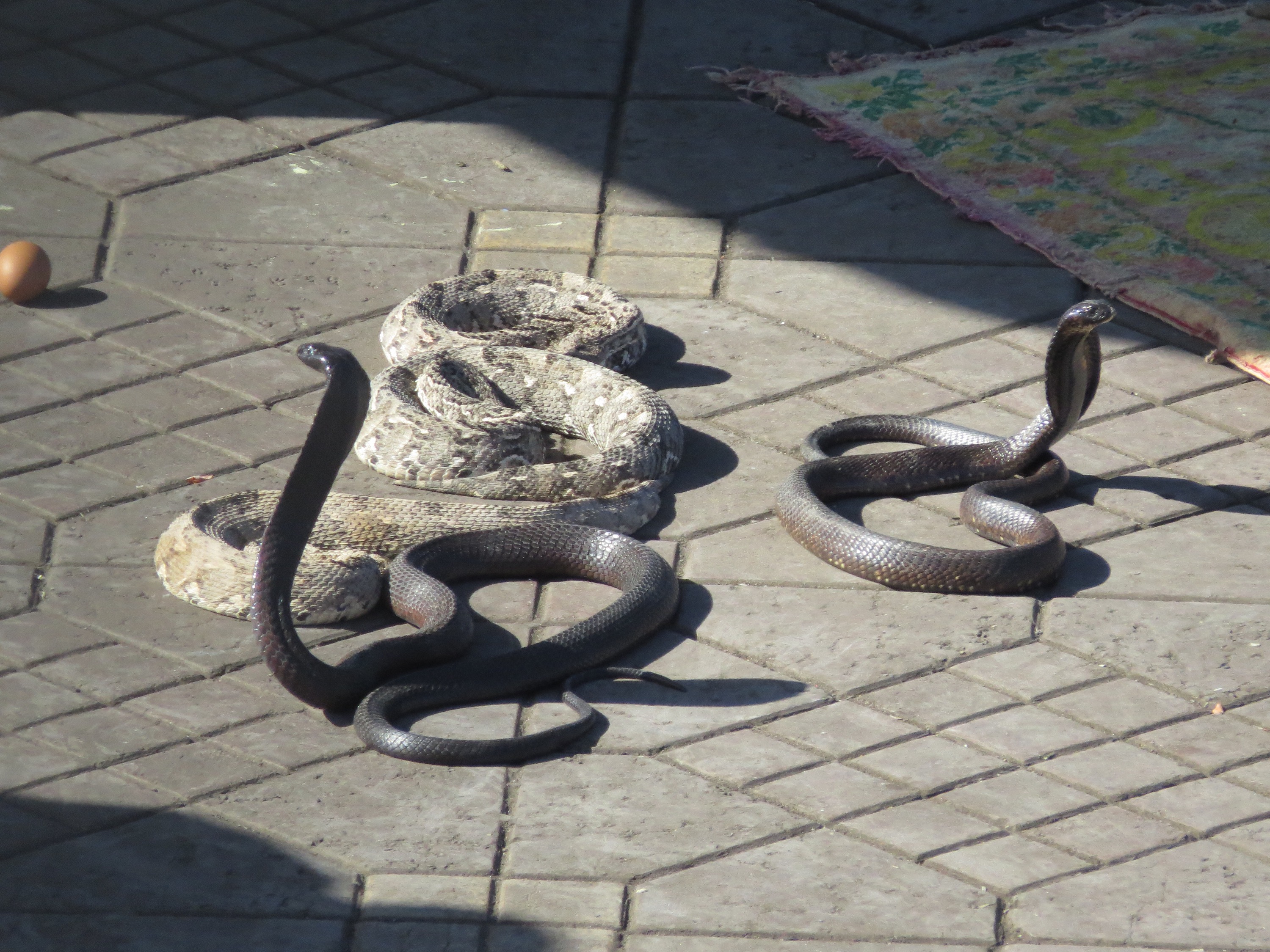
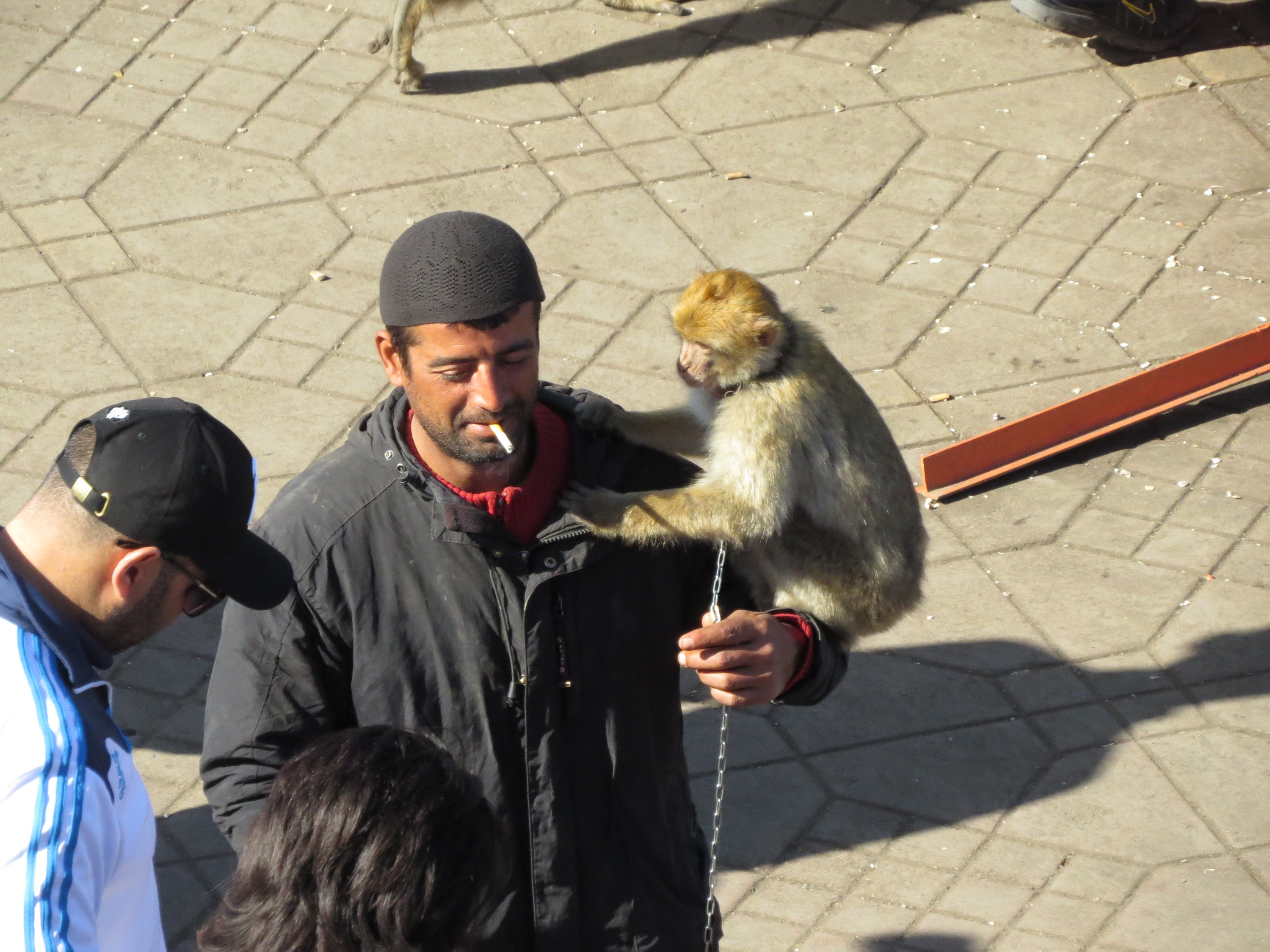
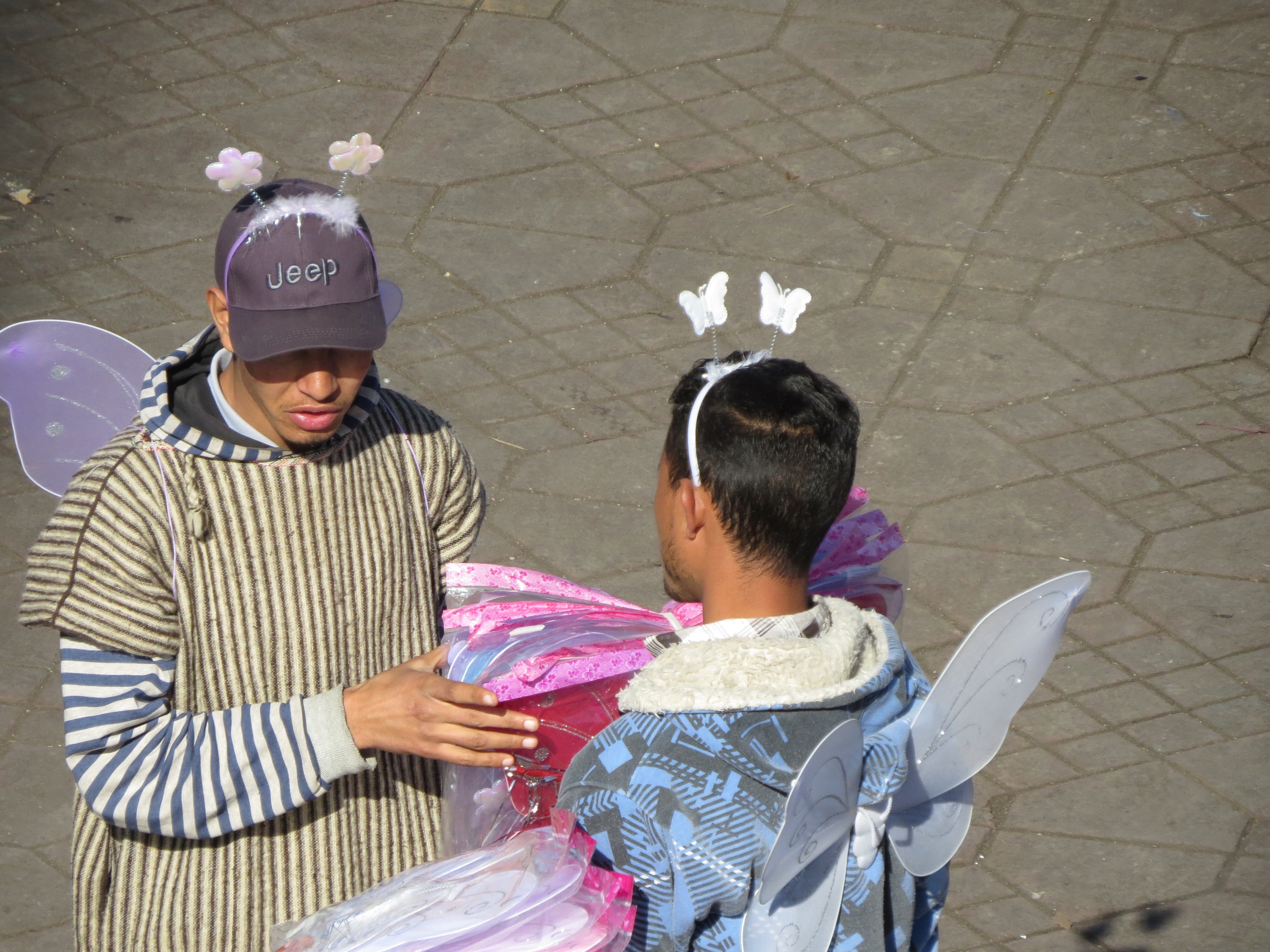
And a few close-ups as well. Remember, I am three stories above the pavement, hundreds of feet away from the chaos, using a really good telephoto lens to get close to the action.
I think Doylestown needs a few terrace cafes. It is so lovely to rise above the noise and the crowds, and to sit back and enjoy the view. It’s another world up there, and after you sit for a while you are sufficiently re-energized to get back into the fray.
We are winding up our three weeks in Morocco with a few days in Marrakech. I’m glad we didn’t begin our trip here, because it would have been rather overwhelming. Marrakech is crowded, busy, and sprawling. We like to stay in the medina, the old part of the cities we visit, so our hotel here, Riad Raphaele, is just a short walk from the ancient district.
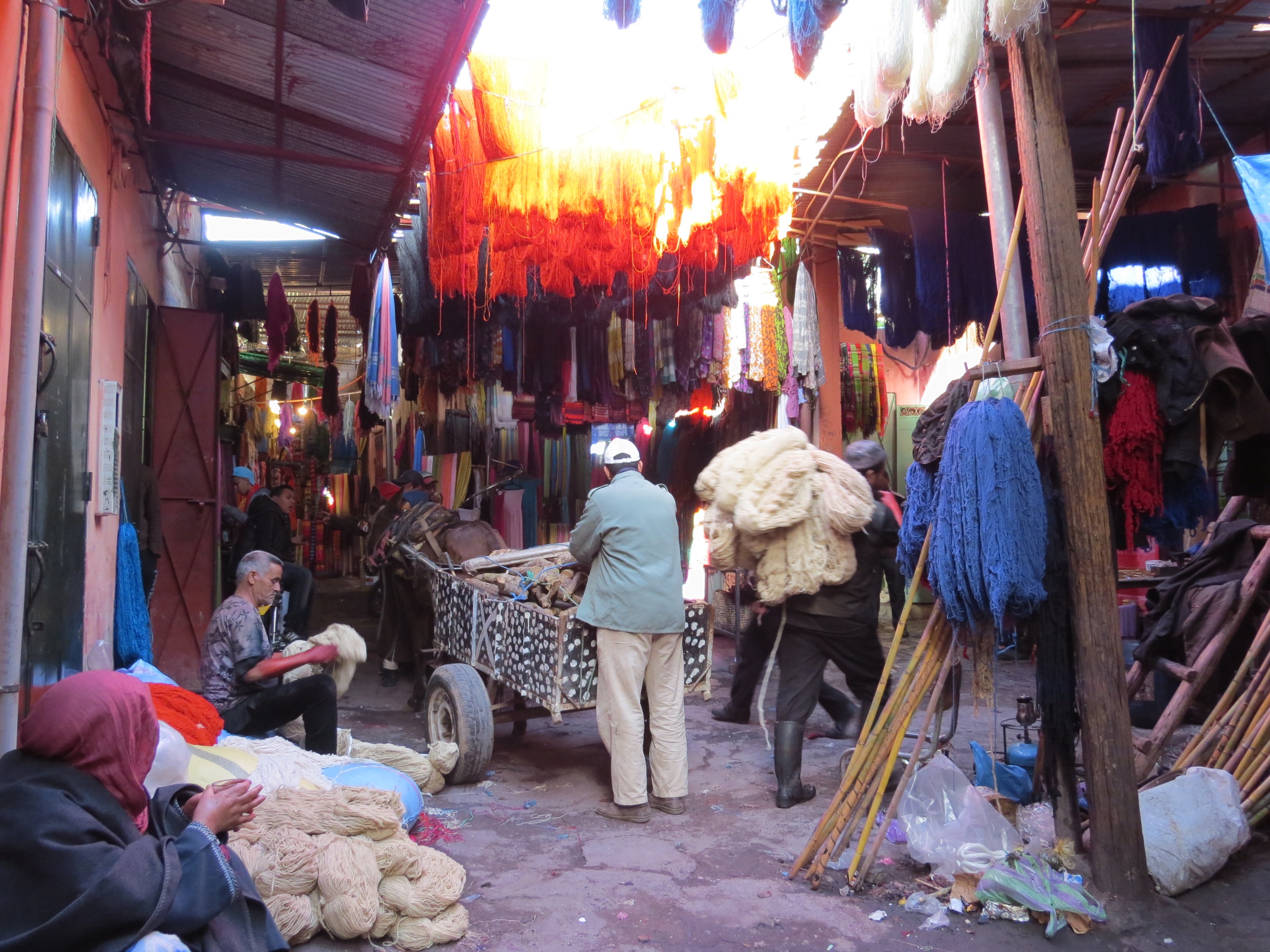
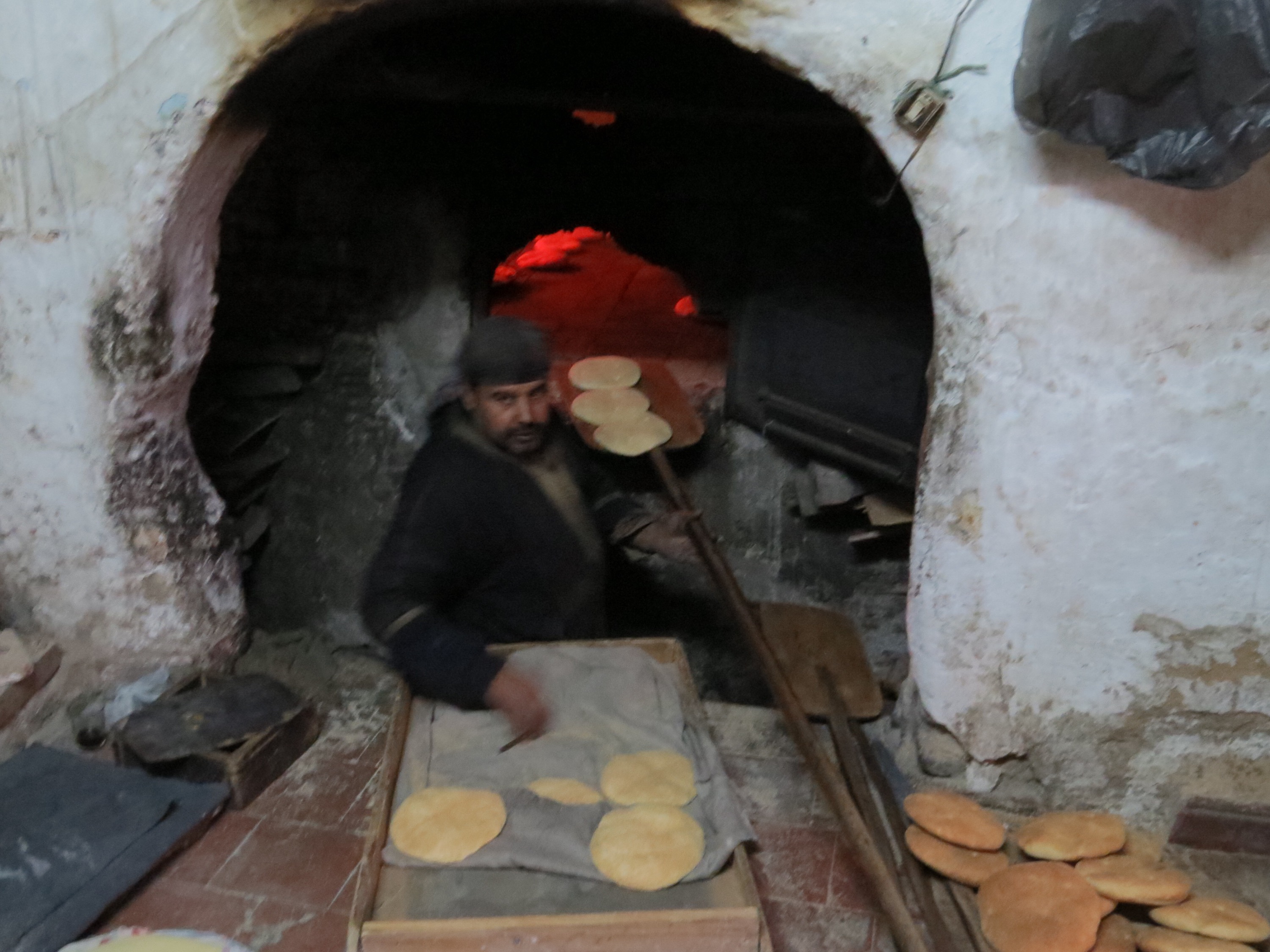
We hired private local guides for two separate day tours, and they showed us fascinating places while narrating the history of the area. Additionally, both Kdijah and Yder have lived in and guided in Marrakech for decades, so they seemed to know every craftsman and vendor we passed. Each of them showed us wonderful rooftop cafes, where we could rise above the chaos and relax. They introduced us to local customs and brought us inside the little shops and workplaces. We learned that every neighborhood has a baker. The area is electrified but judging by how tiny the houses are, I doubt there are modern stoves or ovens in them. So the woman of the house makes her bread at home, then sends it to the baker, who cooks it for her using his wood-fired oven, and an eight foot long paddle to reach the loaves inside.
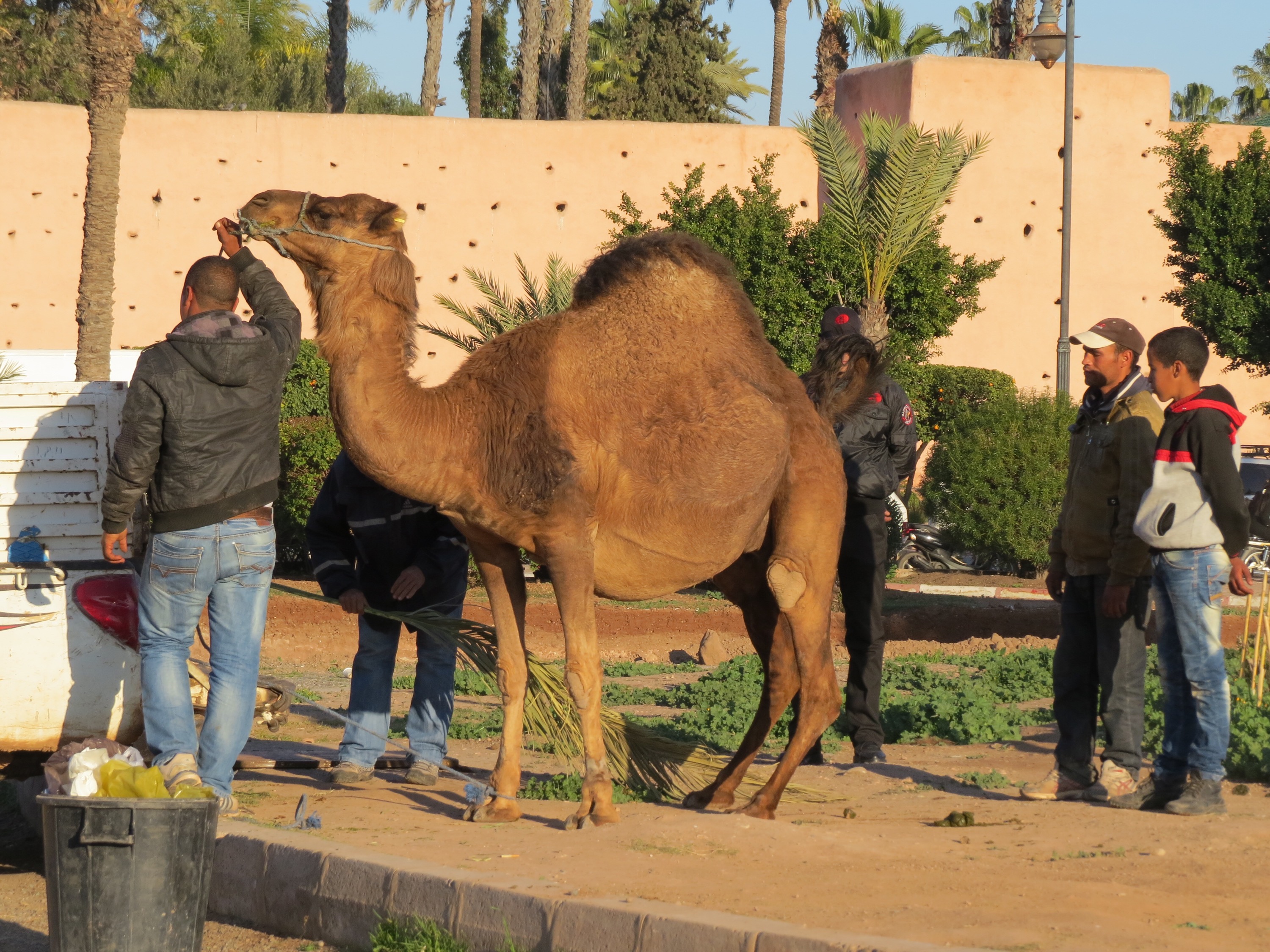
Today we braved the crowds at Jemaa el-Fna, the pulsating square which is the heart of the old medina. Here you can find everything from fresh fruit vendors to small flea markets. Young men blast out bubbles from a pistol-type toy, in order to attract attention to the little wind-up animals, no doubt made in China, that they are hawking. And yes, there are snake charmers, and young fellows crazy enough to pose for a picture while wearing a cobra necklace. No thank you!
After about an hour of the hustle and bustle, we needed a break. Three flights up, we relaxed on a beautiful terrace and watched the chaos continue below us. Half an hour of peace and quiet, two cups of cafe au lait, and free wifi, all for less than four bucks. Can’t beat that.
Back into the fray for a little shopping. I decided that today was the day to purchase a Berber style candleholder made of goatskin. The artisan showed me the parchment-like leather he uses, and tried very hard to convince me that a large lamp would fit nicely in my suitcase, but reason prevailed and I purchased a petite version.
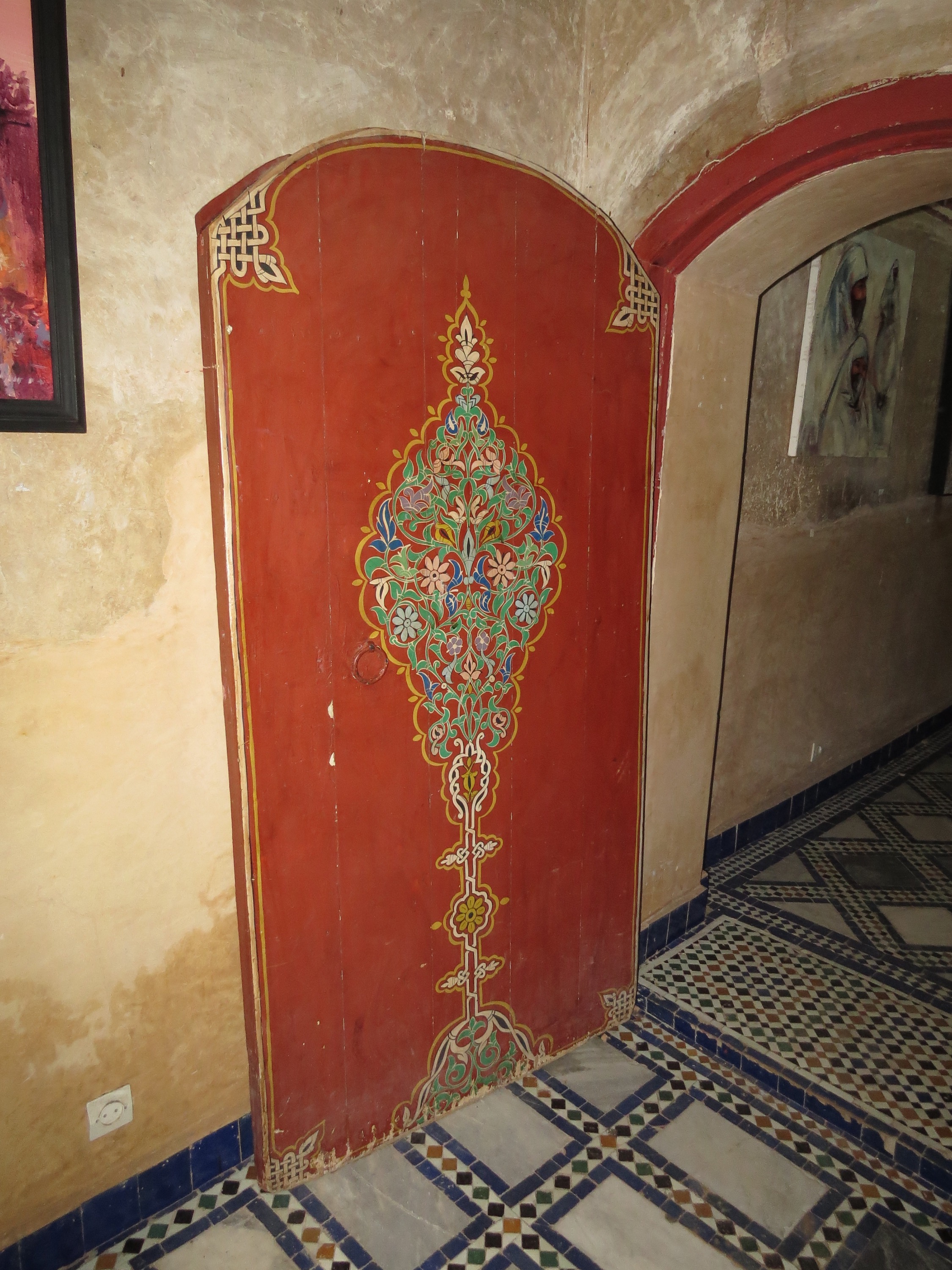
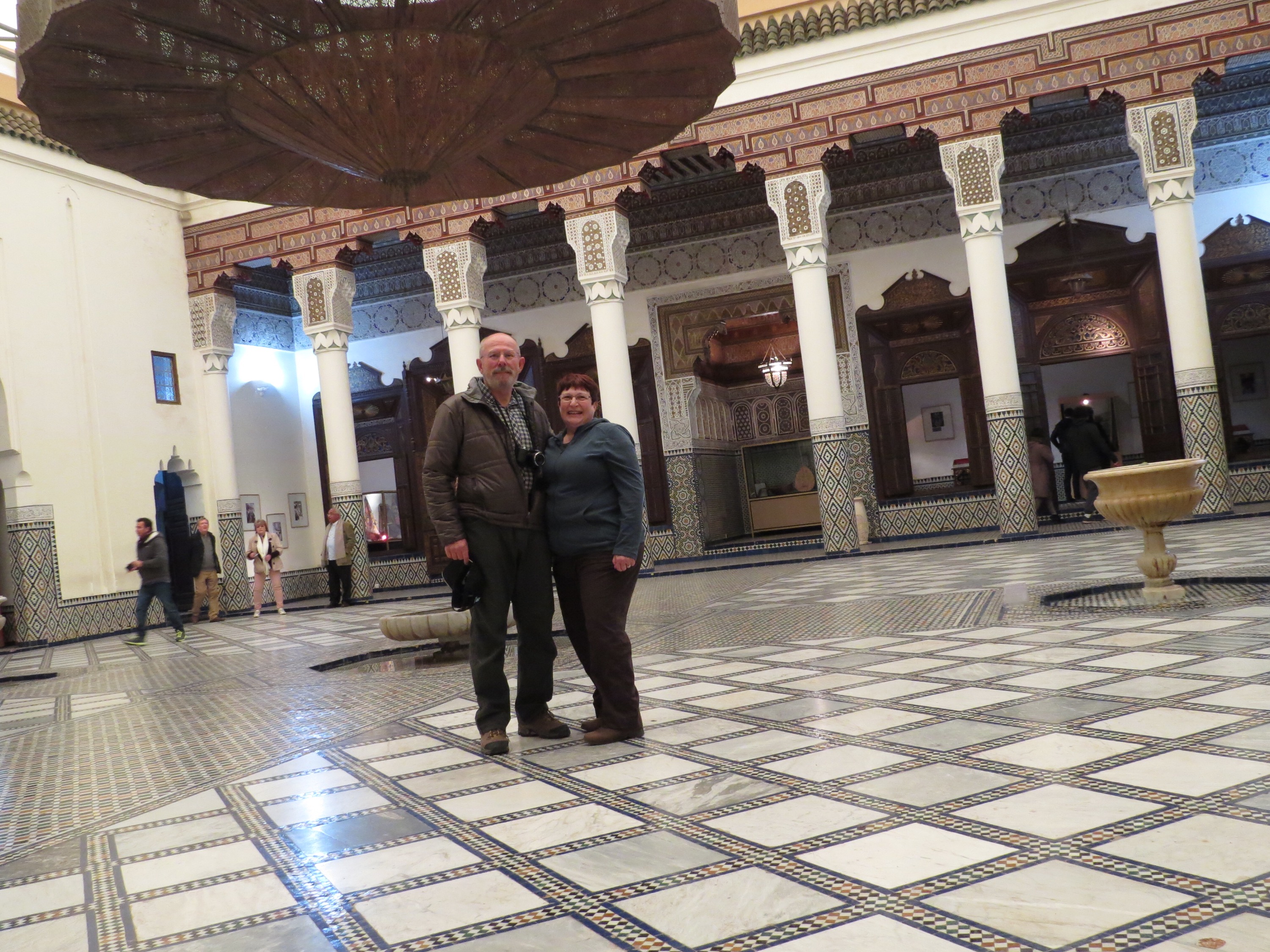
As we headed back to our riad , we decided to detour into a little museum we had passed yesterday. It didn’t look like much from the outside, but we gambled the price of admission, and bought our tickets at the little shack just inside the gate. We stepped through the front door and discovered a breathtakingly beautiful space. Really, it is a museum within a museum – the building itself is a showpiece, plus it is filled with various examples of ancient and contemporary Moroccan art. In a little nook toward the rear of the museum is a calligrapher, who will write your name in Arabic script for a very small fee. We selected a couple of his pieces, plus a contemporary triptych depicting Moroccan women creating handcrafts, done in bright colors and meticulously detailed, painted by a local female artist.
Craig fortunately has a great sense of direction, but even he was stymied by the twists and turns of the souks. And of course, if you show a moment’s hesitation, or pause to get your bearings, you are pounced upon by a local who will get in your face demanding, “Where you want to go? Tannery? Tannery this way.” It doesn’t matter that you’ve given no indication that you’re interested in seeing the tannery – you’re obviously a tourist, so you must want to go there. And naturally, he expects payment for this helpful advice.
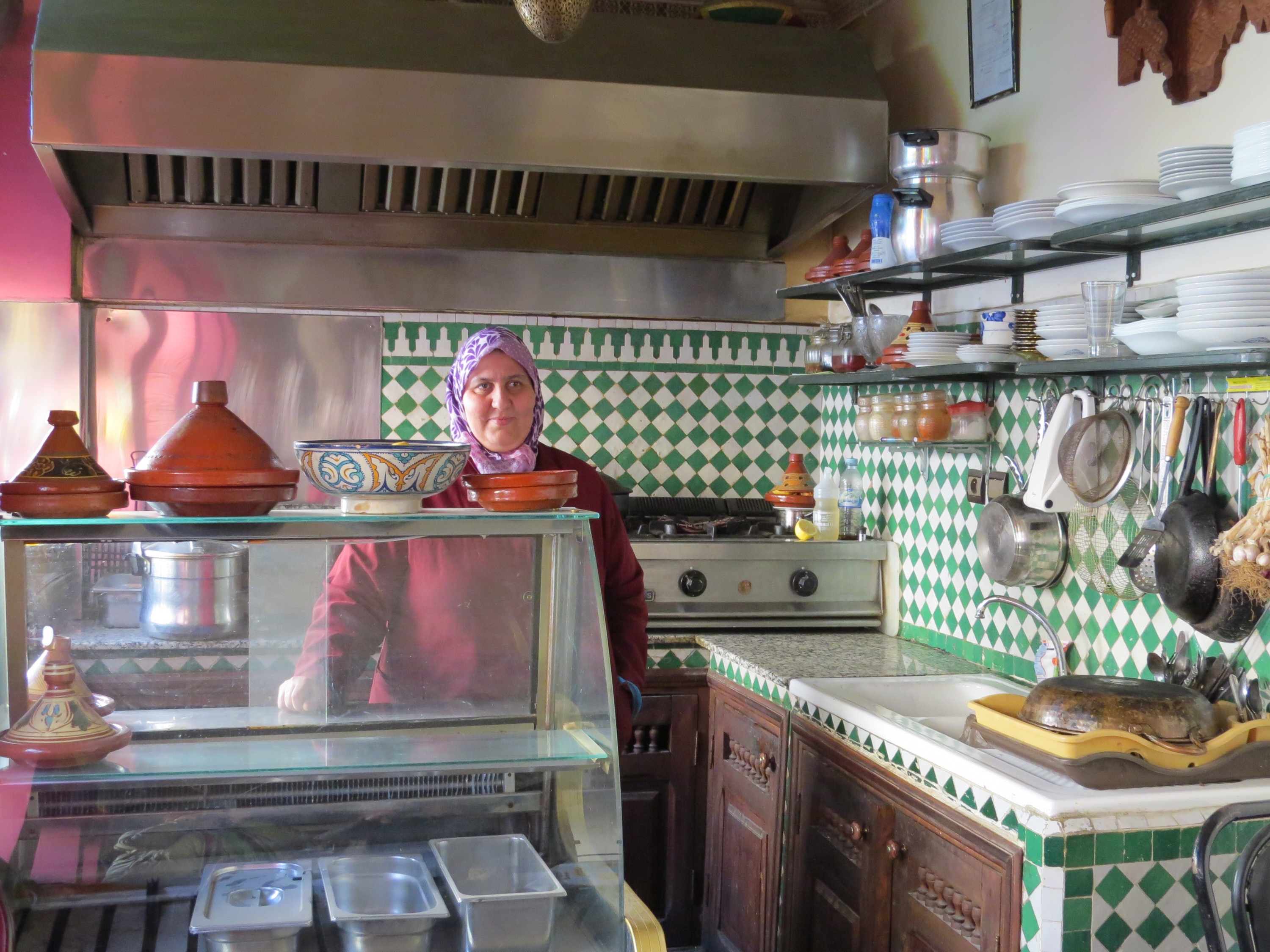
About 6 pm, we spotted a lovely little restaurant with a welcoming fire crackling inside. Although there were no other customers, the menu looked good and the place was spotlessly clean, so in we went. After a delicious lamb tagine and a yummy slice of lemon meringue tart, we struggled out of our chairs and staggered off homeward, which was fortunately only a short walk away.
And that’s how I spent my Super Bowl Sunday!
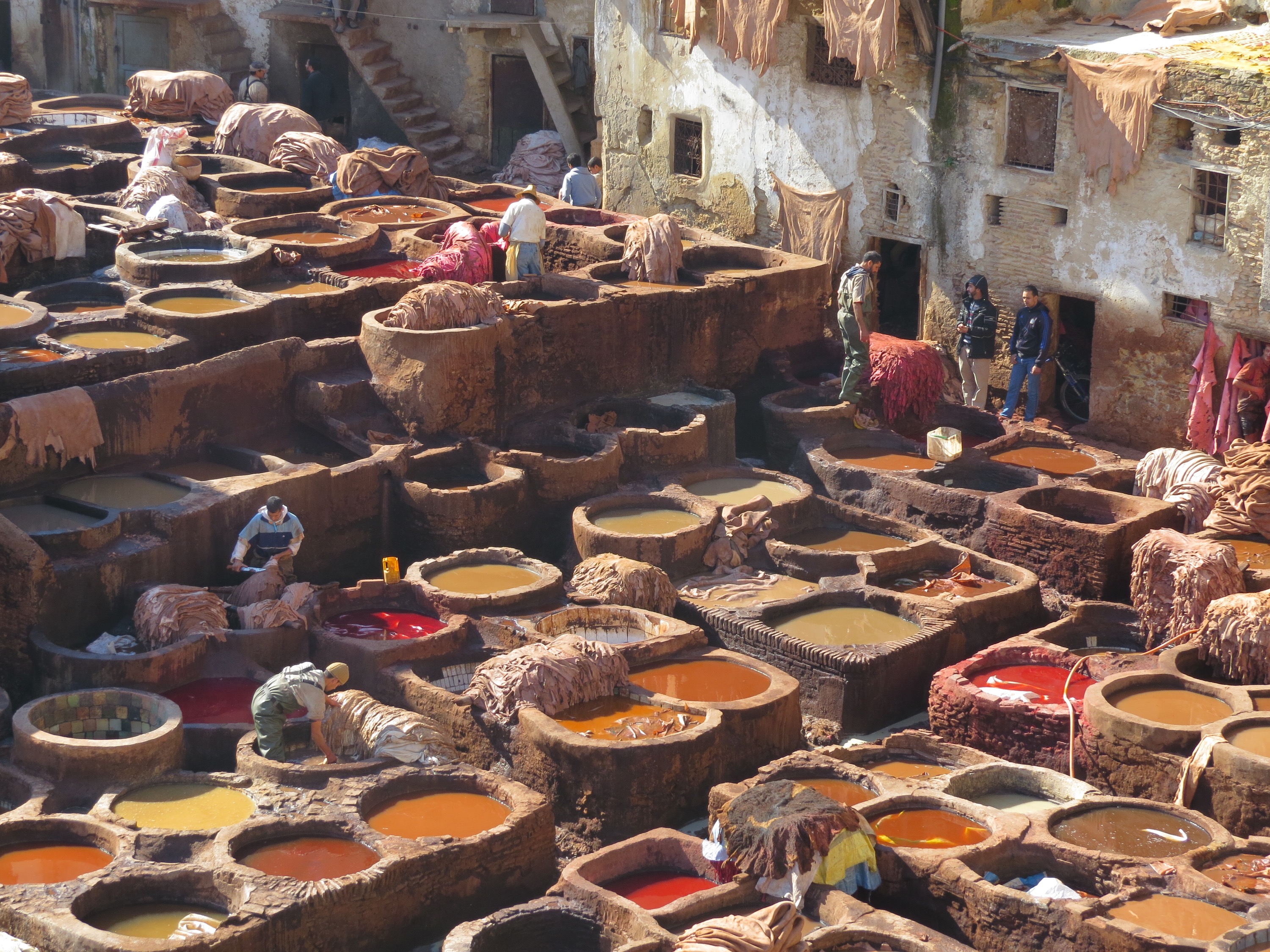
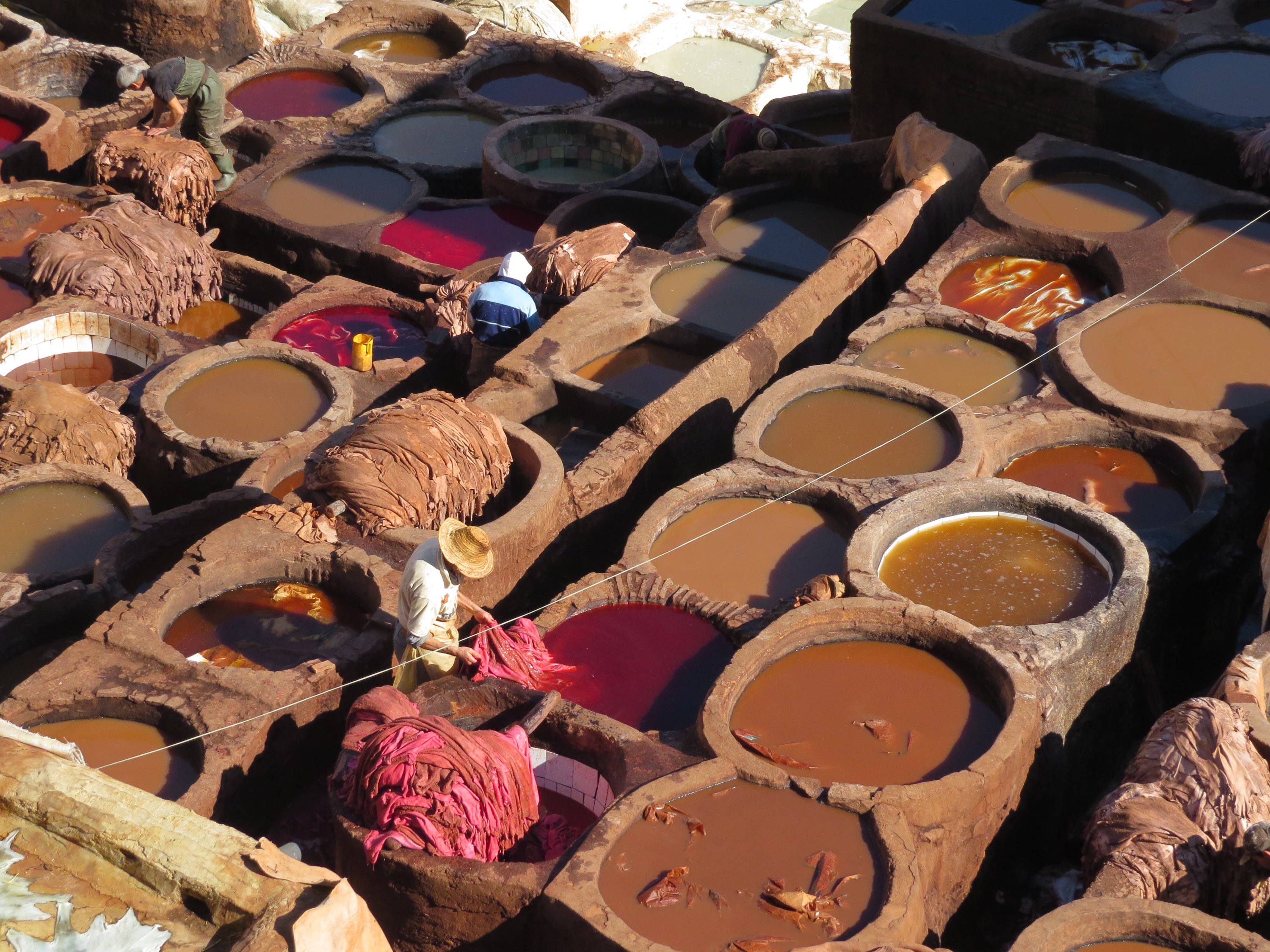
The ancient tanneries are a major attraction in Fez, and we visited them yesterday as part of our walking tour. They have used the same tanning methods for hundreds of years, involving the water from the river than runs through town, as well as natural pigments and lots of pigeon guano for its acidic effect. There are no chemicals used at all in the process.
When we entered the area of the tannery, a man stationed at the doorway handed each of us a sprig of mint. I looked confused, so he mimed holding it under his nose and inhaling the fresh scent. Uh oh. Reality began to dawn. As we ascended the stairs, the smell became stronger. At level three, Sadiki left us in the hands of a tannery worker, and we continued to climb. As I crushed the mint in order to mask the smell of death, I was reminded of the children’s nursery rhyme, Ring Around the Rosy. I clenched my pocket full of posy, but to no avail. The view was spectacular when we reached the terrace, but the stench was overwhelming. I snapped my photos as quickly as possible, held my breath as long as I could, and just at the point of retching, I ran for the exit. Craig, meanwhile, smelled almost nothing.
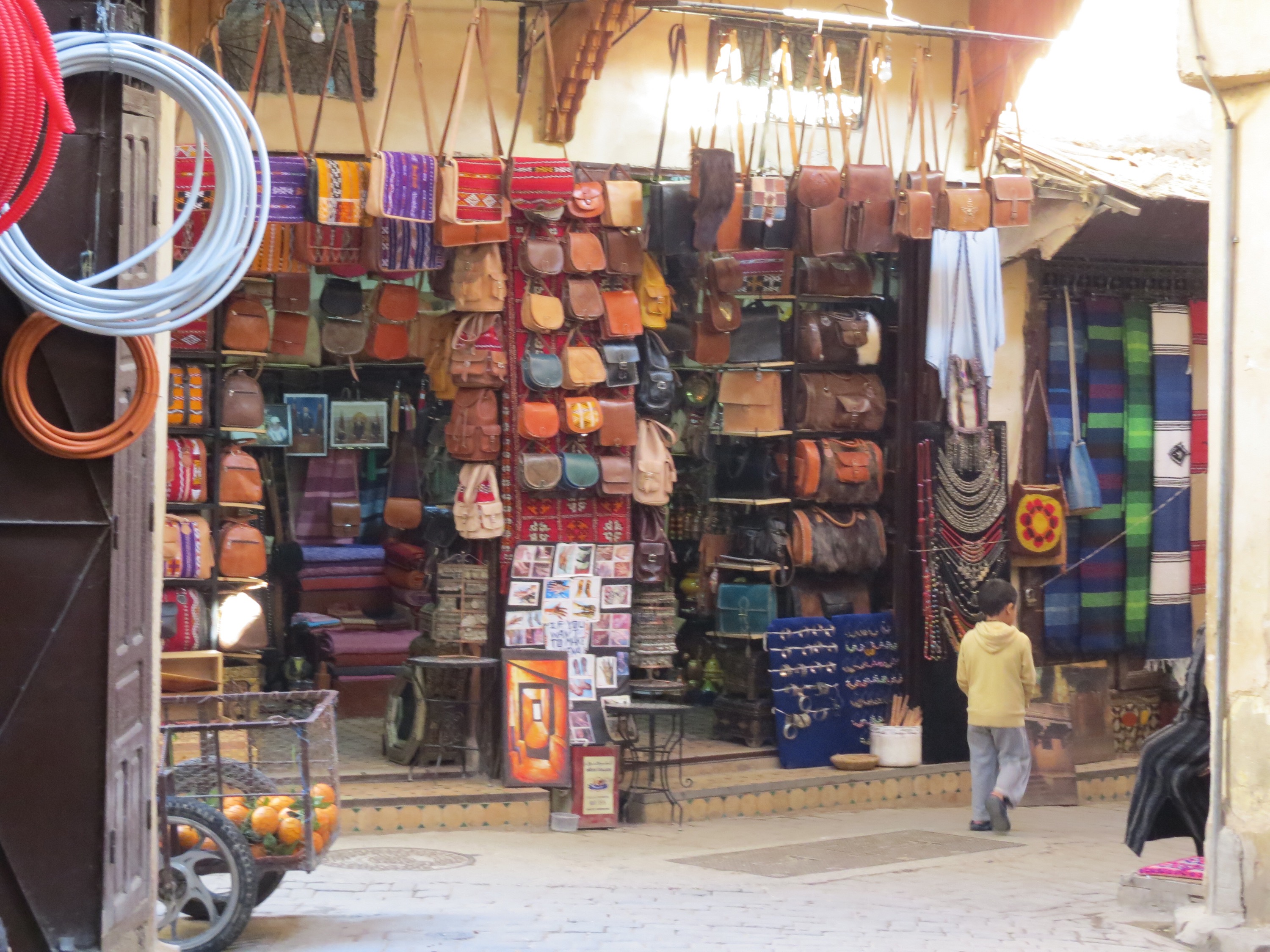
I abandoned Craig to his photos, and went in search of clean air. What I found instead was an incredible array of leather products. Unerringly, I headed straight for the most expensive product line: lamb skin jackets in all shades of butter-soft suede. By now, we have gotten quite good at bargaining, so by the time Craig remembered that I was shopping unchaperoned, I had gotten the price down about 20%. I let my son-of-a-Berber husband move in for the kill.
We left the shop and traveled down another flight of stairs, with the salesman trailing us, saying hopefully, “We take credit cards!” Just before we exited, he cracked and agreed to our lowest offer, 40% less than the original asking price. To show that he was a good sport, he threw in a little change purse for free.
I thought I was safe from the revolting smell of the tannery as we resumed our walk, but unfortunately there is another set of vats, with yet another opportunity for stunning photos. More mint leaves, more gag reflex kicking in. More therapeutic shopping, this time a beautiful hand-stitched goatskin purse. It is good that Craig realizes he must sacrifice for his art.
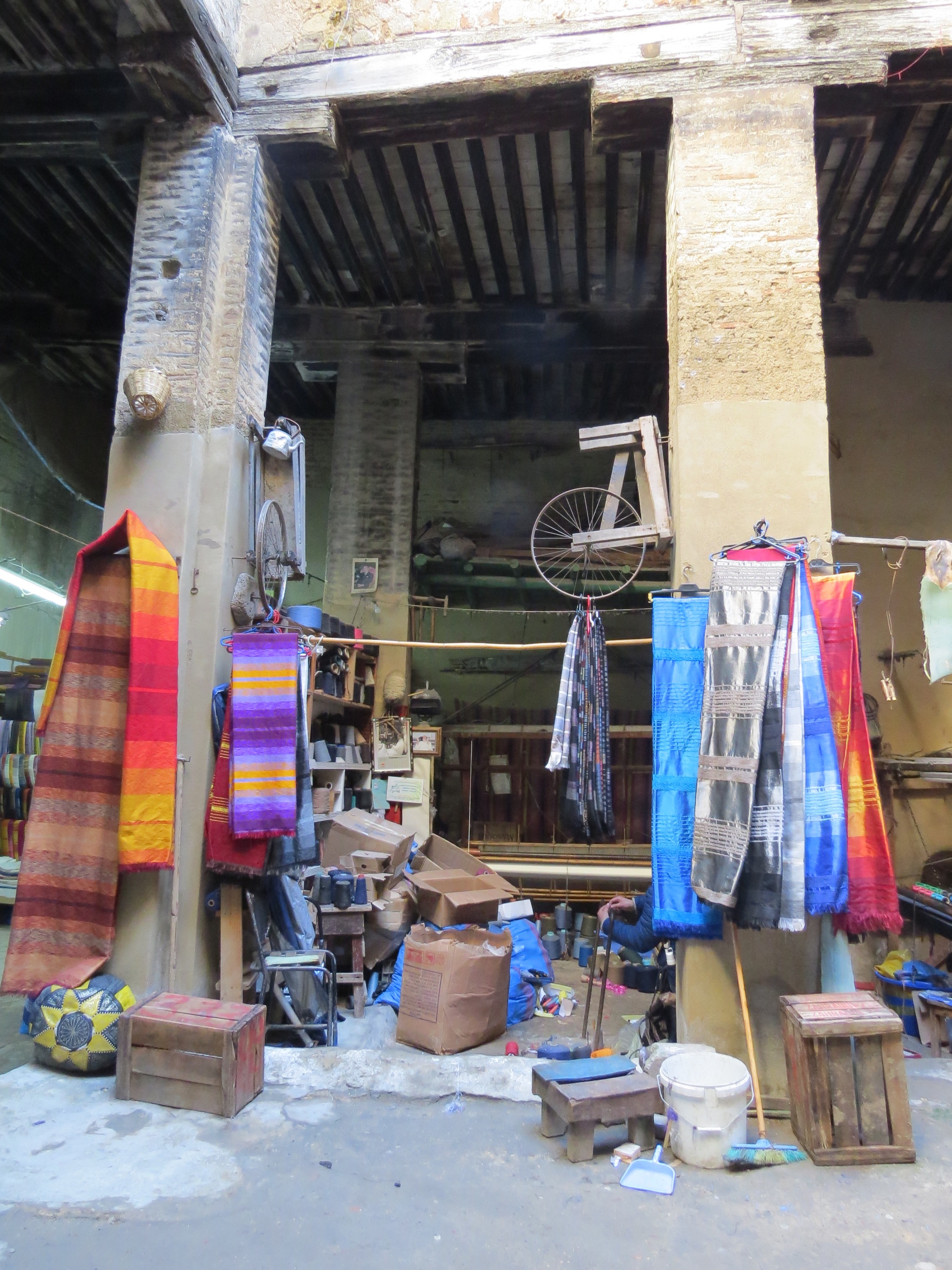
We also visited the shop of a family of weavers, who have four looms set up in a former merchants’ inn on the caravan road. Because the Muslim faith forbids any representation of living beings, all the patterns are stripes or geometrics. They work with cotton, wool, and vegetable silk, which is a fiber extracted from agave cactuses. Again, all the pigments are natural and made from such elements as saffron, indigo, and snails.
In talking with the weavers, we learned that an intricate pattern of various colored stripes can take the weaver two full days to create one meter of cloth. Considering how labor-intensive the work is, by American standards they were giving away their fabrics.
We were happy to help support this dying art, and purchased a stunning piece of cotton/silk fabric in blue, rust, gold, and other earth tones. We’re looking forward to putting it to use at home, to remind us of our wonderful trip to Fez.
We took a private car from Chefchaouen to Fez, a ride that normally takes four hours. Our driver Mohammed was the most aggressive motorist I have ever ridden with, and we completed the white knuckle ride in less than three hours. We were only too glad to climb out of that old Mercedes alive.
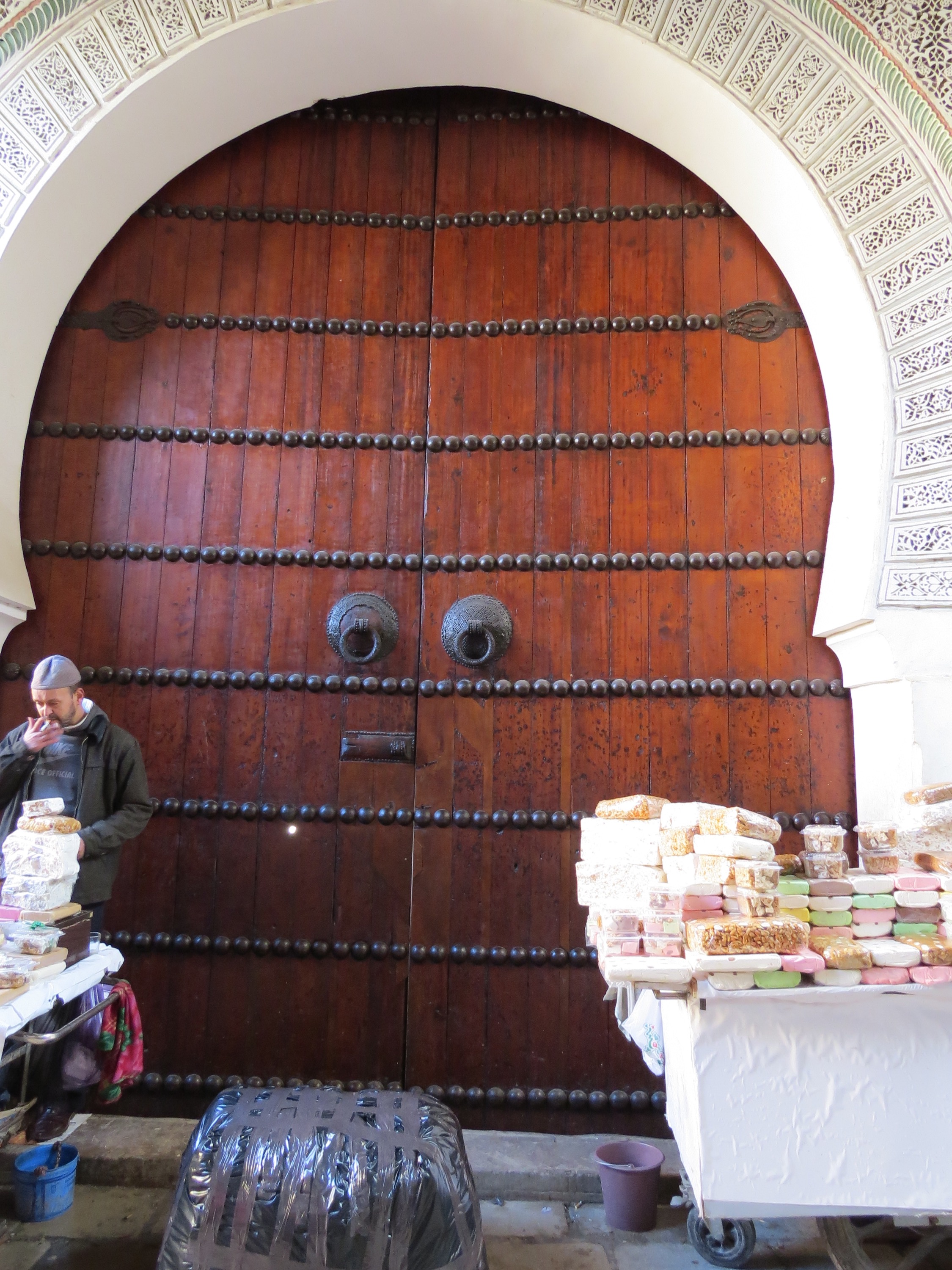
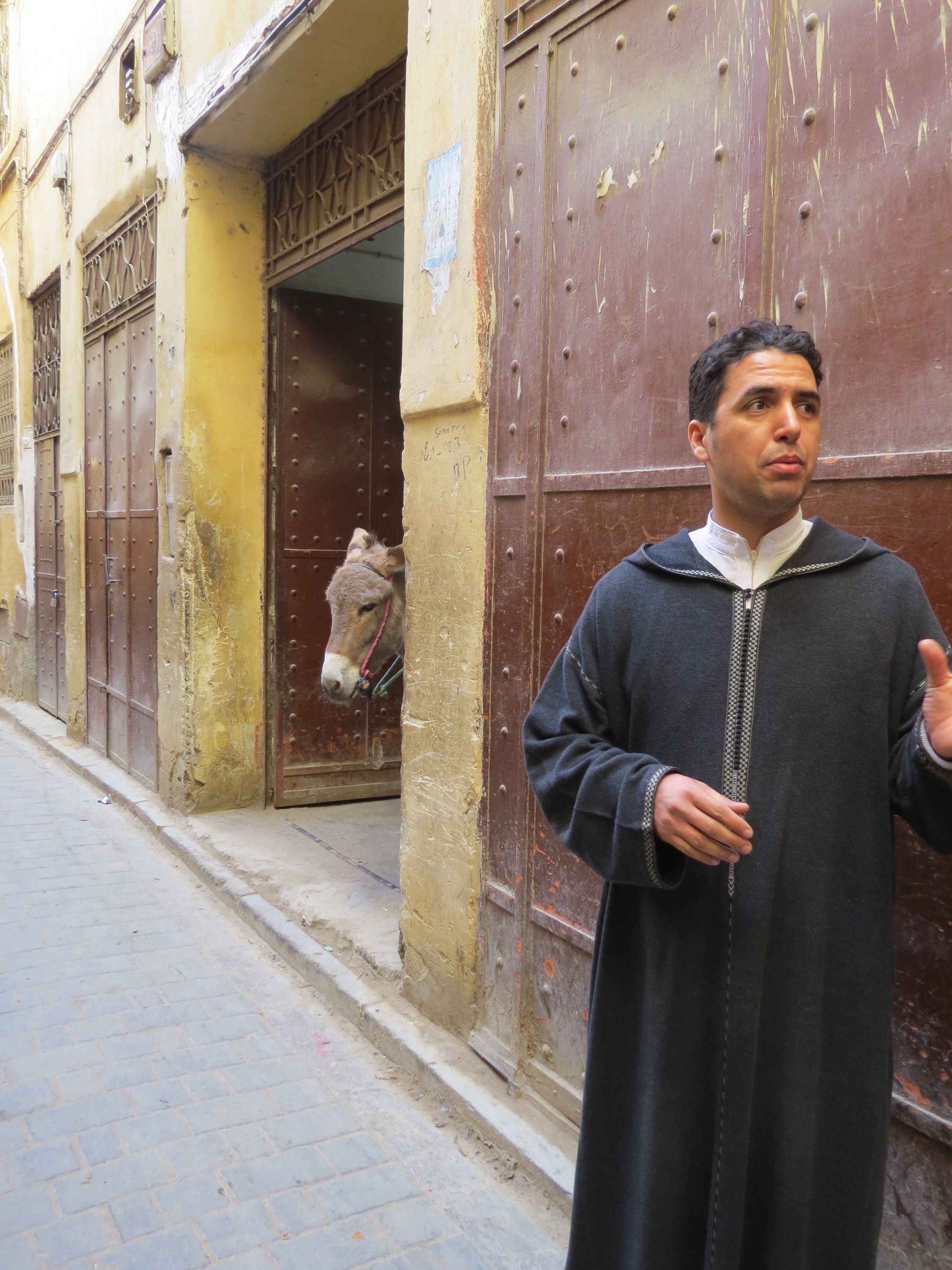
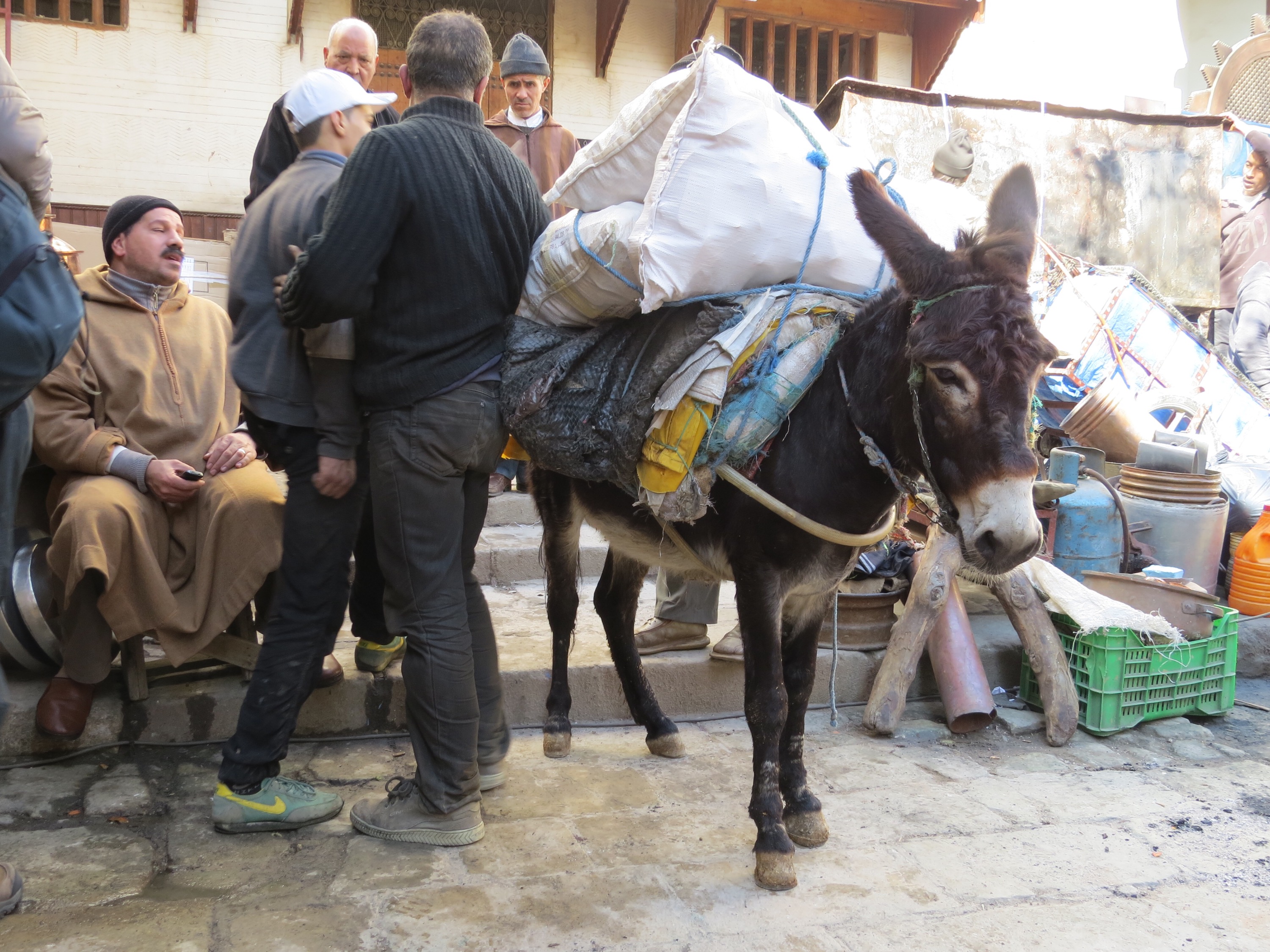
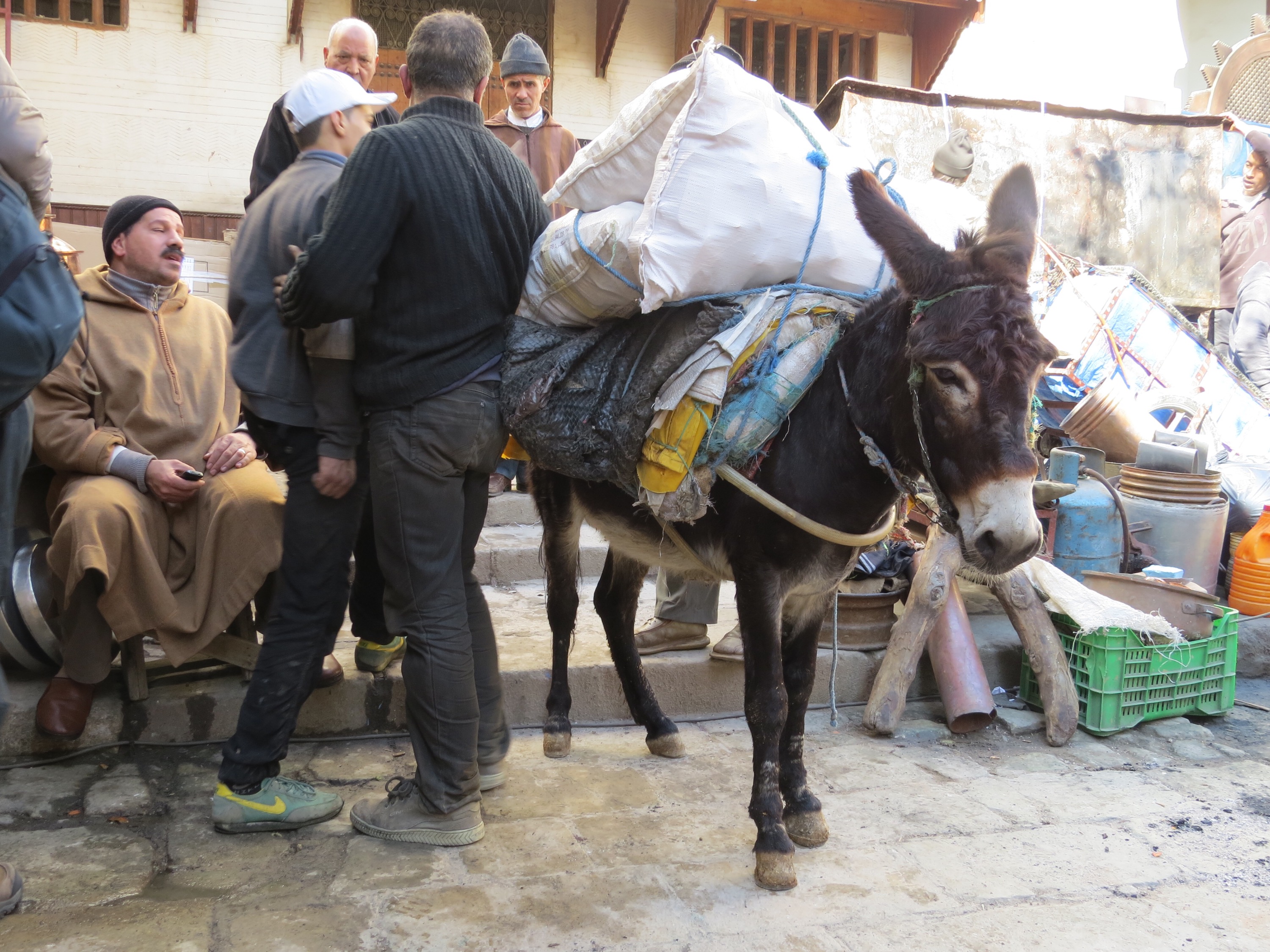
A young man from our hotel came out to the car park to meet us, because motor vehicles are not permitted inside the walls of the old city. He hailed another fellow with a wheelbarrow-type cart, and piled our luggage into it. Off we went, a little parade, chasing after our bags down the crooked dim alleys. At one point the passage narrowed so much that the cart would no longer fit, and the porter and Craig valiantly hauled the stuff by hand. (Remember, by this time I have been shopping for two weeks. Things were getting heavy.) Then he turned into such a dark alley that I thought, this is it. We are about to become the subject of one of those tourist horror stories. A few yards farther, the porter pulled out a set of keys, and unlocked a massive door that magically opened into a sunny courtyard with a lovely seating area lined with orange trees laden with fruit. It was a magical transformation.
Dar Saffarine is a 700 year old structure that was vacant and abandoned for twenty-five years before Alaa, the current owner, began the three year renovation that brought it to its present glory. We had reserved a room off the main courtyard, but Alaa informed us that since we were the only guests that night, he had upgraded us to the suite. “Please consider this your palace, and you are the king and queen,” our gracious host smiled.
Dar Saffarine is breathtaking. The ceilings in the bedrooms must be twenty feet high, and the center courtyard opens to the roof, at least fifty feet above. The original woodwork and mosaics have been meticulously restored to their former glory. Alaa has furnished his home with beautiful pieces of intricately carved furniture: shelves, mirrors, arm chairs, and occasional tables. Finely woven rugs help warm the chilly tile floors, and finely worked, colorful embroidery decorates the sheets, pillow covers, and drapes. The bathrooms have modern amenities, and hot water, much to our relief. (That is something not taken for granted in many of the places we have visited.)
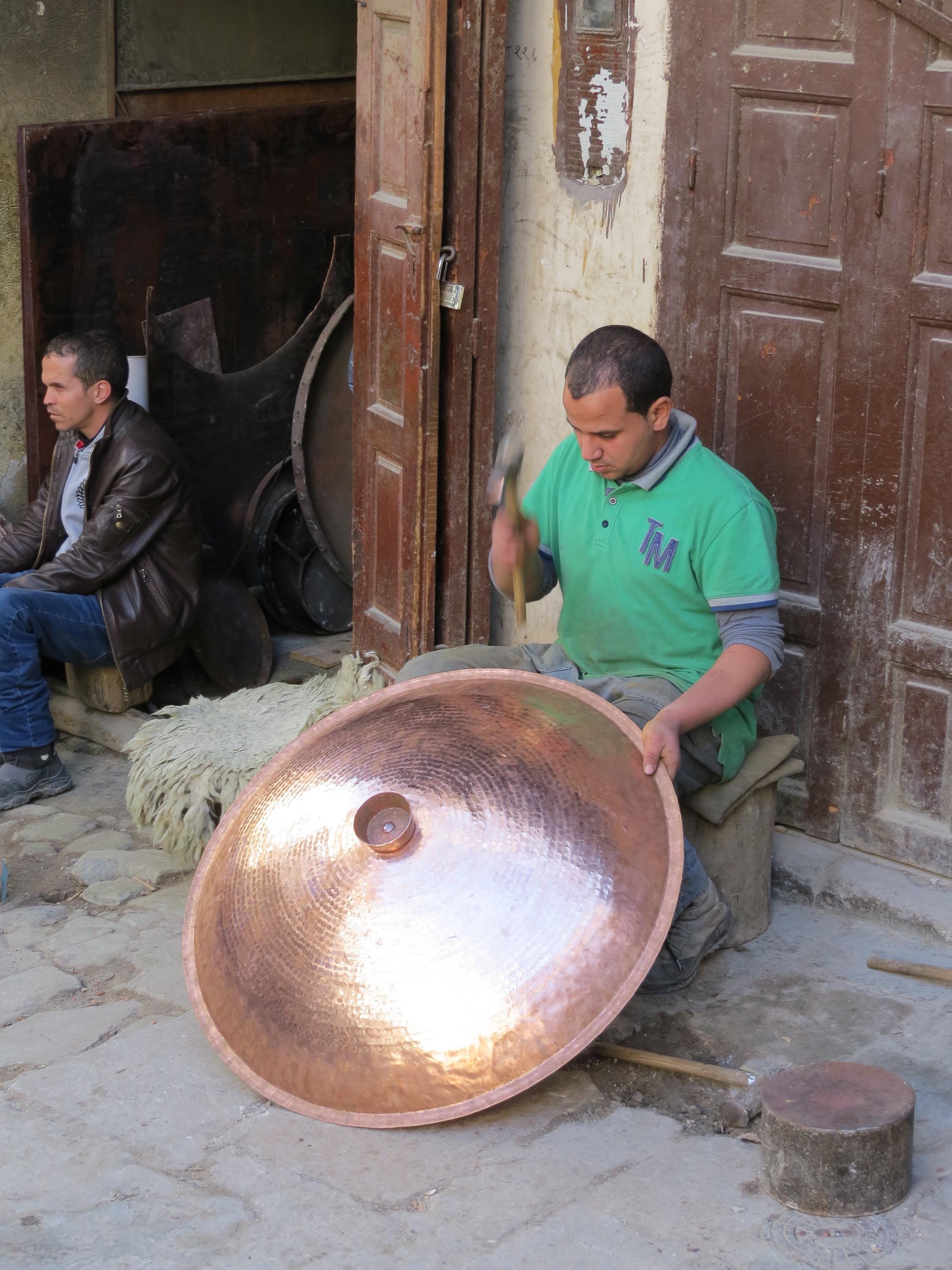
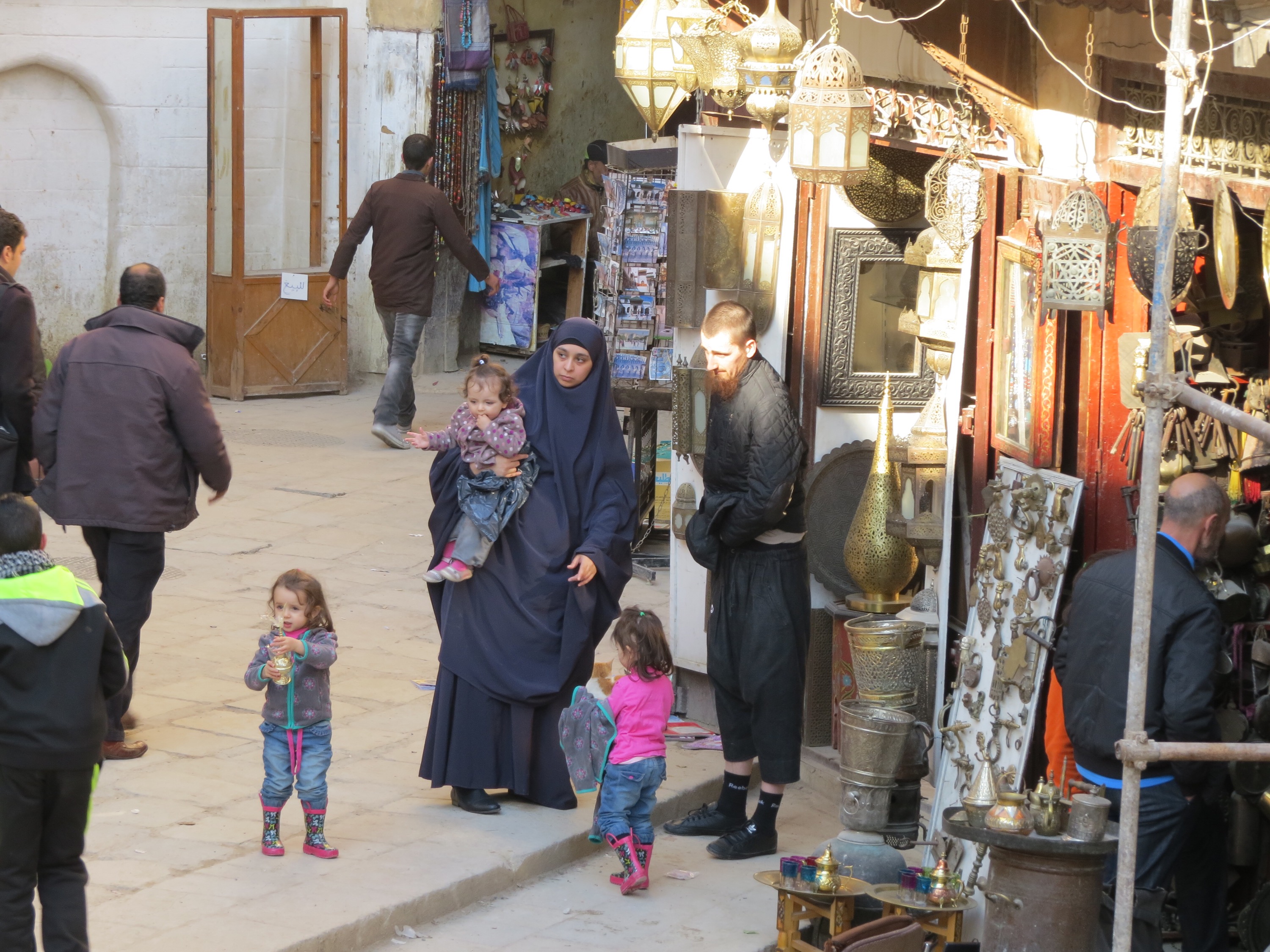
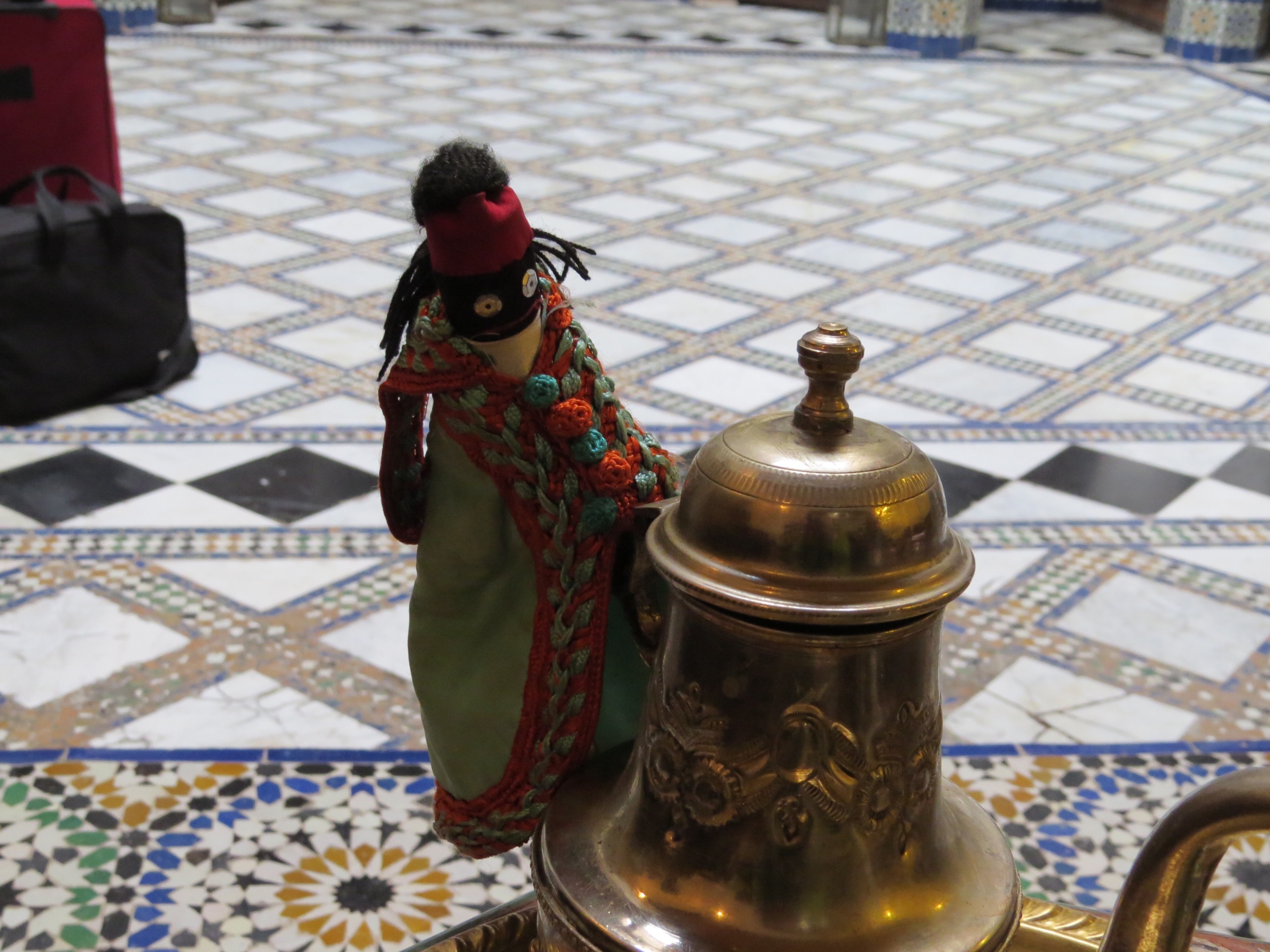
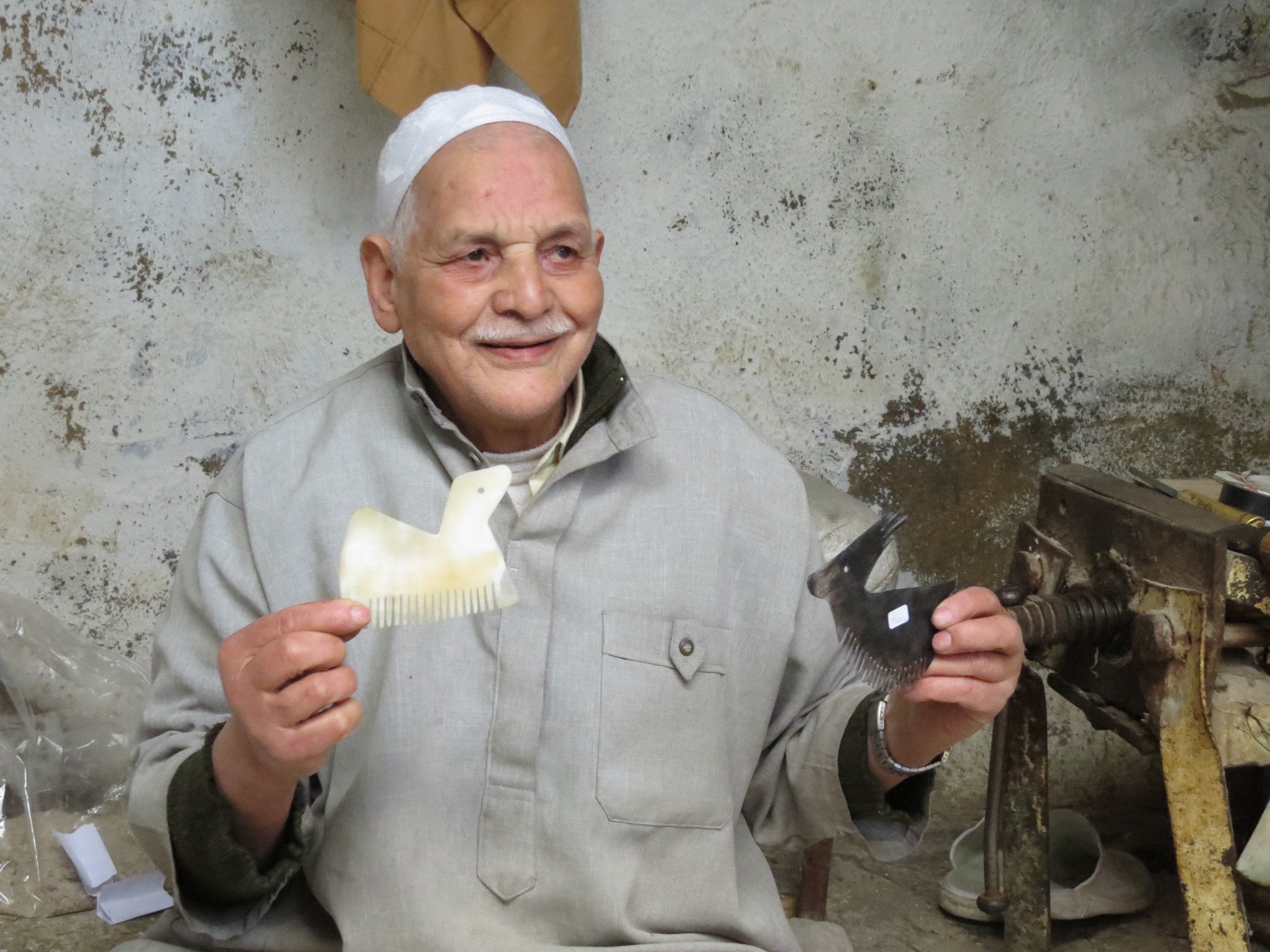
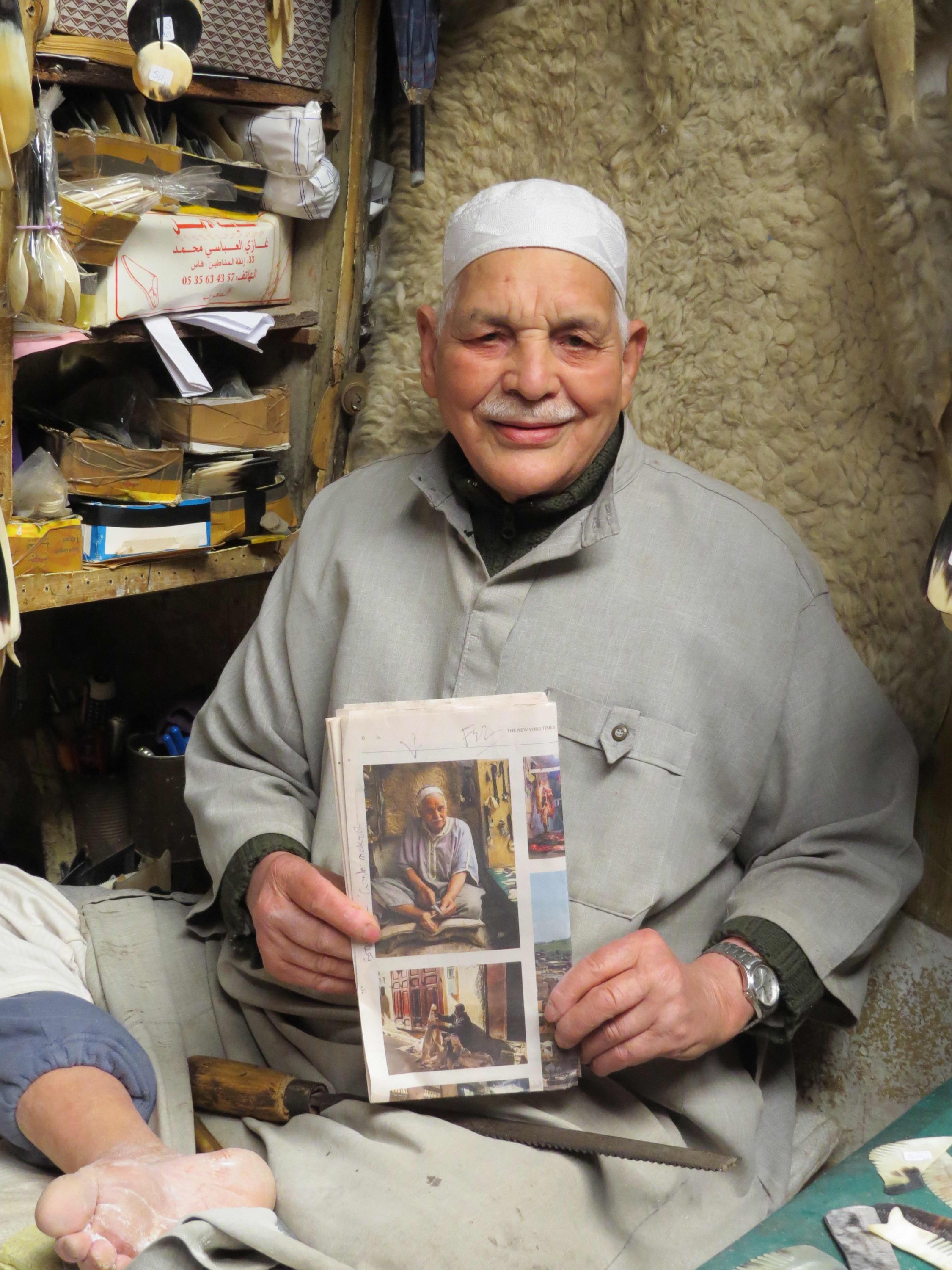
We have spent our days in Fez wandering the medina, both with a guide and on our own. We spent day one with a wonderful guide, Sadiki, who gave us an excellent orientation to the various traditional crafts that still exist in Fez, although just barely. The streets and squares are named after the craftsmen who practice their trade. So for example, our hotel, Dar Saffarine, is just off Saffarine Square, which is the neighborhood of the metal workers. Silver, copper, and brass objects abound here, and the name Saffarine, or saffron, refers to the yellow color of the brass. There are still a good number of metal workers, because everyone must have a tea pot, or copper pots and pans. However, the comb maker is the last of his kind.
At 85 years old, he has no wish to retire, and in fact he still goes to the slaughterhouse to choose the cow horns he uses, sometimes selecting specimens still attached to their owners. He then makes little bottles out of the tips, to hold kohl eyeliner popular with the women here. The large part of the horn is cut open, heated, and flattened in a vise. The comb maker creates hair ornaments too, and his comb handles are whimsically shaped rabbits, camels, and fish. In 2013, he was interviewed for a NY Times article, which we happened to have with us. When we gave him the paper with his picture, he was delighted. When he is no longer in business, the street will be renamed to reflect the end of an era.
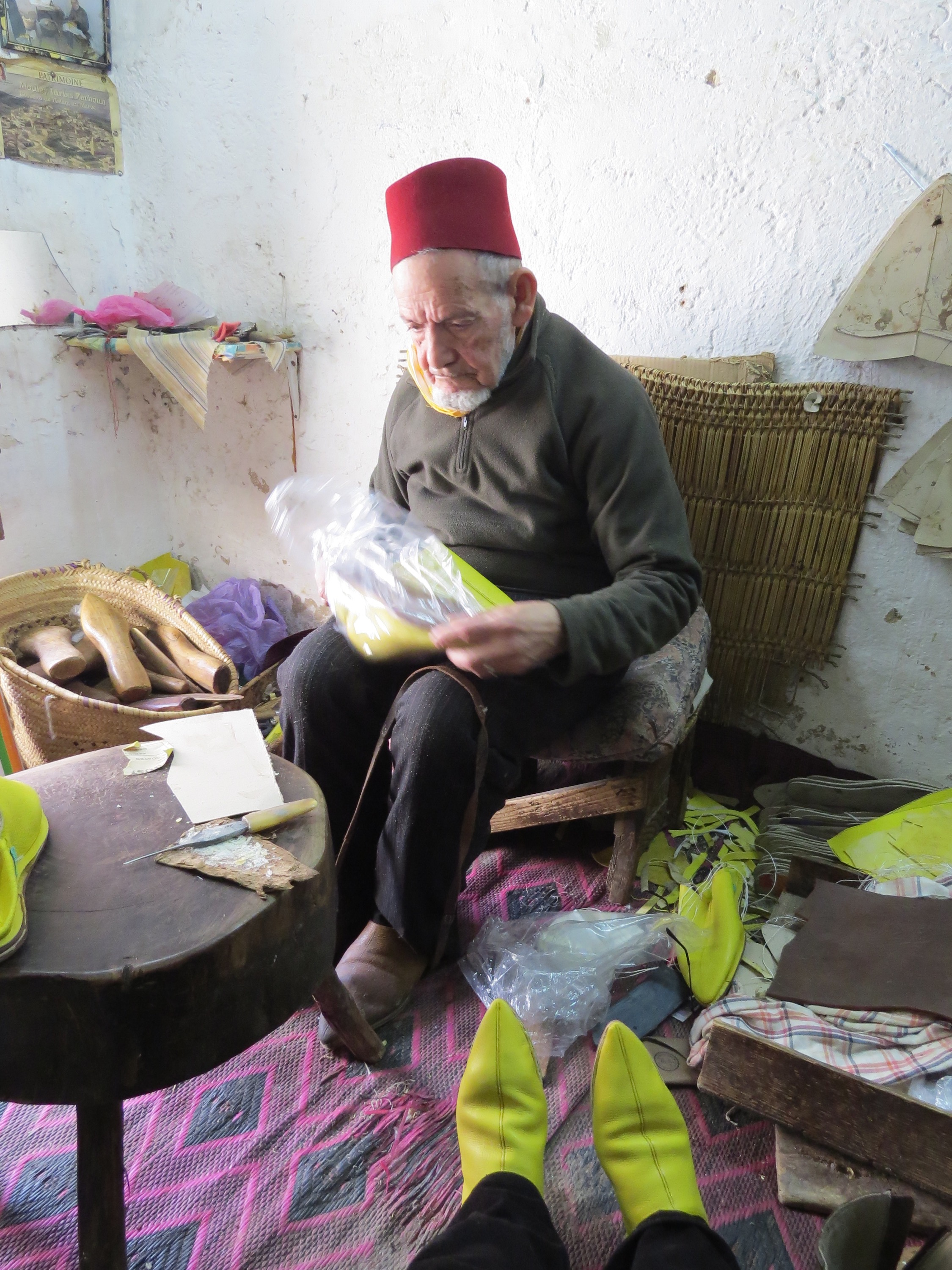
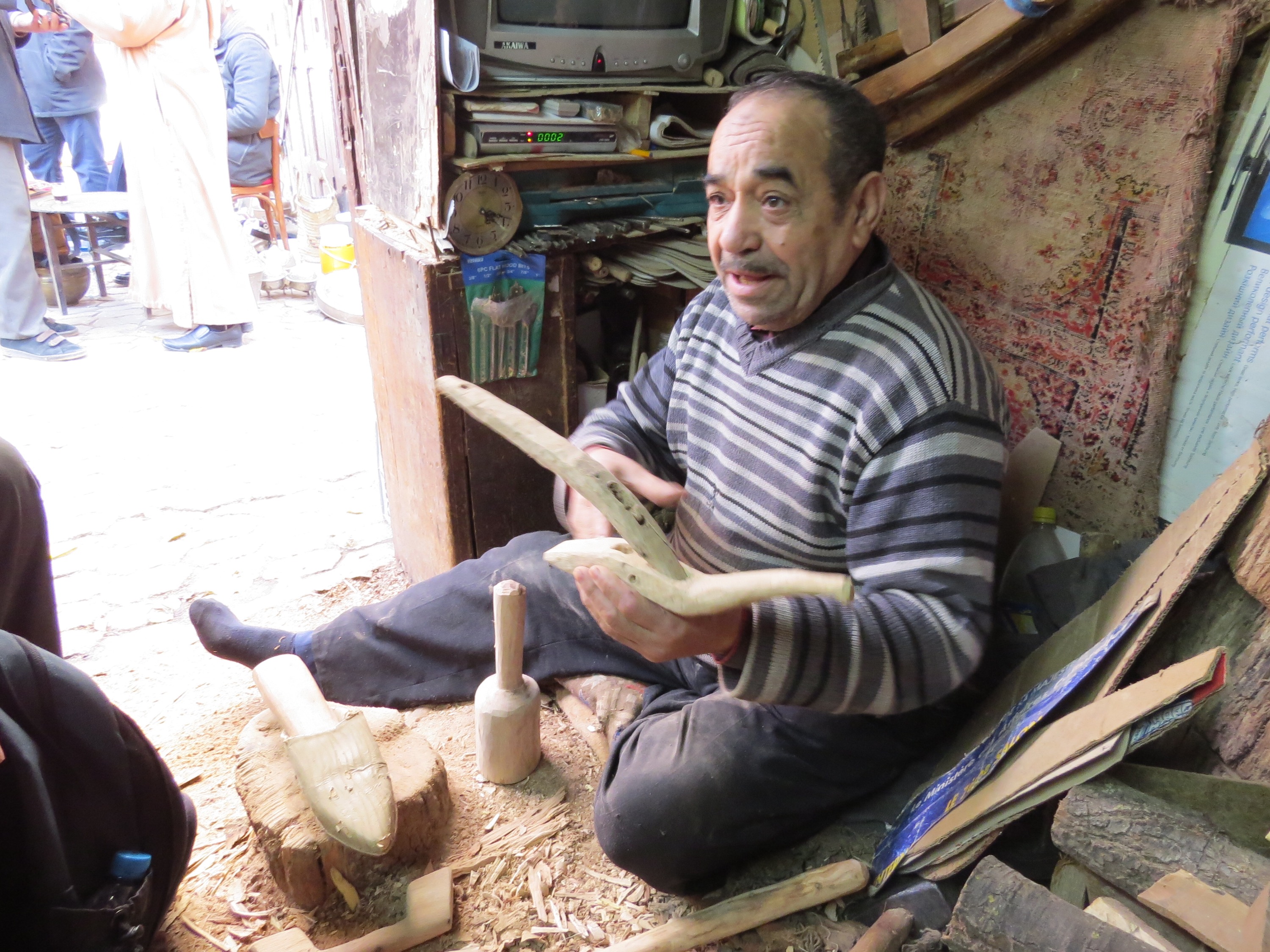
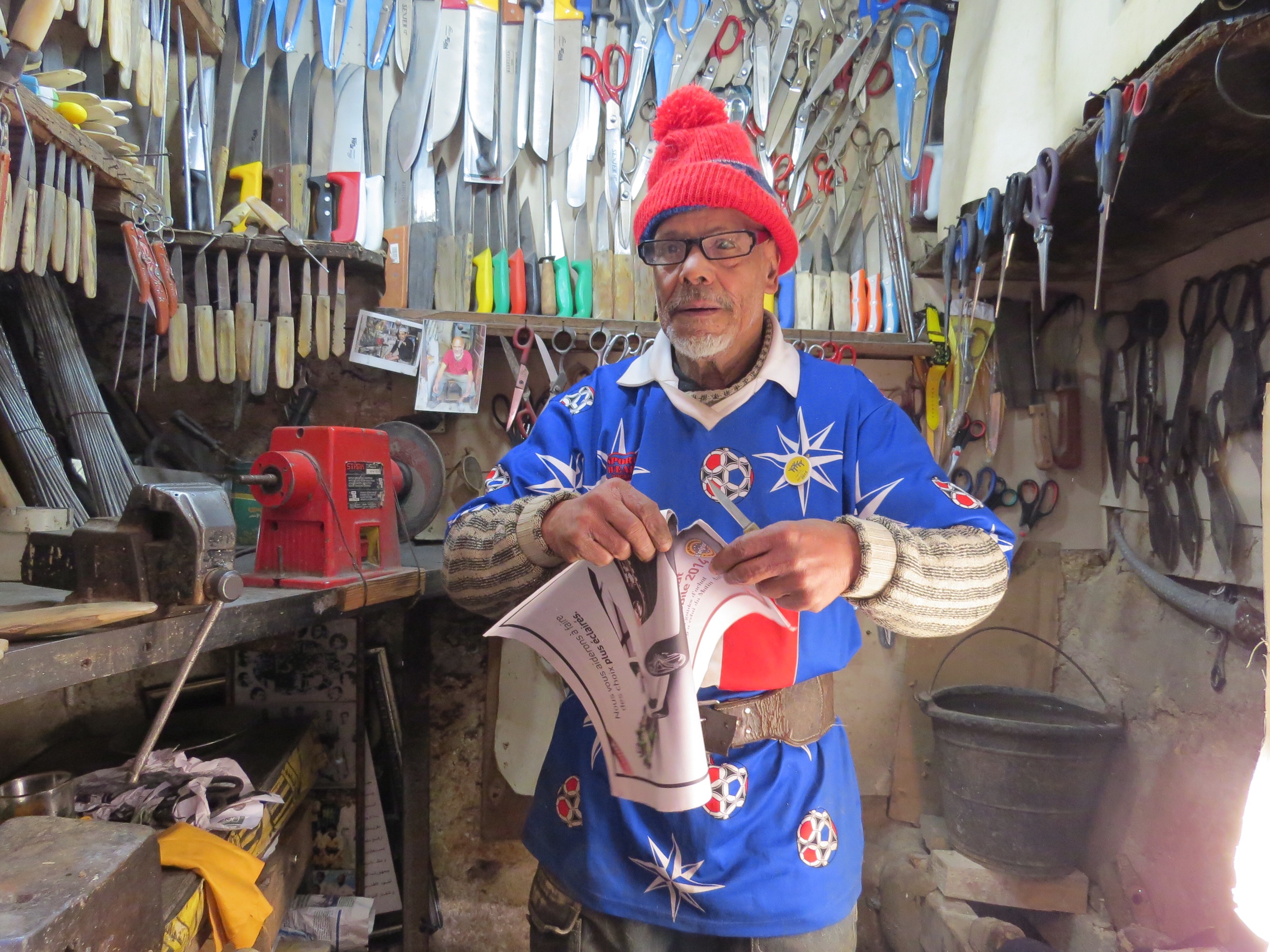
Our guide Sadiki showed us the inter-relatedness of the craftsmen. The sharpener keeps everyone’s tools sharp with his grinding stone. The woodworker makes handles for everyone’s tools, and stools that the workmen sit on. The metal smith makes the blades for the tools. As we visited the tiny workshops, people continuously popped in and out to purchase the service that they required. The stores were no more than small caves, or cutouts in the wall of a building. It seemed inconceivable that someone would spend the entire day in such a confined space, never mind fifty or sixty years. Sadiki joked with the shoemaker about having a room with a view – his was the only shop we saw that boasted a window. He was busily making the traditional pointed-toe slippers that most Moroccans wear, in sunshine yellow leather. He was working on a large order of this color, because all the government cabinet ministers wore yellow slippers with their formal white robes. He reached for a pair he had just finished, and told me to try them on. They fit like a glove, so for 200 dirhams I bought my first pair of handmade shoes. It probably took him the better part of the day to cut the uppers from goat skin, the soles from cow hide, and to stitch them together using two needles, and I purchased the fruit of that labor for 20 dollars.
On to Marrakech in the morning!
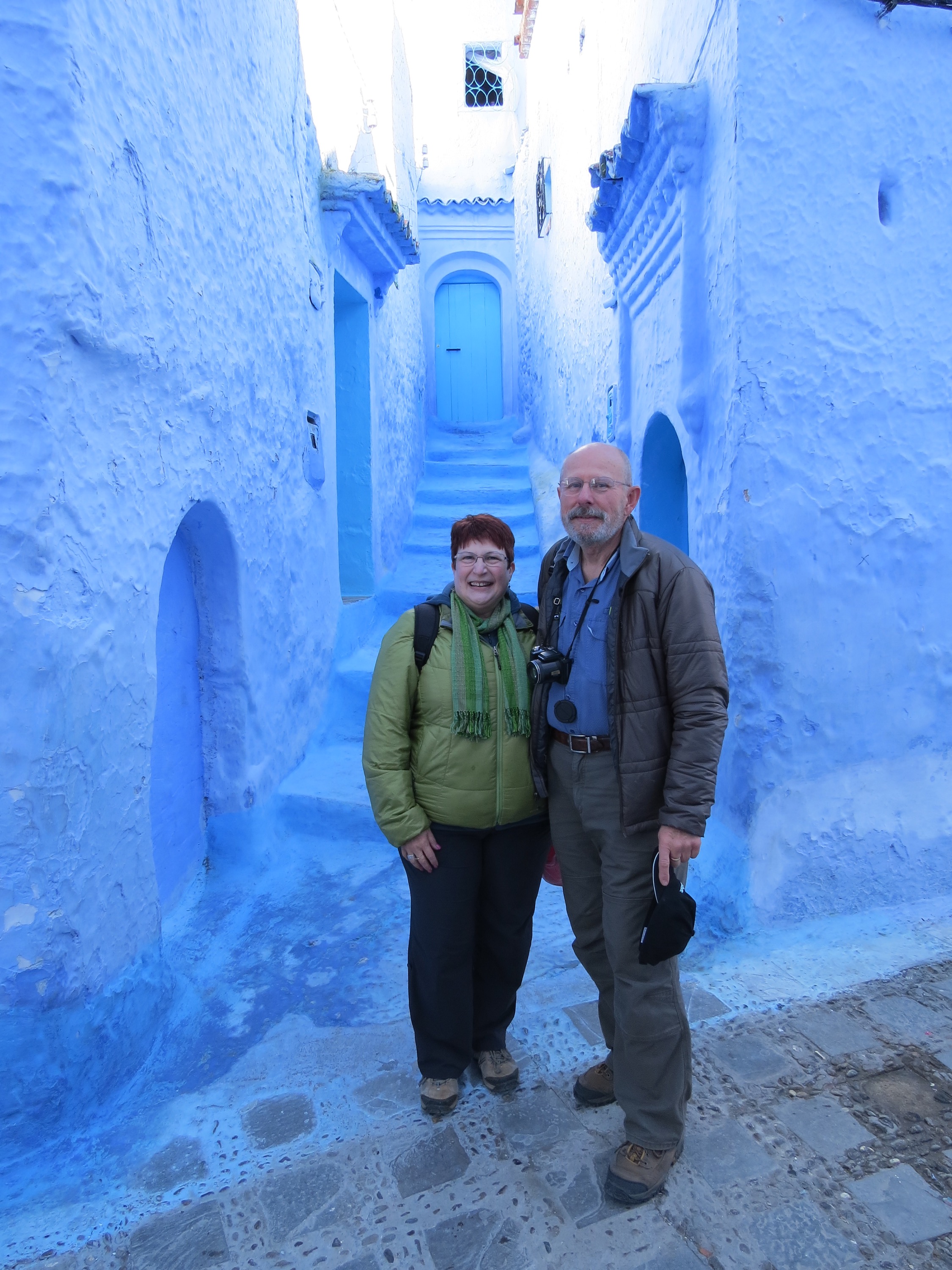
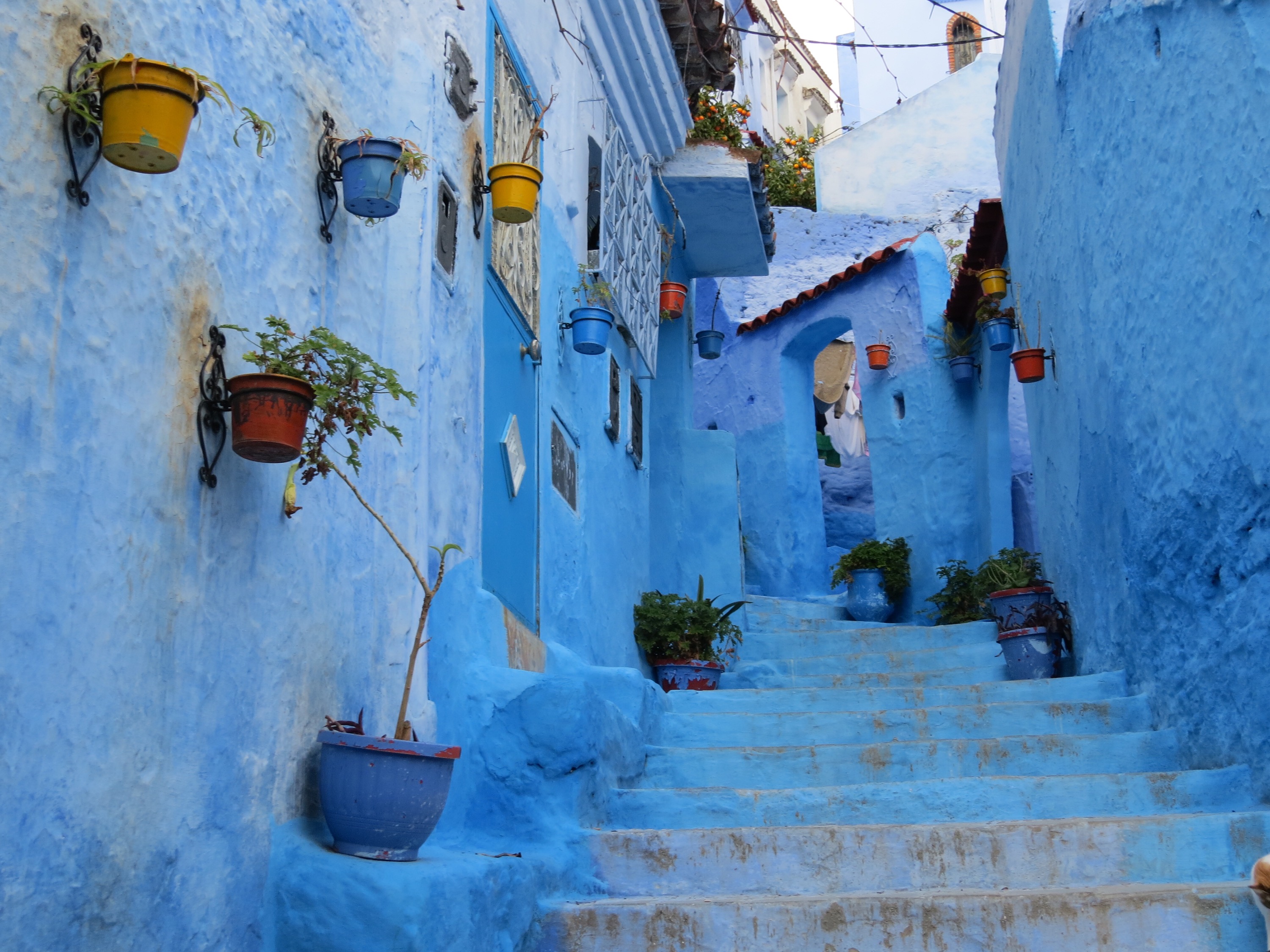
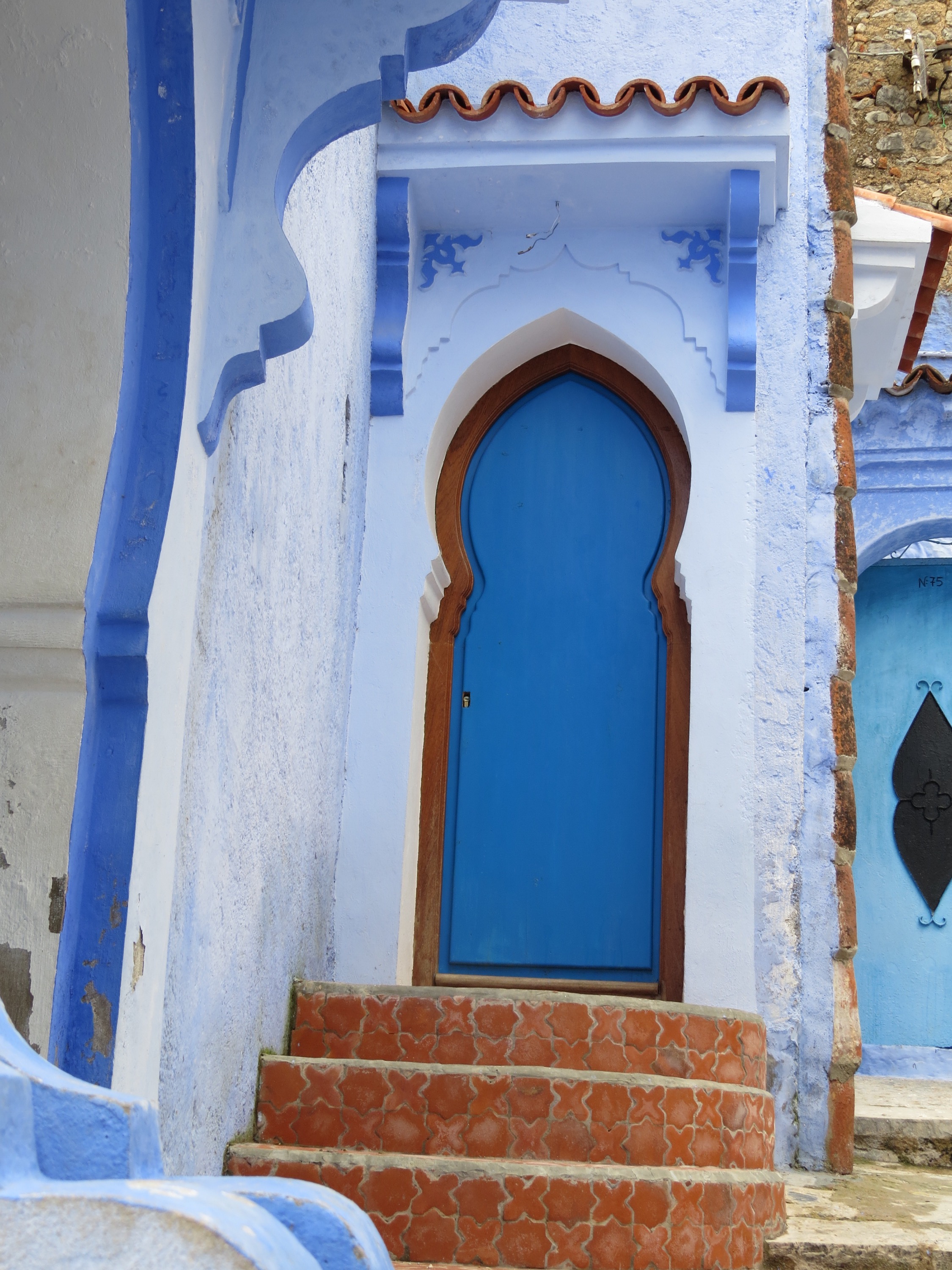
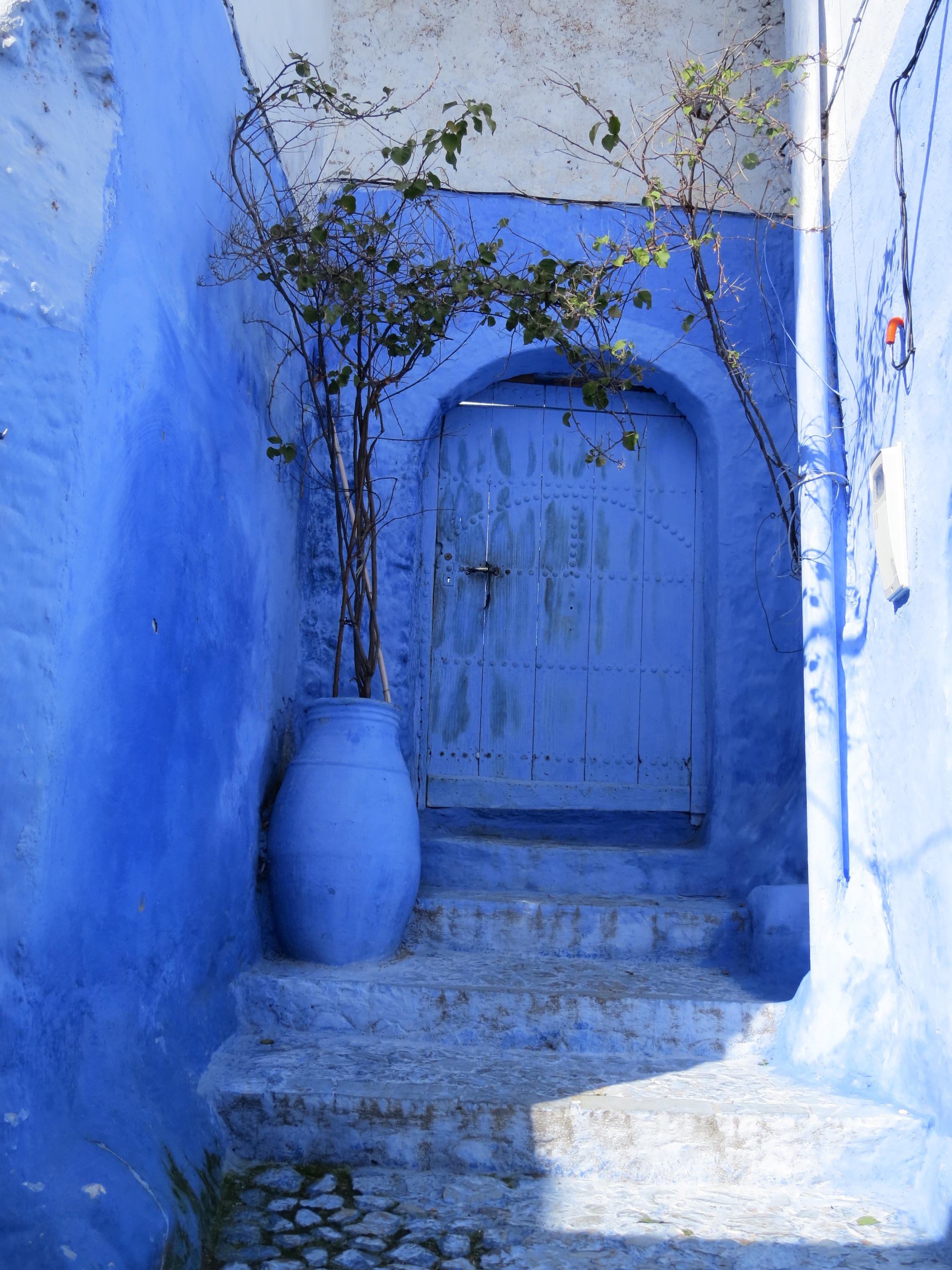
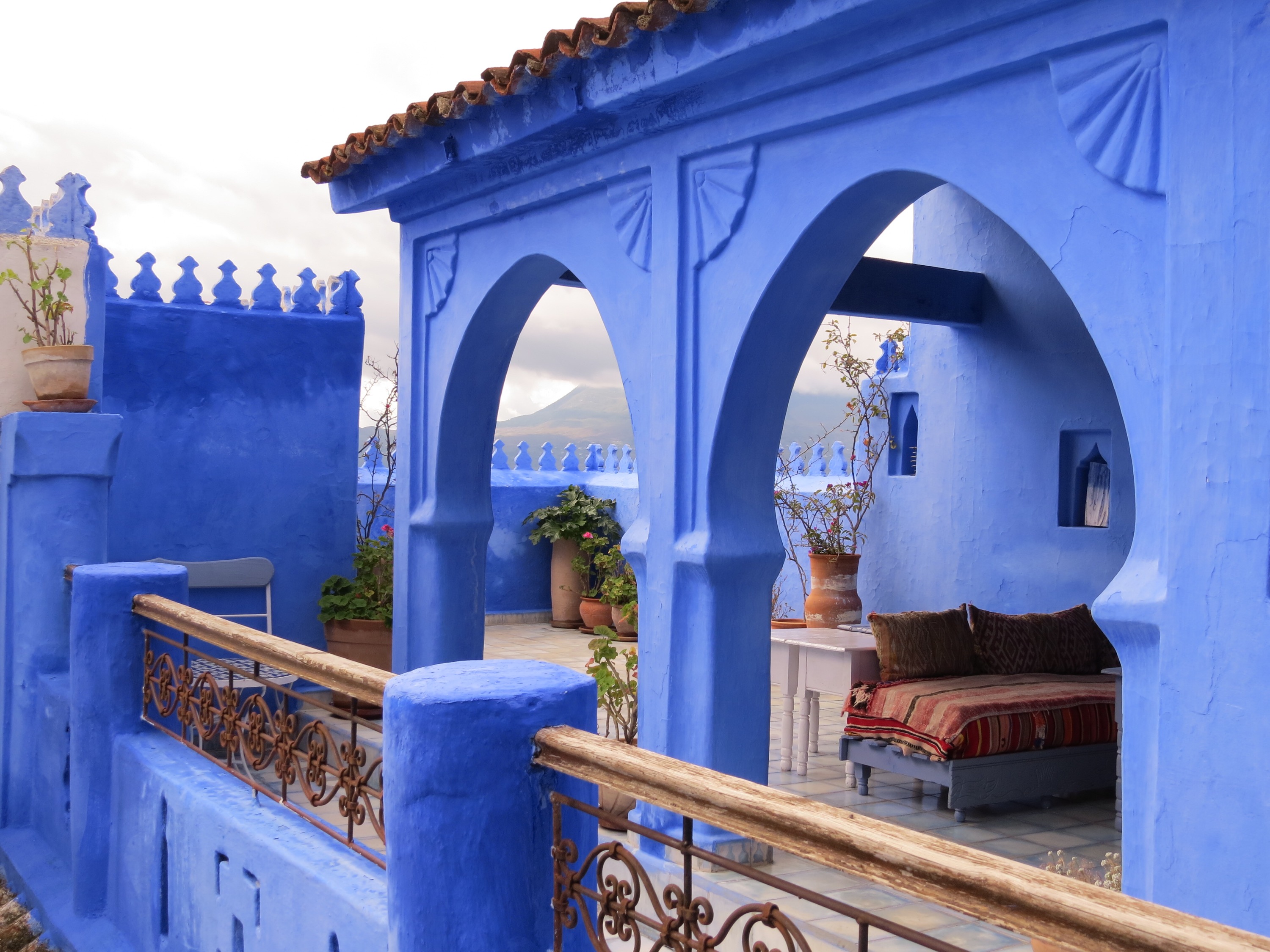
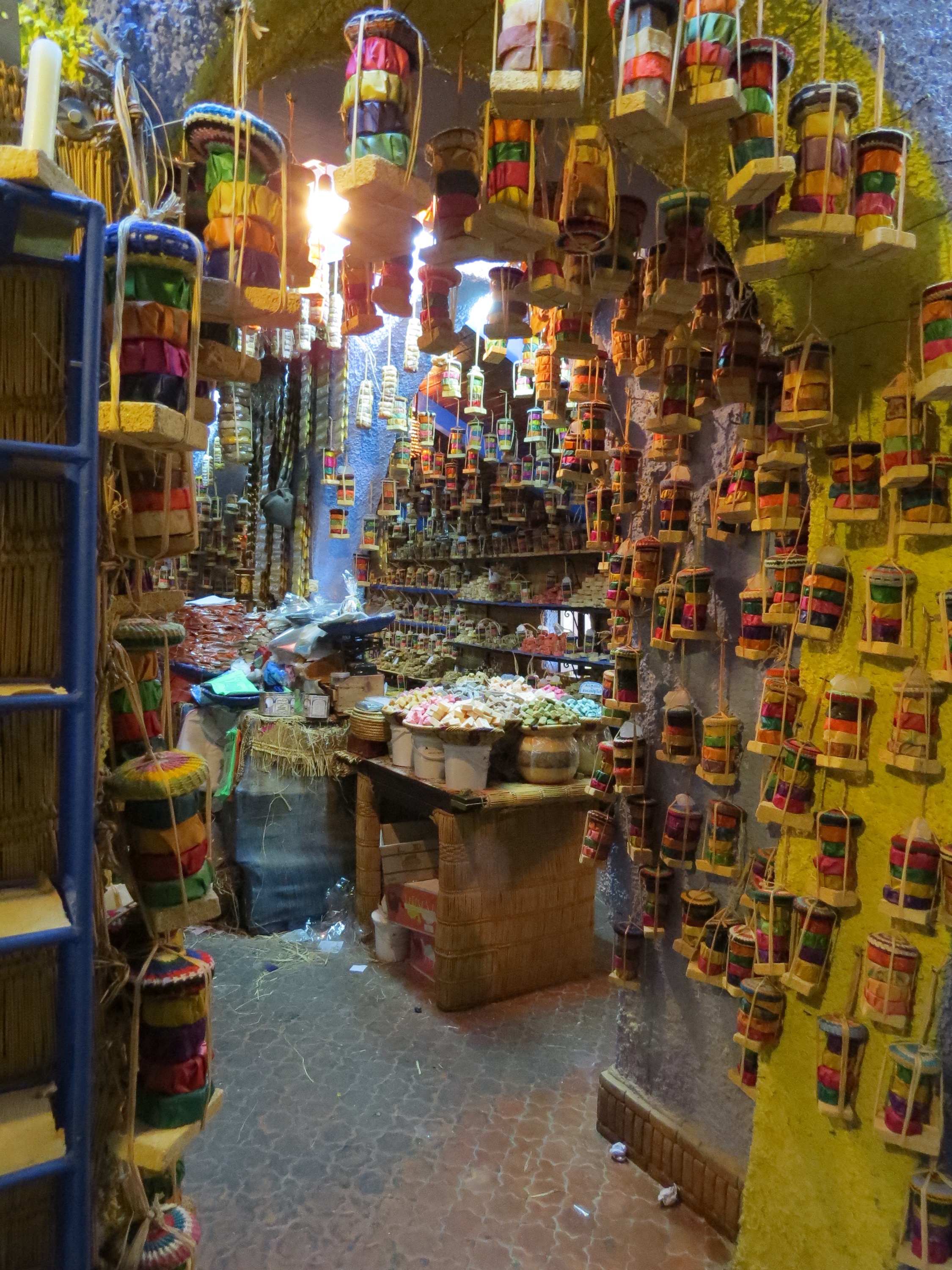
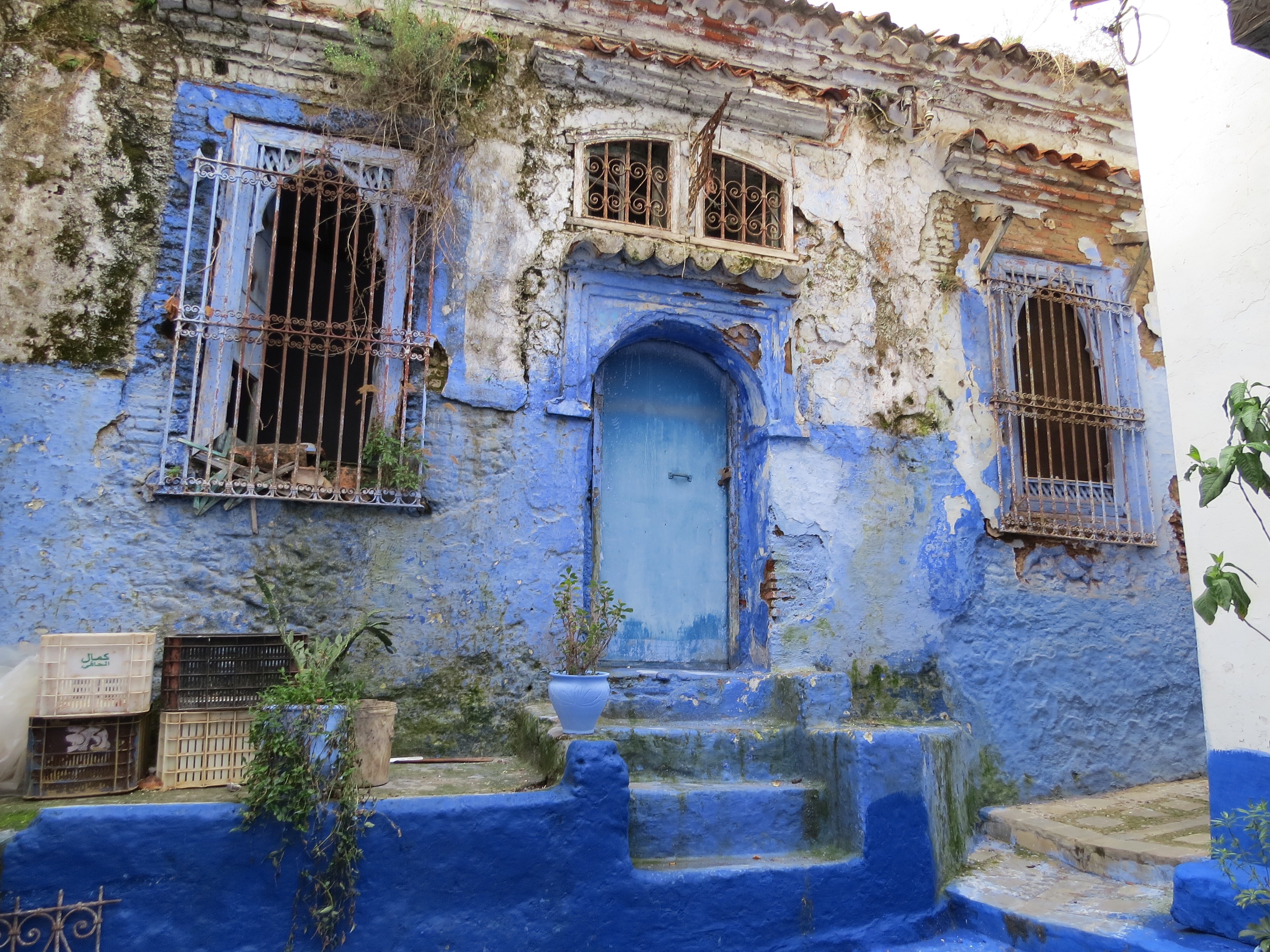
We are leaving Chefchaouen tomorrow morning, and heading to Fes, about four hours away. So I will leave you with some pictures of this beautiful blue city.






 Amalfi is a sparkling, very popular resort town, and 95 degree temperatures didn’t keep the crowds away. There were hordes of smiling tourists strolling, shopping, eating, lounging, sweating, picture-taking, sunbathing. We parked the kids at the beach for only 10 euros per person per day, umbrella and lounge chair included, and headed into town to explore. Craig is really good with directions, so I trudged along after him, whining and threatening heatstroke, as we hiked through streets filled with shops and churches. The side streets were purposely designed in convoluted configurations, in order to confuse invading pirates in centuries past. On one of these crooked little streets, I had to stop and ask myself what century I was in, as I watched an elderly woman lower a basket on a rope from her third story window, to the bread delivery person who stood waiting below.












 Born With Gypsy Shoes
