Swan Song

This is the manuscript of the last sermon I preached at Doylestown United Methodist Church, on June 10, 2018. If you prefer to listen rather than read, you can find this on the DUMC page on Facebook, under the June 10 date, as a live broadcast.
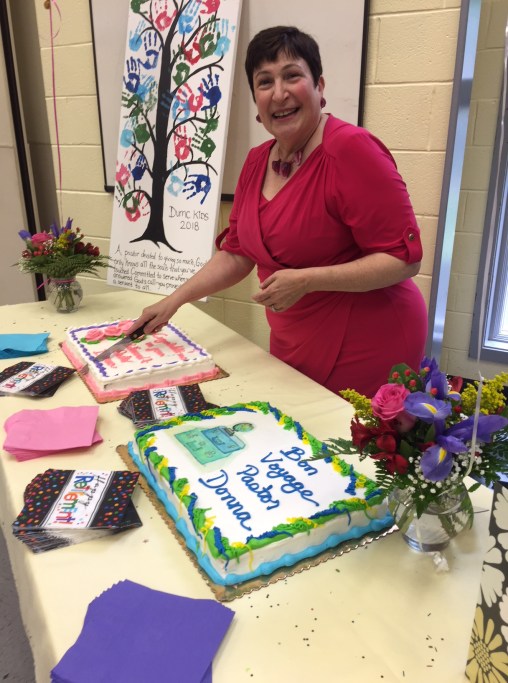
party

Swan Song

The title of this sermon started out as a joke.  Pastor Mike schedules the sermon topics a couple of months ahead, so as far back as April we knew that today was my day in the pulpit.  We started talking about my last day in the pulpit, or my last Sunday, but when he announced that at a staff meeting, that kind of made it sound like I was dying.  Staff meetings here are pretty raucous occasions, and there was a lot of hooting and laughter at the announcement of my Last Sunday.  You have to say that in capital letters, right? Then we started kidding around about it being my swan song, and it kind of stuck.  I looked into the term, and I learned more about swans than I really wanted to know, but I also learned that the term is legitimately used in reference to retirement.

I hope by now that you’ve grown accustomed to my quirky sense of humor.  I don’t tell jokes like Pastor Mike does; I’m more the storyteller type.  I plan to keep things light today, because I don’t want this to turn into a sob-fest, okay?  But just in case, you know where to find the tissues, right?  Under the pew in front of you, either end of the row.  By the way, that was my idea – tissues in every pew.  You’re welcome.  Just make sure you take the used ones home with you, or I’ll never hear the end of it.  Our Office Manager Karen Aduba will track me down in Ecuador to complain that I encouraged you all to create a mess. And by the way, Karen, thank you for being my straight man all these years.

There are big changes ahead. You have probably heard the plans that my husband Craig and I have made.  We are leaving town on June 30th, for our Victory Tour of the east coast, then off to Ecuador, the Galapagos Islands, Guatemala, Cuba, and Portugal. I think I can speak for Craig when I say that we are alternately feeling excitement, anxiety, euphoria, and trepidation.  Daily. Change is tough, isn’t it? Craig and I have made a deliberate decision to make these changes, to uproot our lives, but you, dear church folks, have had this change foisted upon you, and it’s hard to be forced to change when you may not want to.

I’ve been thinking about this sermon for a long time.  In fact, I’ve even written the whole thing in the middle of the night, in my head, a couple of times.  Of course, you know what happened to those sermons.  But the other night I forced myself to get up at 2 am and find a pen and paper, because I finally figured out where to go on this momentous occasion.  I’m going to talk about different scriptures that have come into my life at different times, and have been incredibly important to me.

Let’s start at the beginning. No, not my birth. When I was in seminary in the early 90’s, I had an eccentric friend named Russell.  Nowadays we would probably say Russell had Asperger’s, but in those days he was simply socially awkward and definitely different. When I was appointed to my first parish, he sent me a note of congratulations.  At least, I think it was congratulatory.  It contained a scripture from the apostle Paul, 1 Corinthians 16. “A wide door for effective ministry has opened before me, and there are many adversaries.” Not but there are many adversaries – and there are many adversaries.  Like it’s a given in the life of a pastor.

Old Russell was right – there were a few adversaries during that time of ministry, and I learned a little something from each of them. I came to view the National Register of Historic Places as an enemy, because it turns your building into a golden calf, and refocuses the work of ministry into merely maintaining the structure.  In the parsonage, which was built in 1841, I ran afoul of mice in the dirt-floored basement and bats in the slate roofed attic.  I learned that if you ignore a steeple which holds a thousand pound bronze bell for a hundred and fifty years, that said steeple begins to peel right off the front of the church building.  I also learned that black bears really like salmon scraps, and that they will spread the contents of three garbage cans over the surface of several football fields to make sure they have sniffed out every last fish scale.  My church learned that it paid me a lot of money that week to clean up their garbage.

But it wasn’t all adversity, of course.  I came away from that church with wonderful memories, and my son met his wife in that little NJ town, when they were both in middle school.  Oh look, they’re both here today, with that precious little grandson they made just for me!

During my years in ministry in NJ, I used to cross paths with Leonard Sweet fairly often.  At the time he was the dean of Drew Seminary, a popular speaker, and he is still a prolific author.  Parenthetically, there are a few of his books up for grabs in my office, and you are encouraged to go in there after the service this morning and help yourselves to whatever looks interesting on the designated shelves.  You may not have my Bible and my hymnal, however.

Anyway, in one sermon, I heard Len Sweet preaching on the 23rd psalm.  “The Lord is my shepherd; I shall not want.” And here was his line of thought, which I completely resonate with. If God is the Good Shepherd, and the people are the sheep of his flock, then we in the ordained ministry are the sheepdogs.  Now that’s an analogy I can really get behind.  So whenever you’re tempted to wander away from the path, or to do something you know you ought not to do, just picture Pastor Mike and me nipping at your heels and herding you back in the right direction.

Perhaps you’ve heard me say that I have a love/hate relationship with the Apostle Paul.  I admire him greatly for his devotion to the Lord, for his prolific ministry and writings. After traveling this past fall to retrace some of his missionary journeys, I marvel at the man’s stamina in enduring shipwrecks, imprisonment, beatings, and eventually martyrdom.  By why oh why did he have to write that line about women keeping silent in the church?

1 Timothy 2:11-12 (NRSV)

11 Let a woman learn in silence with full submission. 12 I permit no woman to teach or to have authority over a man; she is to keep silent.

You have no idea how often I have been beaten up with that line. Sometimes it is a sincere question, where the person is innocently asking me how I can be in ministry when it seems to be strictly forbidden.  Other times it’s said with venom, with an attitude of “how dare you presume…”

So, on behalf of clergywomen everywhere, let’s discuss this piece of scripture today. Then the next time you hear it, you can spring to the defense of female pastors with an informed discussion of this controversial scripture.

It’s important to remember that Paul’s restriction regarding women’s participation was written in the context of a personal letter to Timothy giving advice about a specific issue in the church at Ephesus.

There is no command from God here, and no suggestion that Paul intended to establish church policy for all time. There is no mention of this in the rest of Paul’s writings, or anywhere else in the Bible for that matter. So then, using this passage to restrict women in leadership requires elevating a few lines of scripture over the rest of Paul’s writing, not to mention the entire New Testament.

When you read all of Paul’s letters and the Book of Acts in one sitting, it is apparent that Paul supported the leadership of women. We see this in a number of churches, including Philippi, Thessalonica, and Rome. I don’t understand why some church leaders, theologians and church folks give such weight to this one sentence when many other portions of scripture support equality. And aside from Paul’s perspective, such a gag order upon all women contradicts the teaching of Jesus and the Kingdom of God values he ushered in.

Any questions? Now, let us never speak of this matter again.

As I mentioned before, I attended Princeton Theological Seminary in the early 90’s on a full scholarship, and graduated in 1995. Now, I have to tell you the truth about that statement.  It’s really good for my ego to toss around the Princeton name, but the seminary is not the same as the university.  At the time I attended, the seminary had a 400 million dollar endowment, so it could certainly afford to throw me a few thousand.  There were very few seminarians who actually paid tuition in those days, and I’m guessing that’s still pretty much the practice, unless someone in management has really bungled the investments.

I have often said that if one’s faith is not firmly in place upon entering seminary, one would graduate as a complete heathen.  Unfortunately, a lot of the course work focuses upon the historical background of scriptures rather than simply reading and understanding them.  Personally, it never helped much in my parish ministry to know that certain OT texts bear a resemblance to Babylonian creation myths, and that comparisons have been drawn to the Gilgamesh epic as well. This less than spiritually fulfilling course of study was fortunately balanced by my participation in the various seminary choirs. Hence, much of my memorized scripture is set to music.

One of my favorite pieces is the John Rutter arrangement of the 27th psalm. After all, the psalms are the hymnal of the early church. The Lord is my light and my salvation, King David wrote. Whom them shall I fear? The Lord is the strength of my life. Of whom then shall I be afraid?

When my father and my mother forsake me, the Lord taketh me up. Be strong, and he shall comfort thy heart. Put thou thy trust in the Lord.

Proverbs 27:9 says,

Sweet friendships refresh the soul and awaken our hearts with joy, for good friends are like the anointing oil that yields the fragrant incense of God’s presence.

I am so blessed that I am able to count so many of you as friends; as my brothers and sisters in Christ. I have had the privilege of meeting God’s people in the many circumstances of life, and it has been an honor and a privilege to be invited into your sacred moments of joys and sorrows.

One of the comforts in my leave-taking is the assurance that my work will continue, and that the Caring Ministries will be enhanced and expanded by my successor, Debbie Hudson Schultheiss.  When Deb first expressed interest in the position, I was so happy because I knew she would bring her experience, her deep love of the Lord, and her radiant nature to the ministry. Deb has been a member here for 11 years, but perhaps you don’t know her name. Here she is. As a bonus, you also get her wonderful husband Arthur, who has also been a member here for 7 years, because let’s face it, when a church hires one part of a couple, the spouse pretty much goes along for the ride.  Just ask Craig, my long-suffering husband. Honey, I’m not going to say I couldn’t have done it without you, because I did, for a lot of years.  But you have made my life and my ministry so much richer with your sweet nature, your broad shoulders and listening ear, and your five lovely children that I got to claim as my own. Thank you for being my travel partner.

And now I turn my attention to my work husband, Pastor Mike, who has been a support, an encourager, a partner in crime, and my left-hand man for 12 years now.  I can remember only one occasion in all those years when he lost his temper with me, and I have never seen him lose his cool in any contentious situation here at church. He has never once behaved in a sexist, condescending, or authoritarian manner toward me, and ladies, I know you know what an honor it is to work with someone like that. Mike, I don’t know what you’re going to do without me.

Decades ago, in the darkest time of my life, God spoke to me in a dream.  He said quite clearly, I will love and care for you. It is a message that I have carried in my heart for the last 30 years, and let me tell you: when God whispers that in your ear, there is no situation that is too difficult; no problem that is insurmountable. I will love and care for you.

Back to that troublemaker the Apostle Paul. At his finest, he wrote inspirational, encouraging scripture that was pure poetry. In what has come to be called The Love Chapter, Paul gave us the ideal – not for romantic love, but as an illustration of God’s love for us, and ours for God.

1 Corinthians 13:

Love is patient; love is kind; love is not envious or boastful or arrogant or rude. It does not insist on its own way; it is not irritable or resentful; it does not rejoice in wrongdoing, but rejoices in the truth. It bears all things, believes all things, hopes all things, endures all things.

Love never ends. 13 And now faith, hope, and love abide, these three; and the greatest of these is love.

In the end, that’s what I want to leave you with – love.  My love for you, your love for me, and God’s love for all of us.  I know sometimes it’s so hard, to love.  Sometimes you’d like to throttle that neighbor rather than love them.  I know too that sometimes you and I are so much less than loveable, and yet there are people who love us in spite of ourselves, and there is God who loves us unconditionally.

When I taught high school, I entertained the kids by choosing a quote of the week, writing it on the blackboard (yes, you heard me, a blackboard) and hopefully generating discussion about its source and meaning. When I closed out my teaching career I chose one last quote to leave the kids, and I leave you now with the same words: Au revoir, mes amis. Je vous aime beaucoup.

Goodbye my friends.  I love you very much.
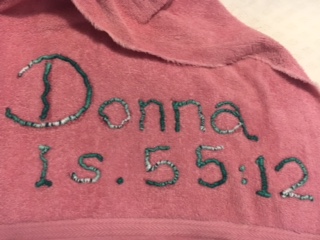
Donna Is. 55

I’ve had this towel for a long time. Such a long time that when my son Ian teased me about being 55, I could hardly imagine being that old.  Hah!

IMG_1220

ISAIAH 55:12 NEW REVISED STANDARD VERSION

12 For you shall go out in joy,
    and be led back in peace;
the mountains and the hills before you
    shall burst into song,
    and all the trees of the field shall clap their hands.


One of the things I had to leave behind in the great Pod Purge was the towel shown above.  I’d had it since the mid 90’s; it was fraying on the edges and had really seen better days.  I didn’t want to toss it, but I knew I should, so I took a picture of it as a memento.   Then I decided I should tell you the story behind the towel.

My first church appointment was in tiny Stillwater, NJ, in 1994. Stillwater is in the northwestern corner of the state, and is a lovely little farm community.  The kids and I had a wonderful time there, at Harmony Hill United Methodist Church.
One of the notable features of church life was the weekly meeting of the quilters’ group.  Most of the ladies were church members, but friends and neighbors were also welcome to sew and socialize every Monday. That’s how I met Margaret, the lady behind the towel.

Margaret was a member of a Lutheran church in the next town; in fact, she had helped build that church, brick by brick, as one of the founding families.  She asked to meet with me privately one afternoon, and tearfully explained that her church and her pastor refused to allow her to hold office in the church because in a Missouri Synod Lutheran Church, no woman is allowed to be in a position of authority over a man.  Why, you may ask?  Say it with me now – because the Bible says that women are to keep silent in church.
Now, my DUMC friends have just heard me preach, with my woman’s voice, on the ways that scripture is misused to silence women.  If you perchance missed my Swan Song sermon, you can find it in a post by that name elsewhere on this blog.  But back to Margaret.
Through tears, she told me of her long and faithful history with her church.  At 72 years old, she was now being denied a place in the ministry of her church, with the approval and support of her beloved pastor. She told me her story because she knew I would understand, and because she couldn’t go to her own pastor in her time of sorrow.

I don’t know if Margaret is still alive, since this all took place about 25 years ago.  As I was leaving Stillwater to continue my journey, she brought me this towel as a gift.  When I unfolded it, there was my name, lovingly applied in her handwork. She said that she put the Isaiah scripture on the towel as a sneaky little way of reminding me to pray for her whenever I used it.  She chose that scripture, she said, because it reminded her of me.

It still makes me sad to think of Margaret, and all the people who have been hurt over the years by the misuse of scripture. Do me a favor, will you? If you ever hear someone begin a sentence with, “But the Bible says…” be very very careful about believing the rest of that statement.

A Key-less Existence

One of the funny realizations that dawned on us is the fact of key-less-ness.  When you’re a homeless, car-less retiree, you no longer have keys. No office keys, no front and back door keys, no ignition keys.

Now the only key that remains in my possession is the one Craig gave me early in our relationship: the key to his heart.


We sold the dining room table

As we’ve packing in preparation for our departure, facing the task of paring down our worldly possessions to the size of a storage pod, we realized that we have to like something an awful lot to pay to keep it but not use it for the next two years.  Also, taking into consideration that we may be settling in Albuquerque, a lot of what has been acquired in Pennsylvania will just look silly in the southwest.  So we have been ruthlessly jettisoning. It’s become something of a joke for my friends to greet me by saying, “So what are you selling today?”

After some discussion, Craig and I decided to sell the dining room table and chairs.  The listing languished on Craigslist and Facebook for quite a while, but then we got a call from a sweet young couple who had just purchased their first house.  They came to see it, they loved it, they handed us a fat roll of twenties.  It’s a deal.

The husband was a master at fitting all the pieces into his vehicle, and they were soon on the way to their new home. They were clearly thrilled with their purchase, and we were happy for them. We waved good-bye, and stepped back into the house.  There was now a yawning hole where the table used to sit.  In unison Craig and I reached for our hearts and cried, “Oh!”  We both experienced a pang at the sight of that empty room. We’d spent a lot of time around that table – shared a lot of meals with friends and relatives, ate a lot of good food with people we loved.  It hurt to acknowledge the end of those times in that place.

Craig and I have seven kids.  Three of them now have partners, and there is one adorable grandchild.  Our tradition since 2006 has been to gather at our house on Christmas Eve for the late service, then exchange of presents, and a massive free-for-all sleepover.  Wall to wall kids, and we loved every minute of it.  On Christmas morning, pots and pots of coffee, a huge cheese tray, and the famous Reuben loaves for brunch.

Every year, we waited to hear that one of the kiddos wasn’t going to make it. We fully expected that they would be the reason things changed.  And now here we are, pulling the plug on the family Christmas tradition. Kids, do you forgive us?

Sometimes we had to sneak up on the locals

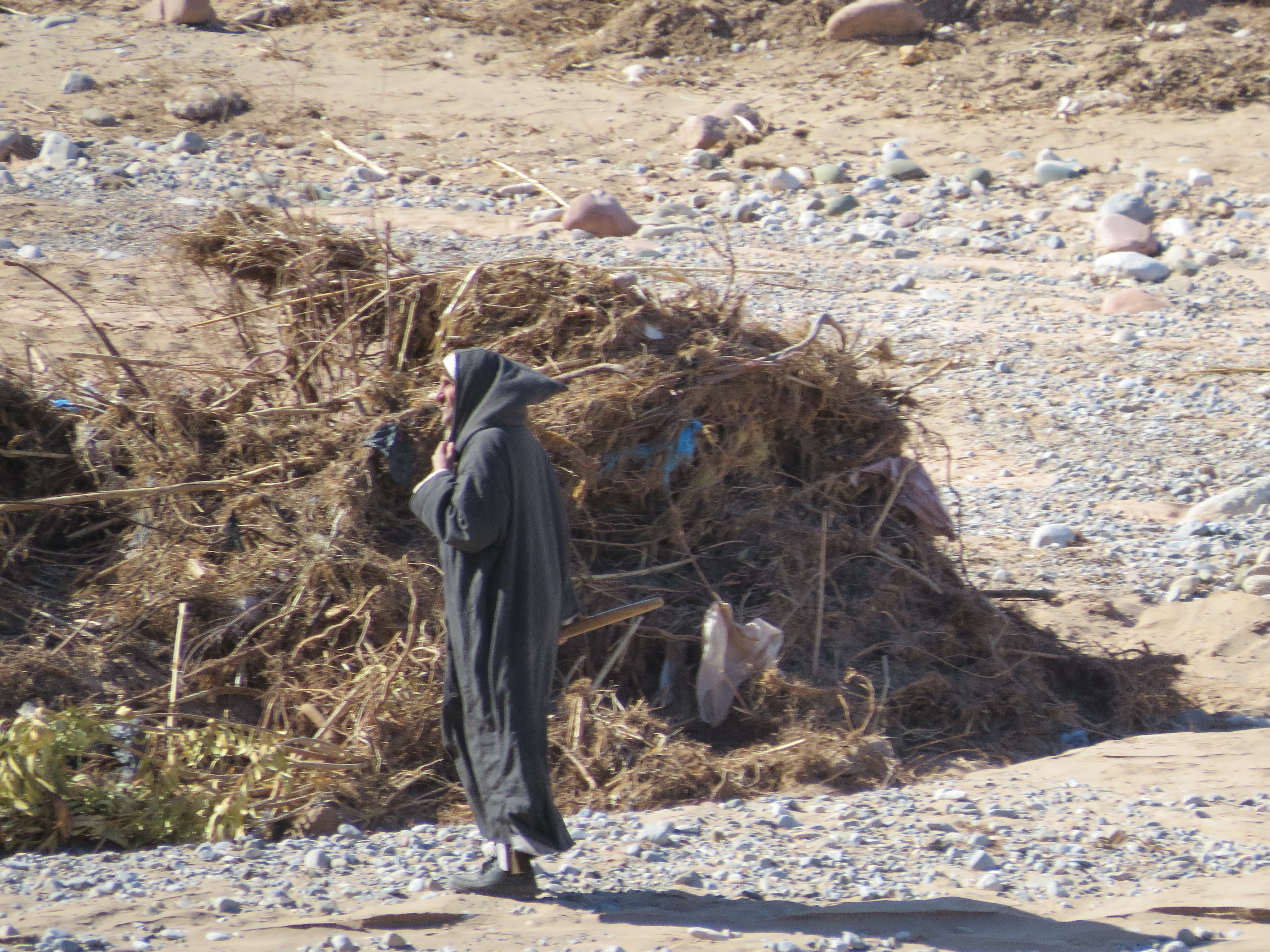
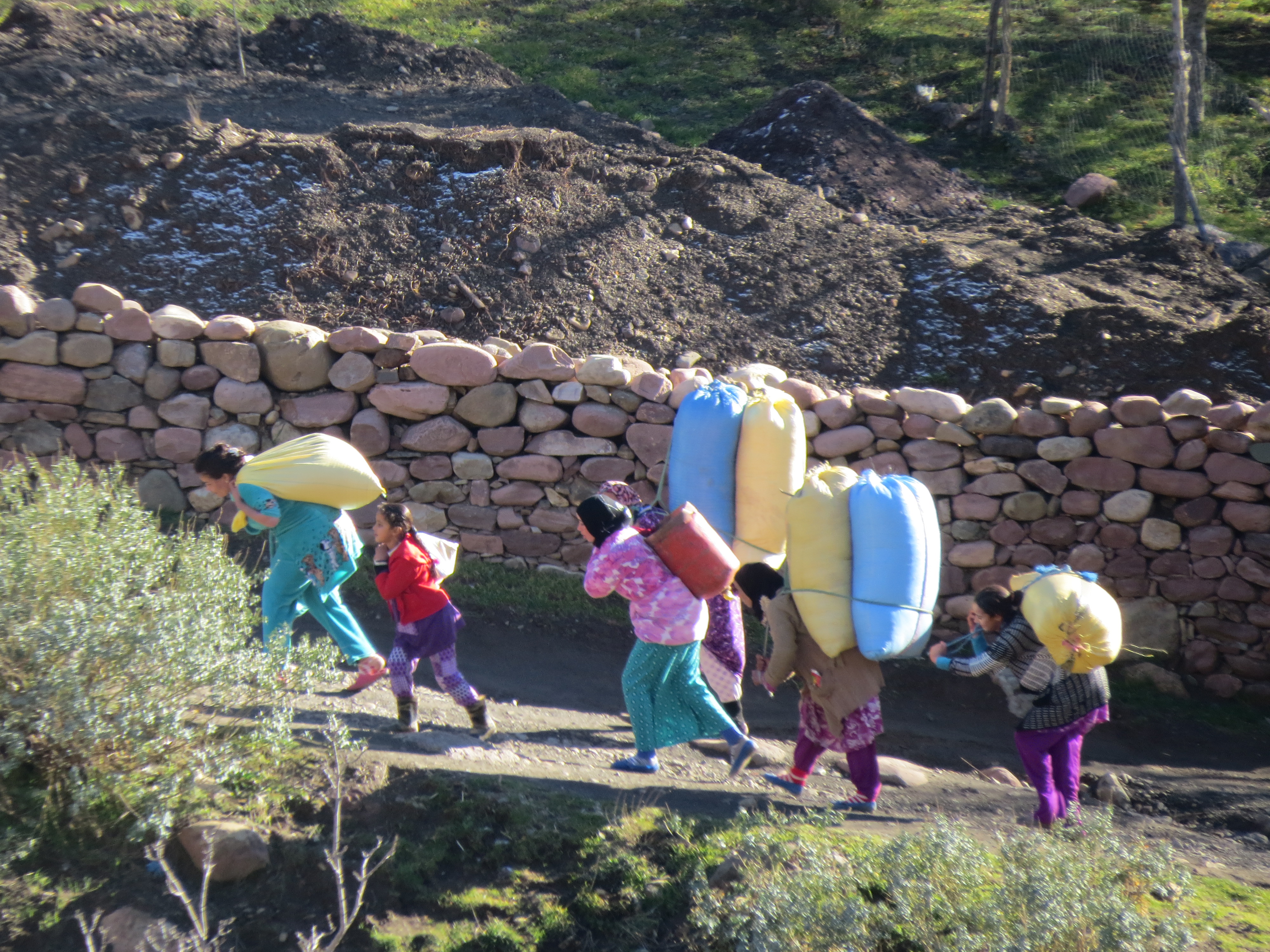
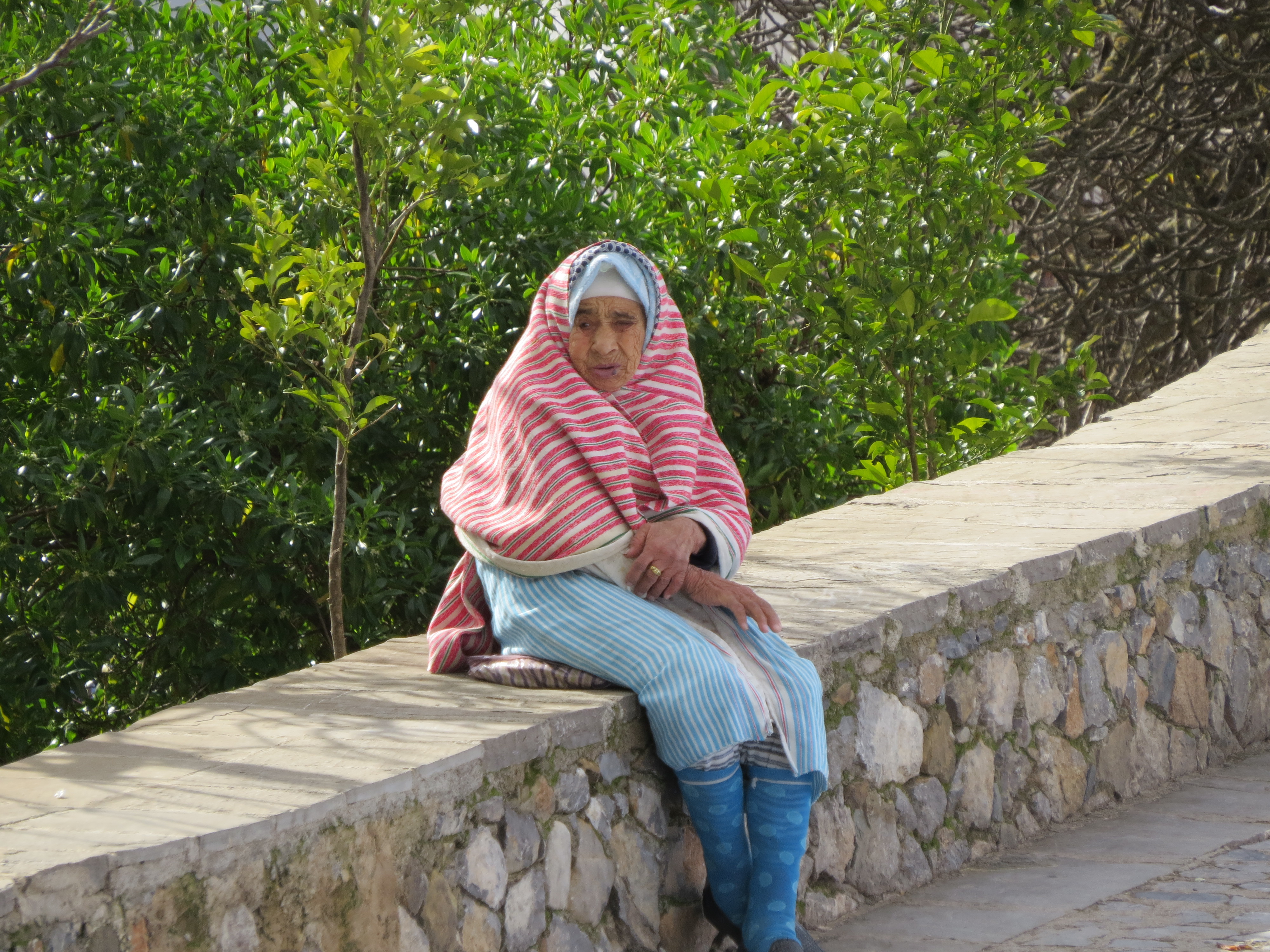
Some Moroccans are camera-shy. As far as I could tell, it wasn’t a religious thing, just a personal preference. Residents of smaller cities, who perhaps weren’t as accustomed to tourists, were especially cranky about having their pictures taken. We quickly learned to politely ask, and if turned away, to cope with the disappointment. We also learned some surreptitious shooting techniques, which resulted in interesting results.

Here are a few examples of my efforts to photograph people without them noticing me. Hint: a killer telephoto lens is extremely helpful!

Some parts of Morocco are still quite undeveloped, and old-fashioned, traditional methods of doing things prevail.

IMG_1285 IMG_1293 IMG_1296

You may notice an inordinate amount of litter in these photos. Unfortunately, that is the norm, not the exception. I witnessed many instances of people simply dropping trash as they walked along the streets. Plastic bags litter nearly every part of the country, and in areas where floodwaters had overrun riverbanks, the trees were festooned with this particularly indestructible form of garbage. I was sorely tempted to get out there and clean up.

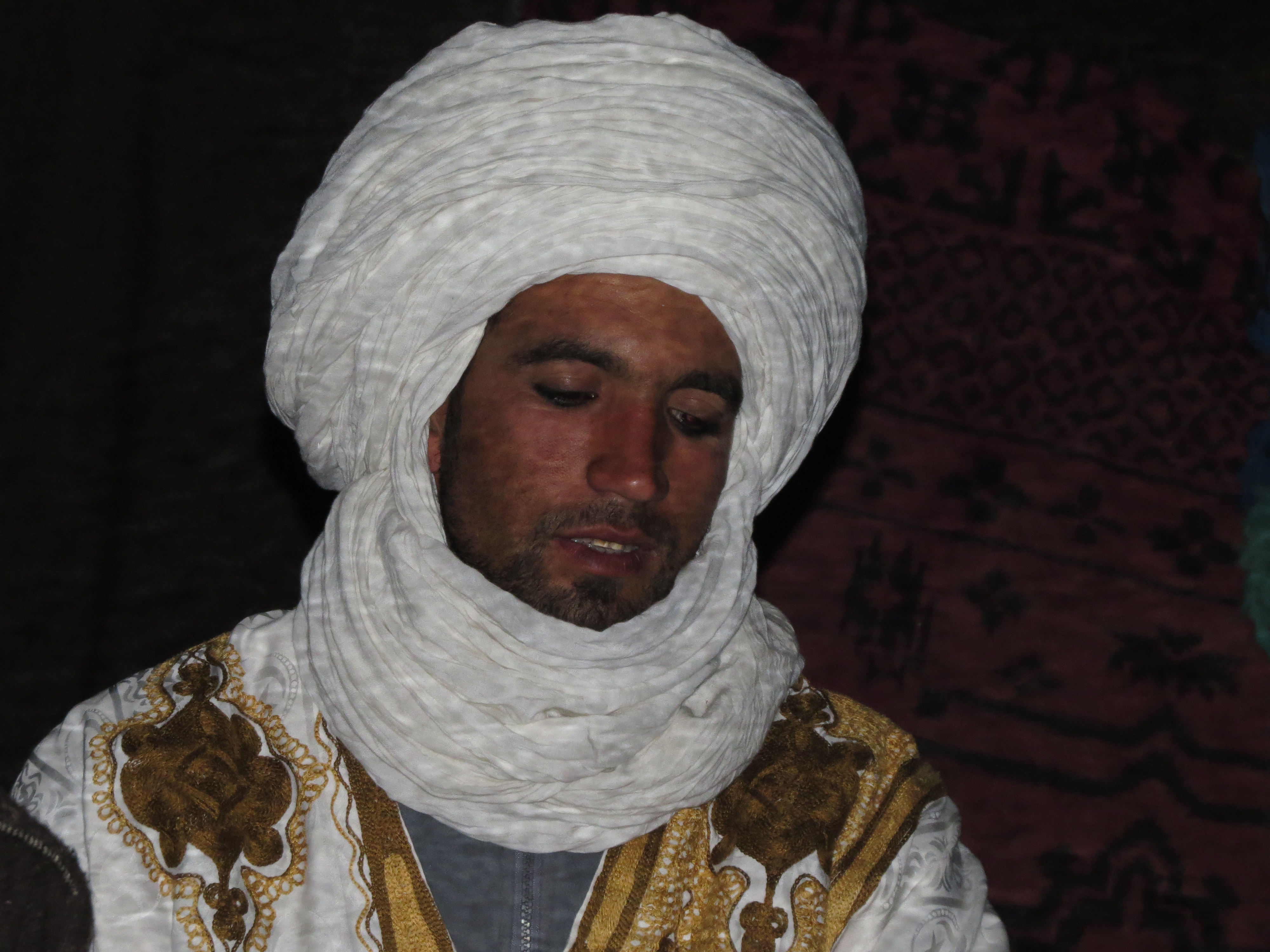
These three young men were part of our Sahara Desert adventure. They are from the Tuareg people, and are distinguished by the generous proportions of their headwrap. This is a very practical turban, and is useful for keeping the blowing sand out of one’s ears, nose, and mouth.

IMG_1600 IMG_1640 IMG_1698

These little girls magically appeared from nowhere, and displayed their trinkets in the Sahara Desert.

IMG_1662 IMG_1500

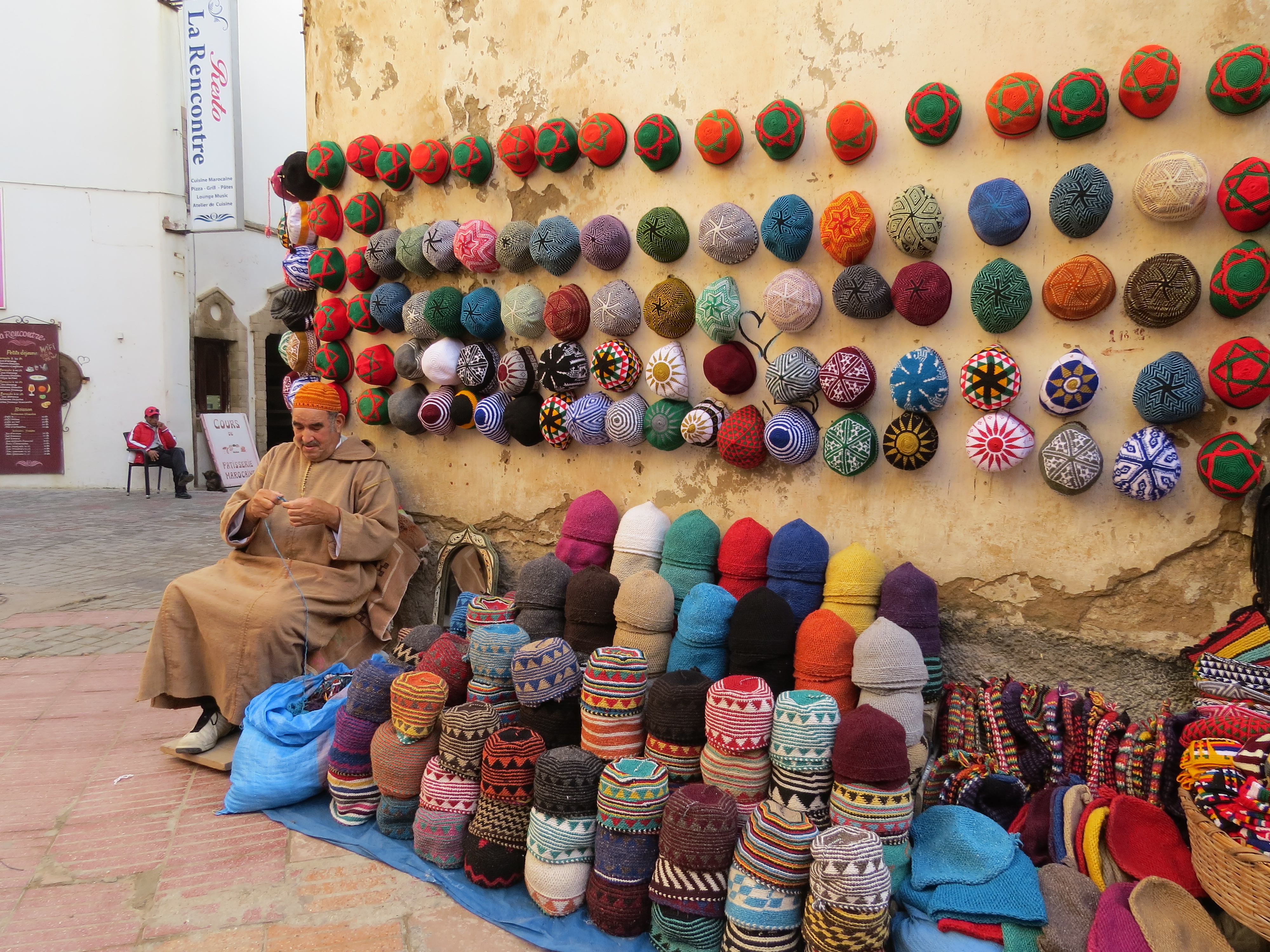
IMG_0748 Yes, he said he made them all himself.
IMG_0651 Selling the catch of the day on the sidewalks of the harbor in Essaouira.
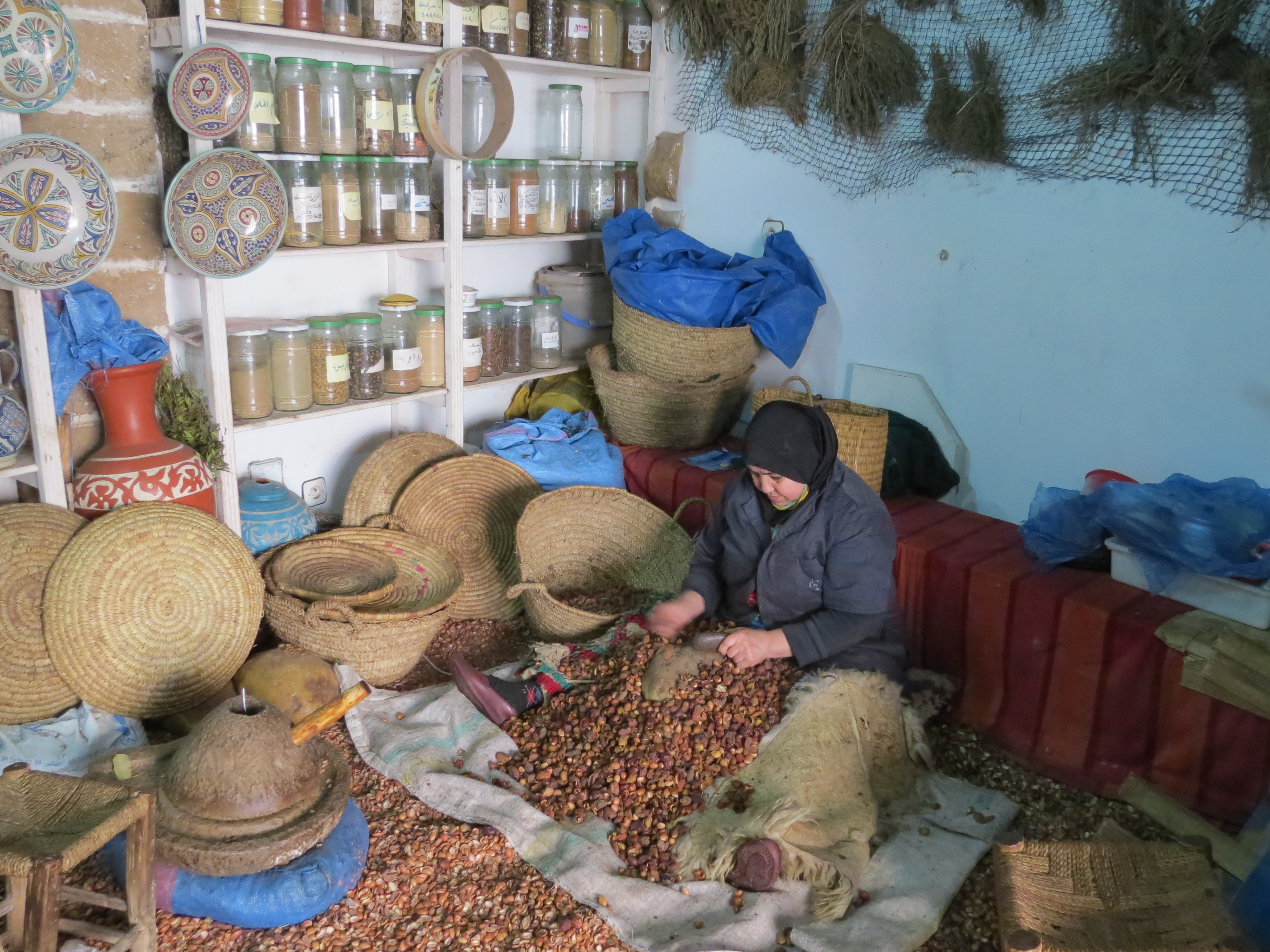
IMG_0857 This woman is sorting and shelling argon nuts, which are then ground to extract the oil, which is used in cooking and cosmetics.

IMG_0901

This man is playing a traditional Berber instrument, serenading us as we had lunch.

The dagger, we were told, was strictly for show and is not sharp.

IMG_0976 IMG_0996

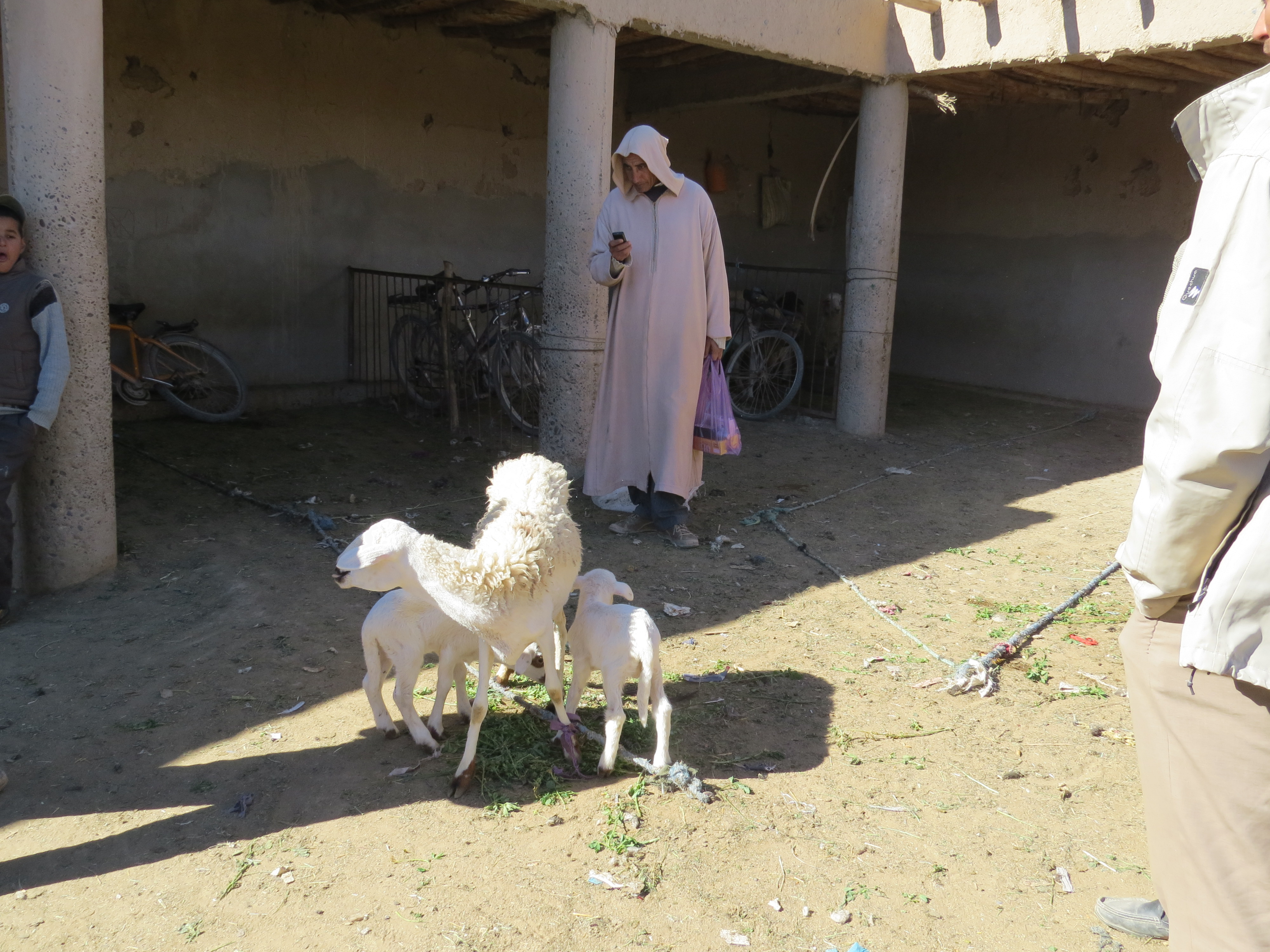
There’s just something funny about a guy in a traditional djellaba standing in the middle of the livestock market and checking his cell phone, isn’t there?

IMG_1762

As I mentioned, I was using a superlong telephoto to photograph these folks doing laundry the old-fashioned way, but I was spotted.

IMG_1781IMG_1783

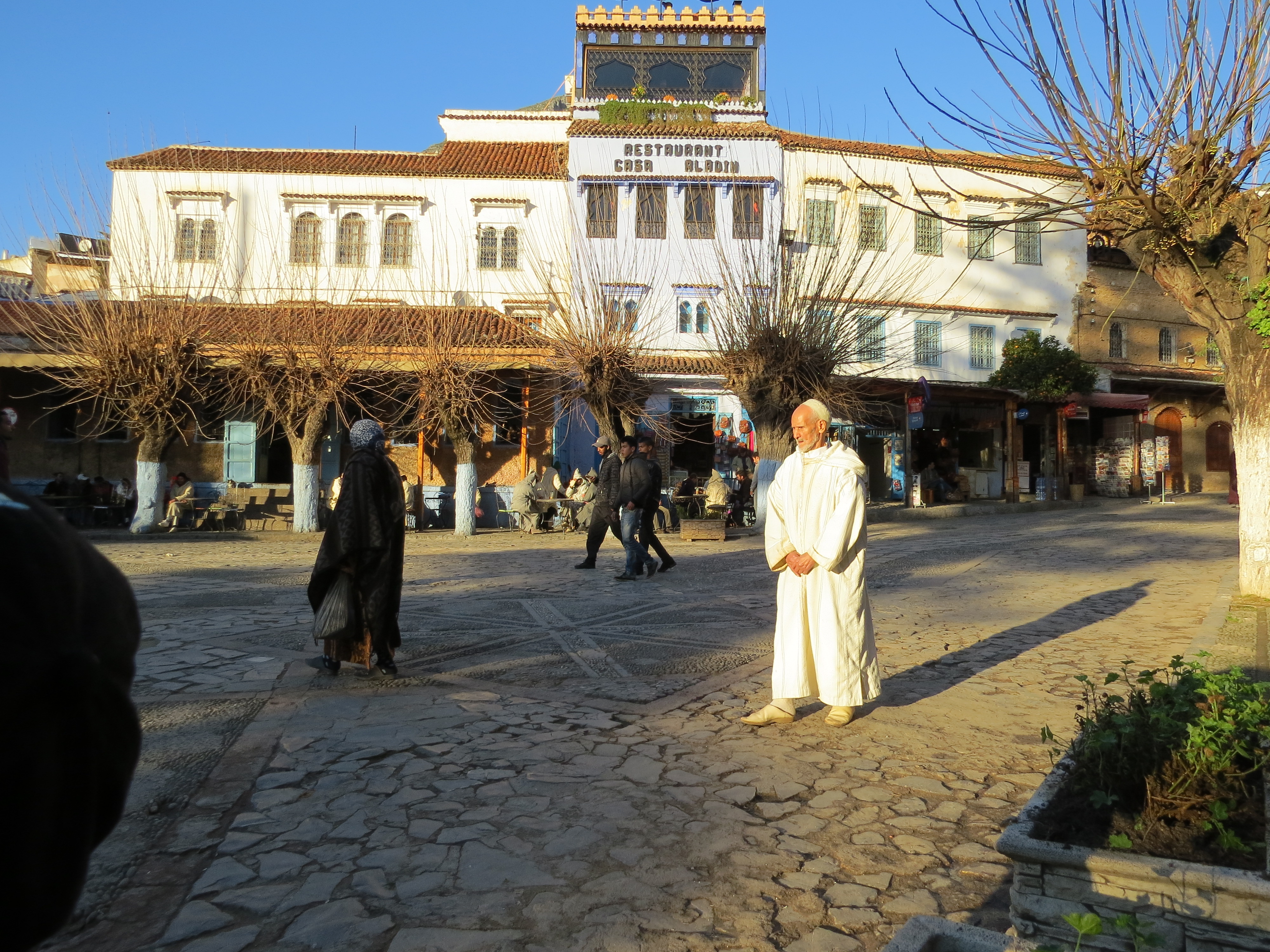
IMG_2337 No, he’s not a genie, but he does work at a restaurant called Aladdin’s Magic Lamp.

IMG_2139 IMG_2291

IMG_2420

See these cool pointy shoes? I have an identical pair in bright yellow, handmade by a little old man in Fez.

IMG_2508

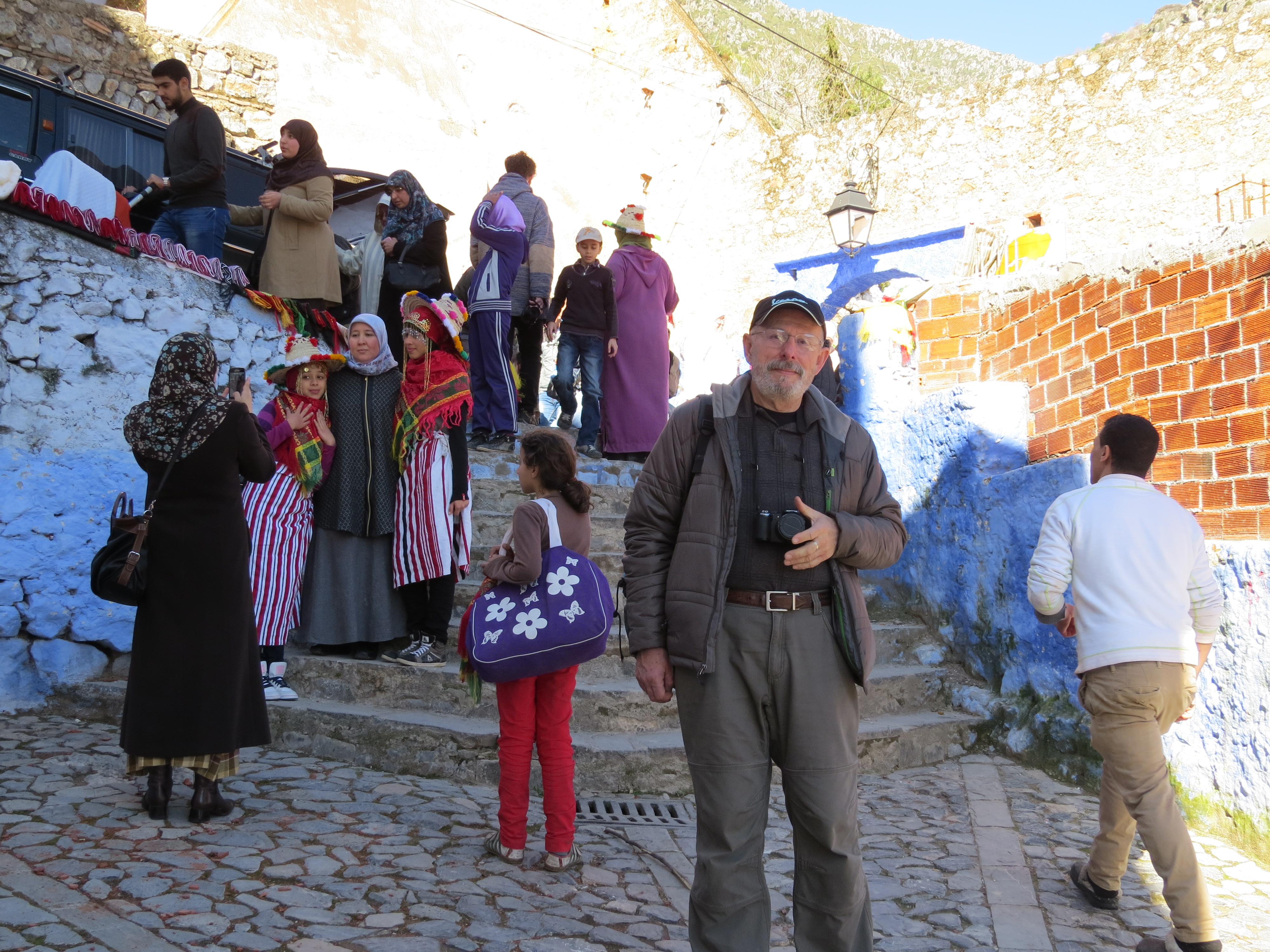
This young couple was having their photo taken by an enterprising woman who loaned out these accessories for “dress up” pictures. We were across the river at a cafe, watching them pose and taking our own pics.

IMG_2517

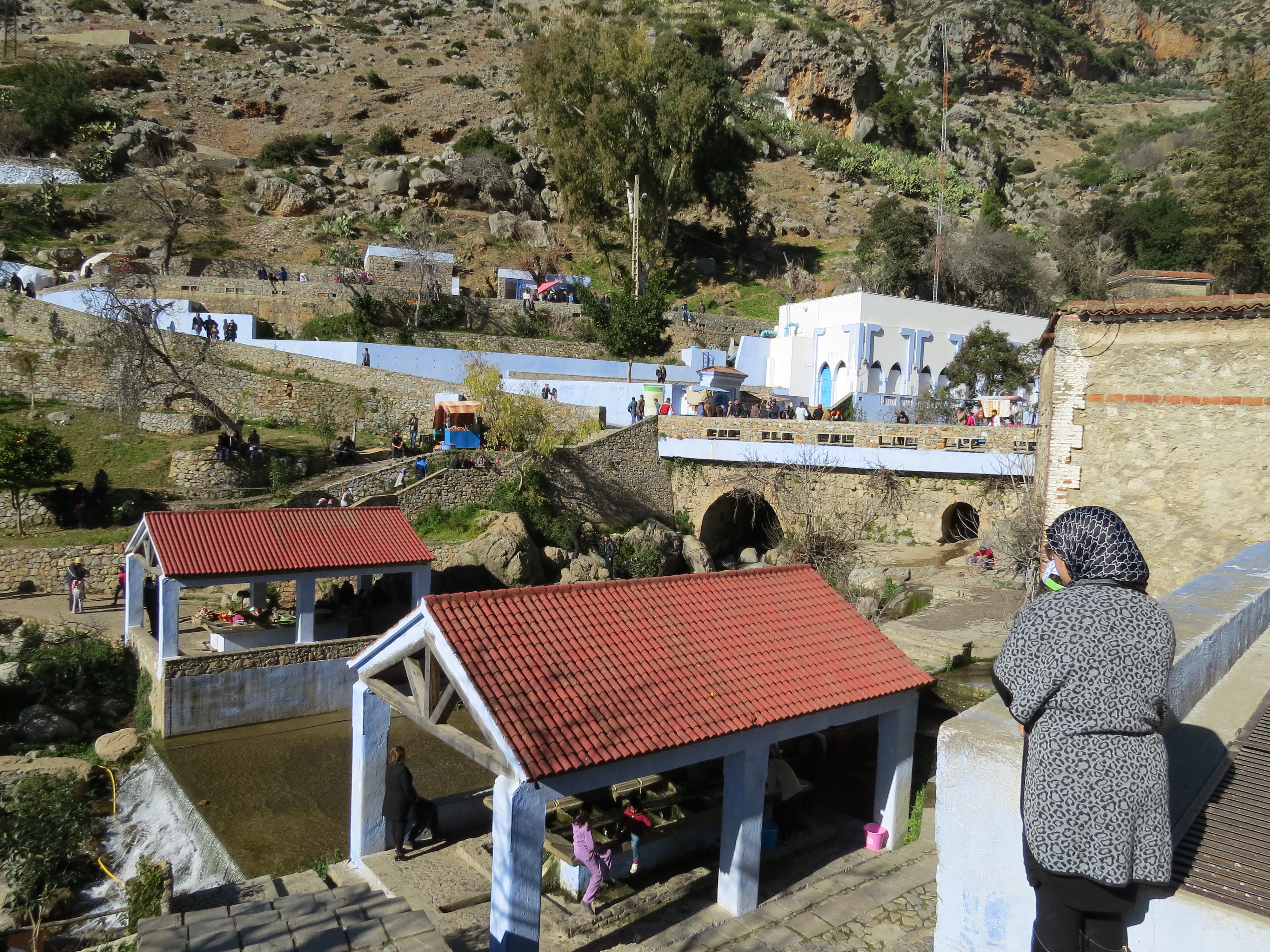
Believe it or not, these two red-roofed structures are the local laundromat. River water, ice cold, is diverted into large concrete troughs, and the women of the town (and the occasional single male) scrub the clothing, then spread it on bushes to dry in the sun.

IMG_2522

In one of our more creative maneuvers, Craig posed for a photo while I widened the angle to include some interesting townfolk.

IMG_2524

Firewood is a primary heat source, and people work hard to gather it.

IMG_2655

Meet the Comb Maker. He is 85 years old, and the last practitioner of his craft. His street was once lined with craftsmen who make combs from cow horns, and is named after the work that went on there. A couple of years ago, the Comb Maker was interviewed by a New York Times reporter, who then published an article in the travel section of the paper. We had happened to save the article, and brought it with us for reference. When we stumbled across his shop one day, we intentionally returned with the paper another time and presented it to him. He was delighted, since he did not know the article and pictures had been published. When he retires, there will be no more comb makers in Fez, and the alley in which he works will be renamed.

It’s hard to be a Berber

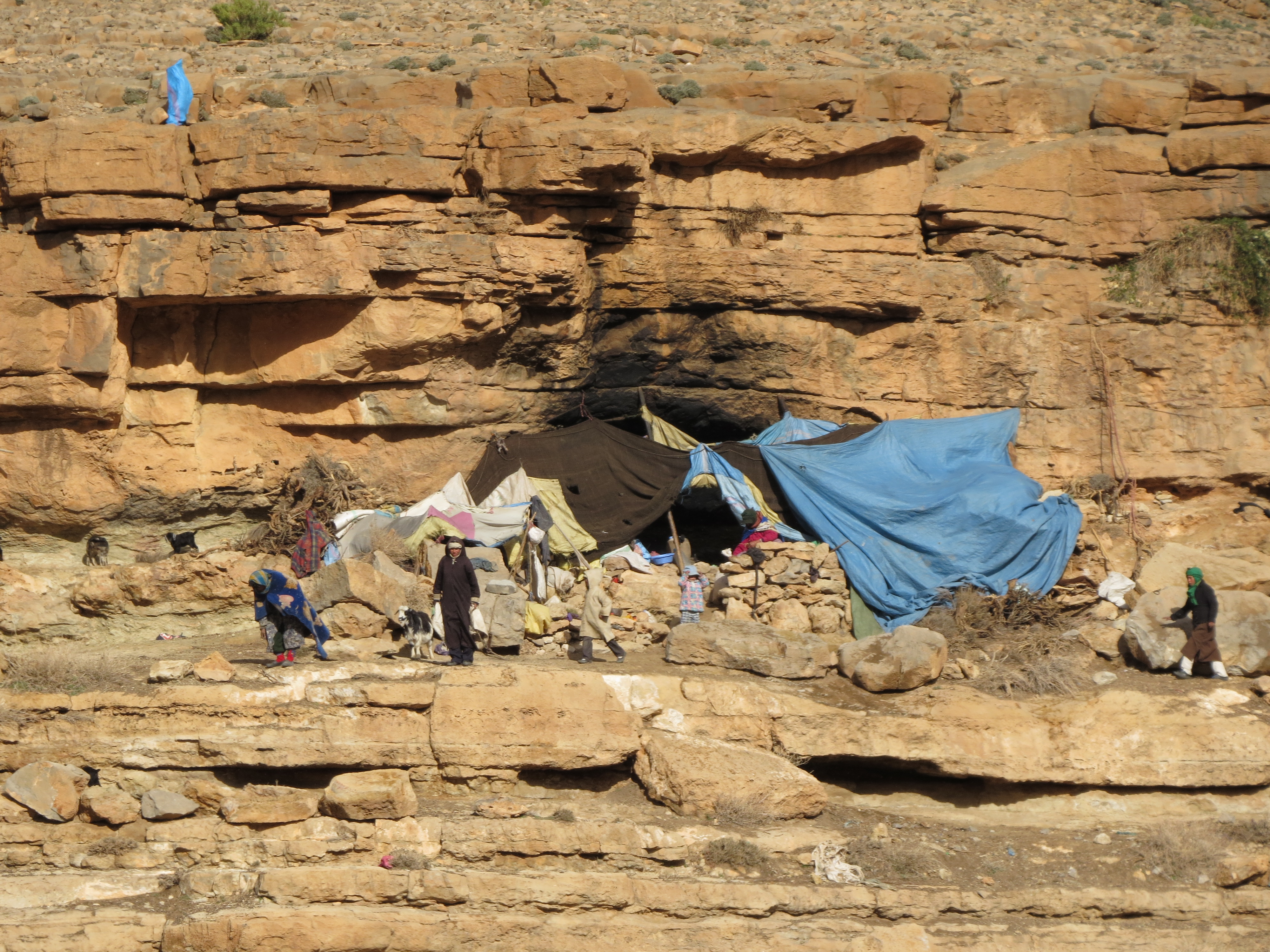
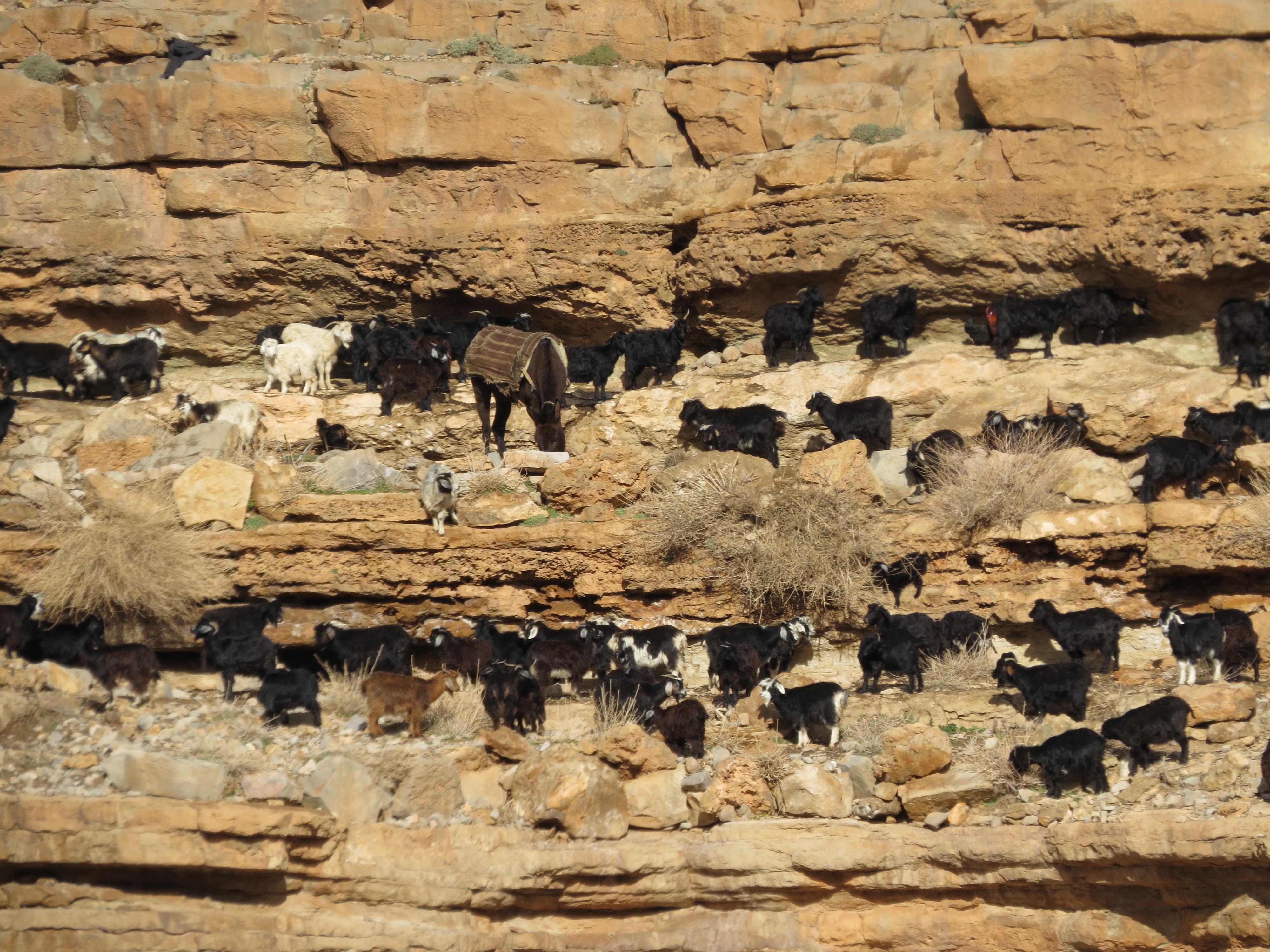
Morocco still has lots of nomadic people, who live in temporary, tent-like structures, and who move with their flocks in order to access good grazing lands. As we were driving through the area of the gorges, off in the distance we saw one such family. Their large flock was spread out across the rocky hillside. We stopped to take a few photos, confident that we wouldn’t bother them since we were very far away.

IMG_1417

IMG_1421

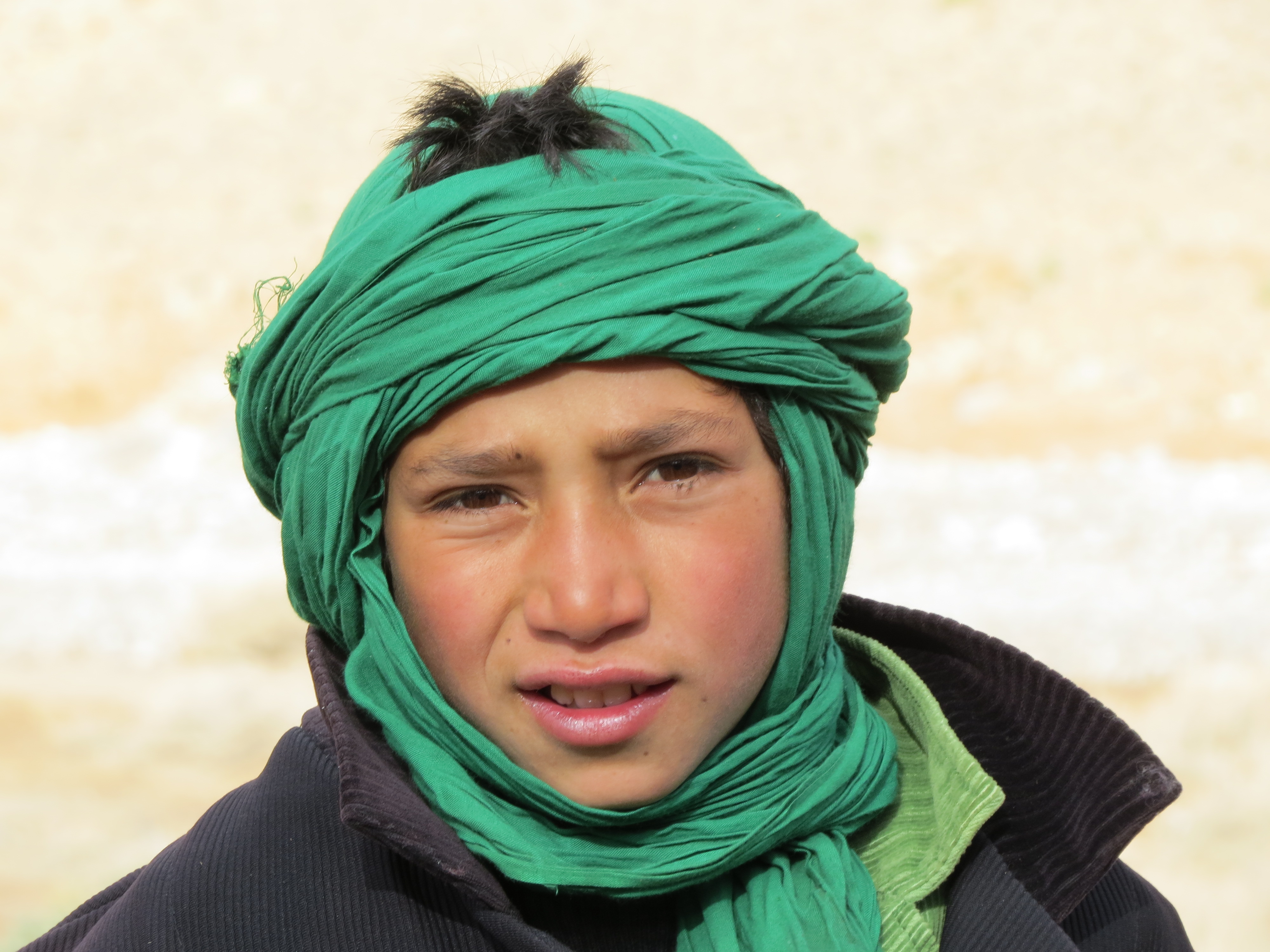
We hadn’t counted on the fact that the Berber children were as nimble as their goats.  Before we knew it, one of the youngsters ran down the rocky hillside and appeared at our car window. He and our guide Omar chatted in Arabic while, with his permission, we took more pictures.

After speaking for a few minutes, we gave the young fellow some coins and pulled away.  Curious, I asked Omar what the little boy had asked him.  “He wanted to know,” Omar replied, “if we had any clothes or shoes we could give him.”  I felt just awful.

IMG_1429IMG_1441

The Gorges: Dades and Todhra

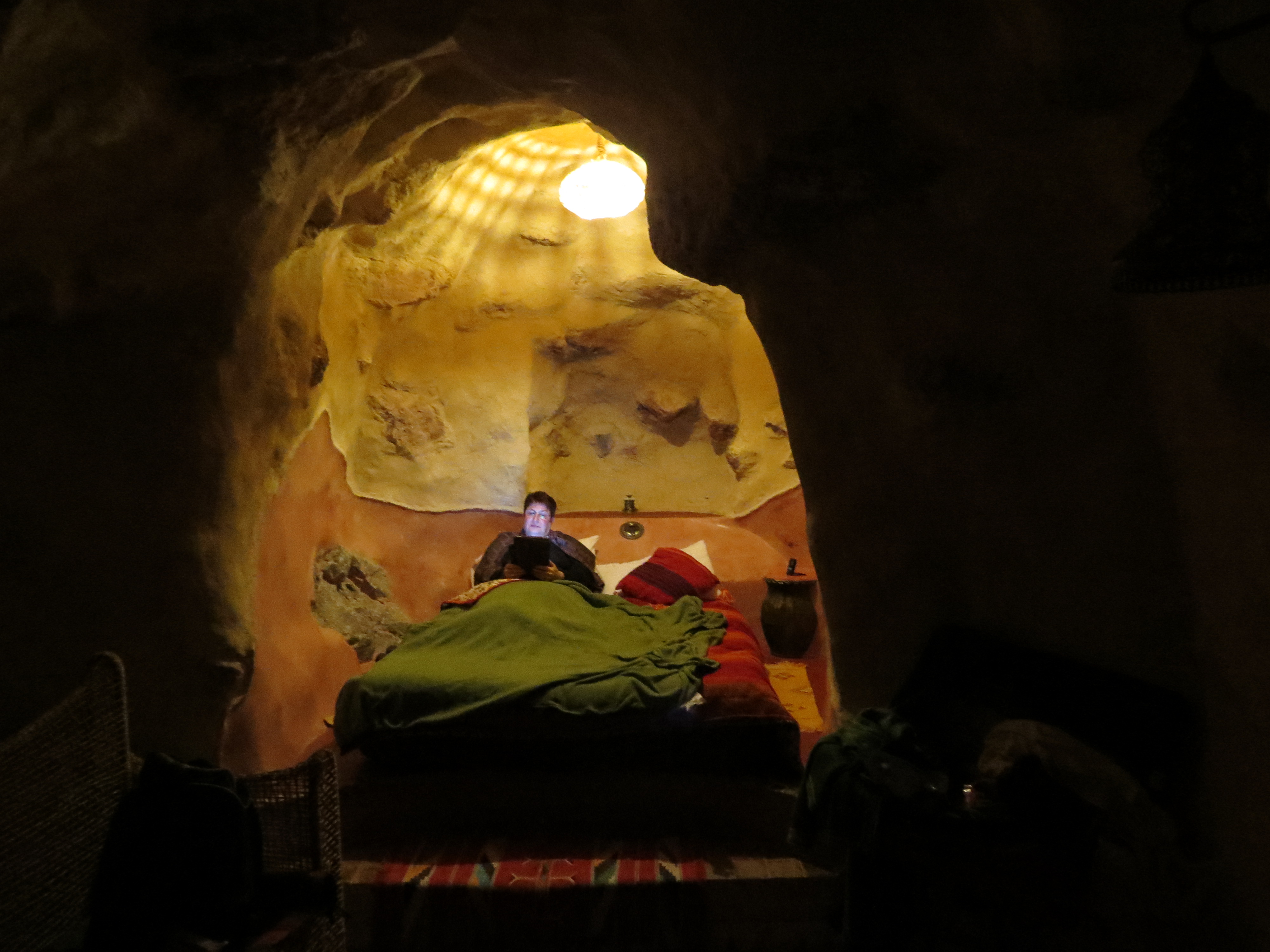
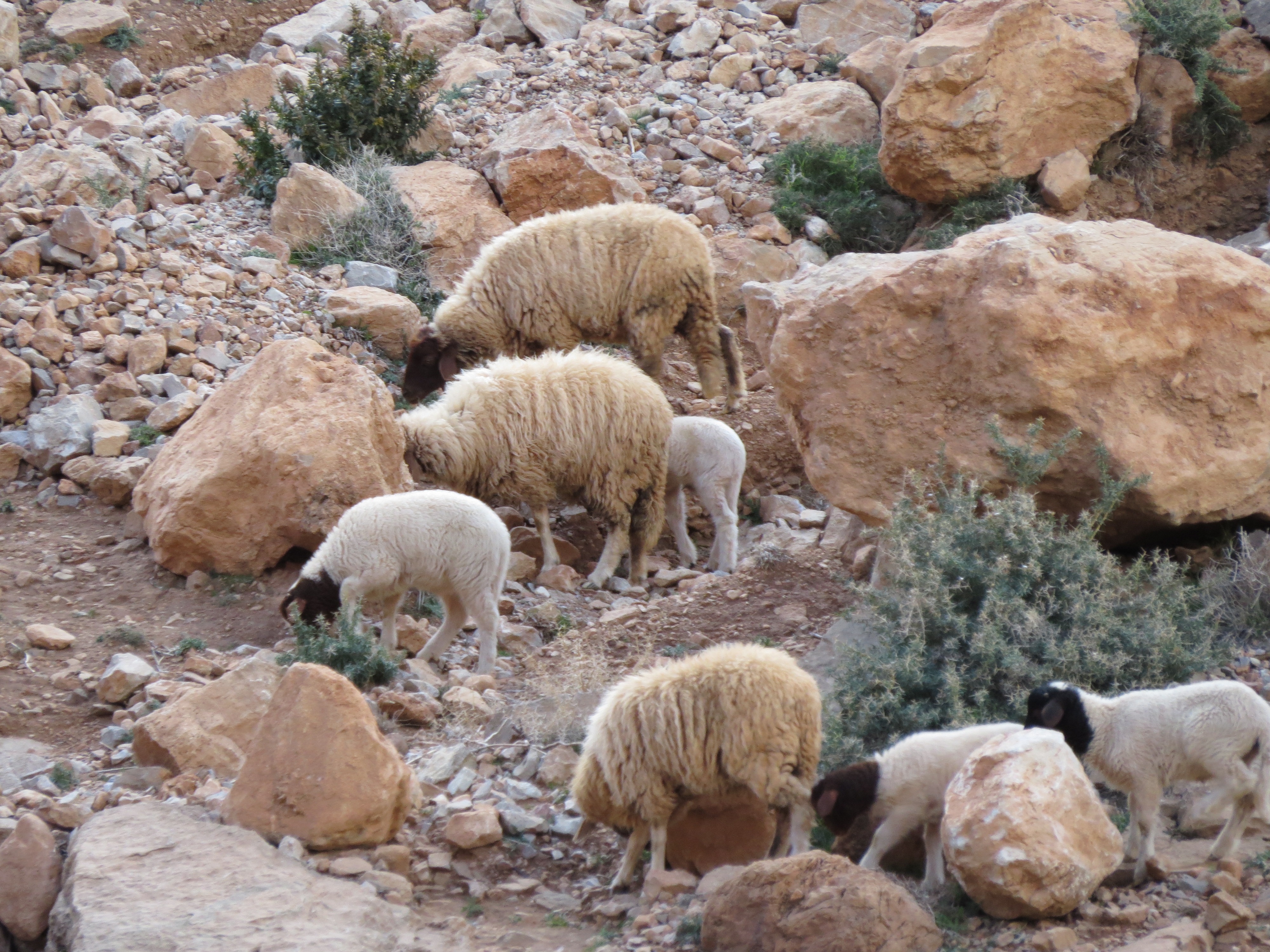
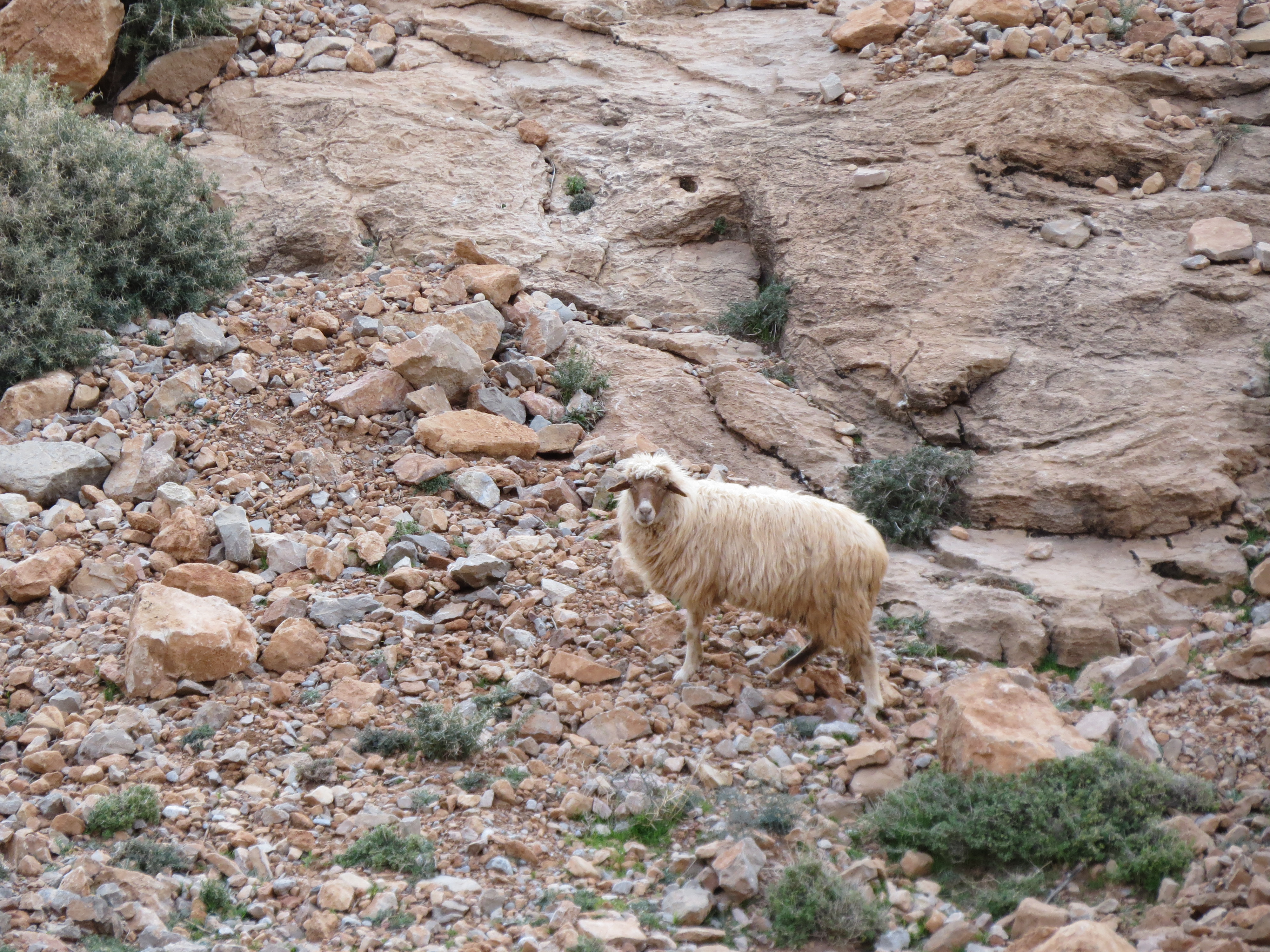
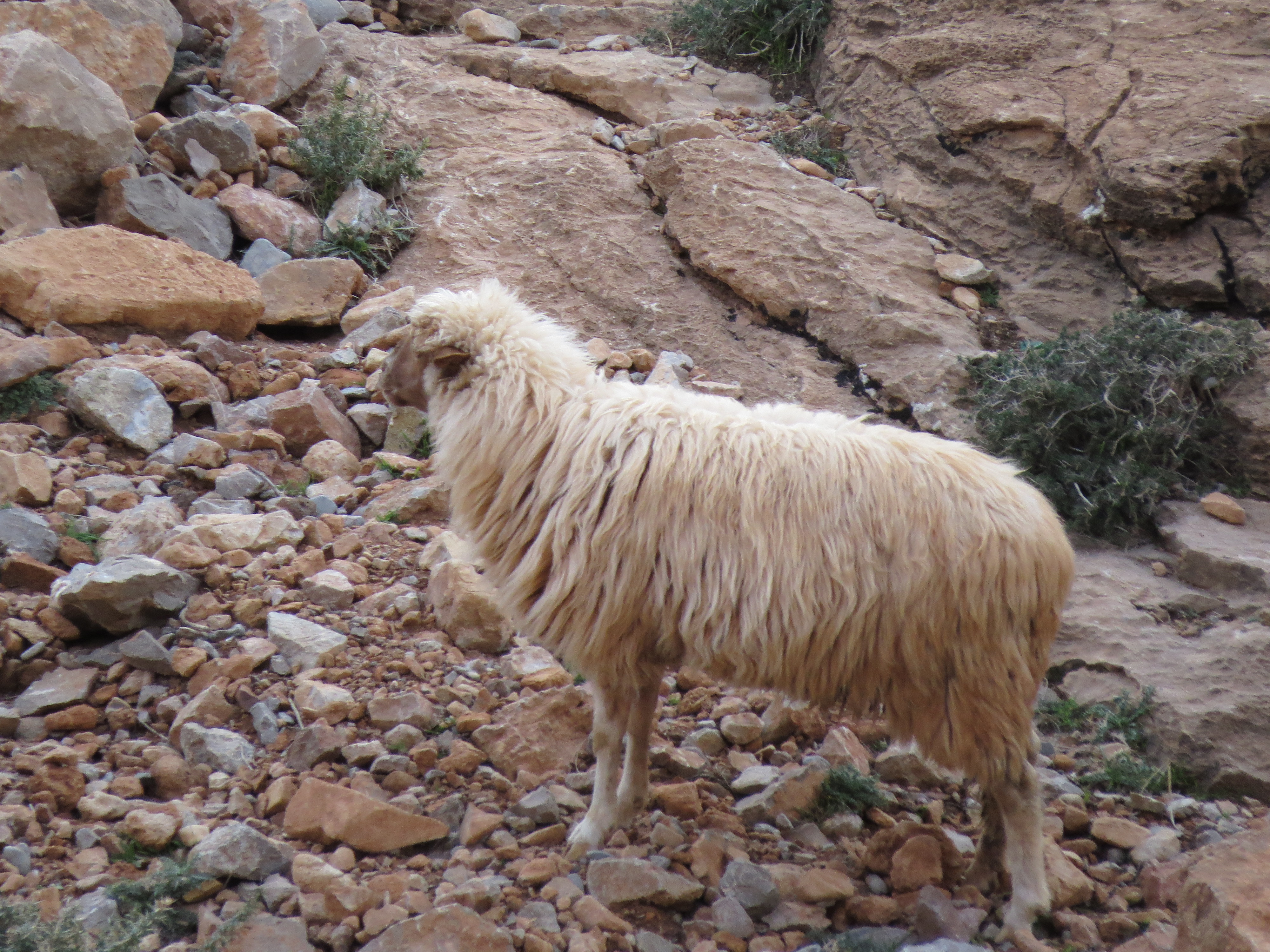
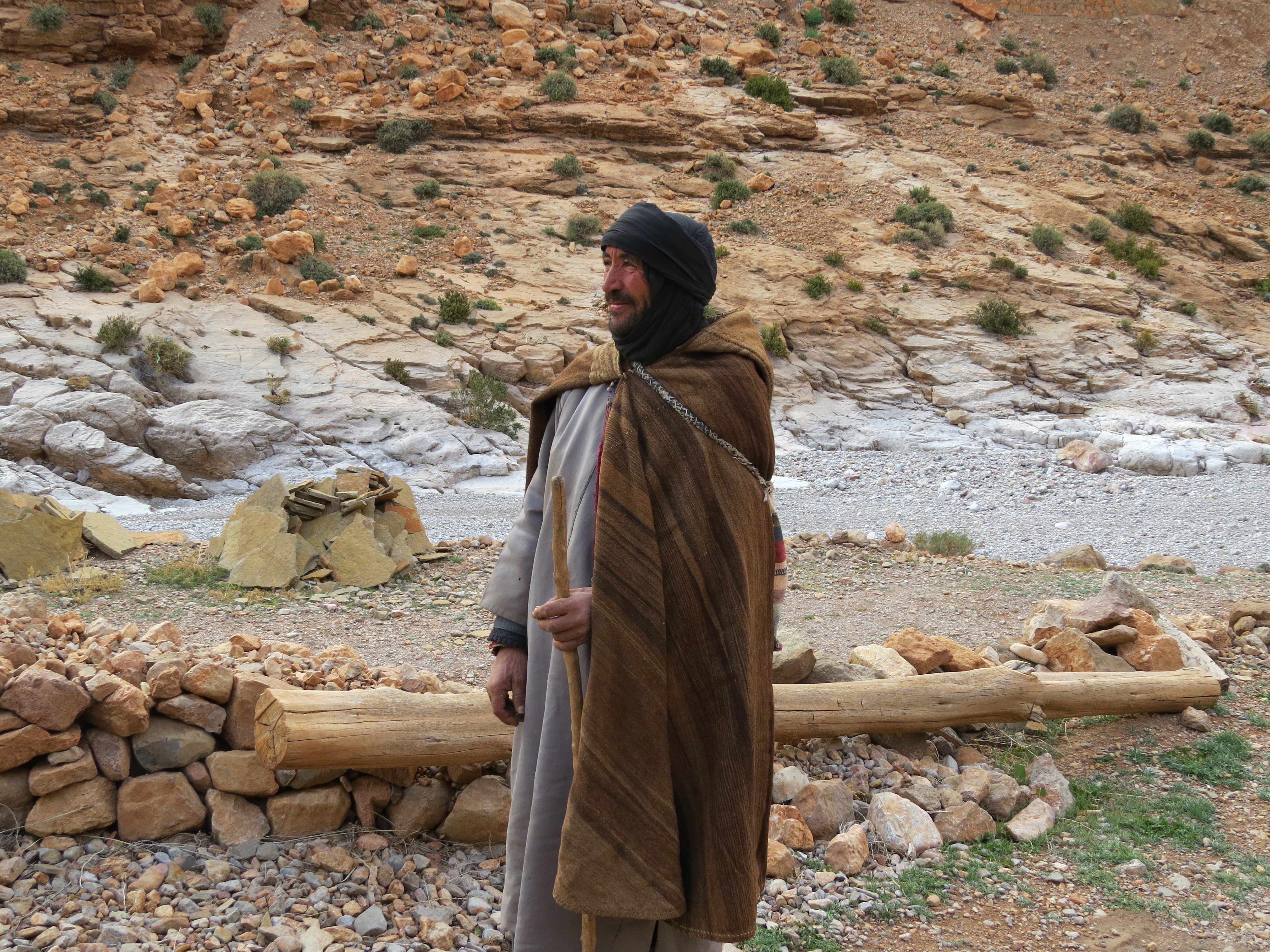
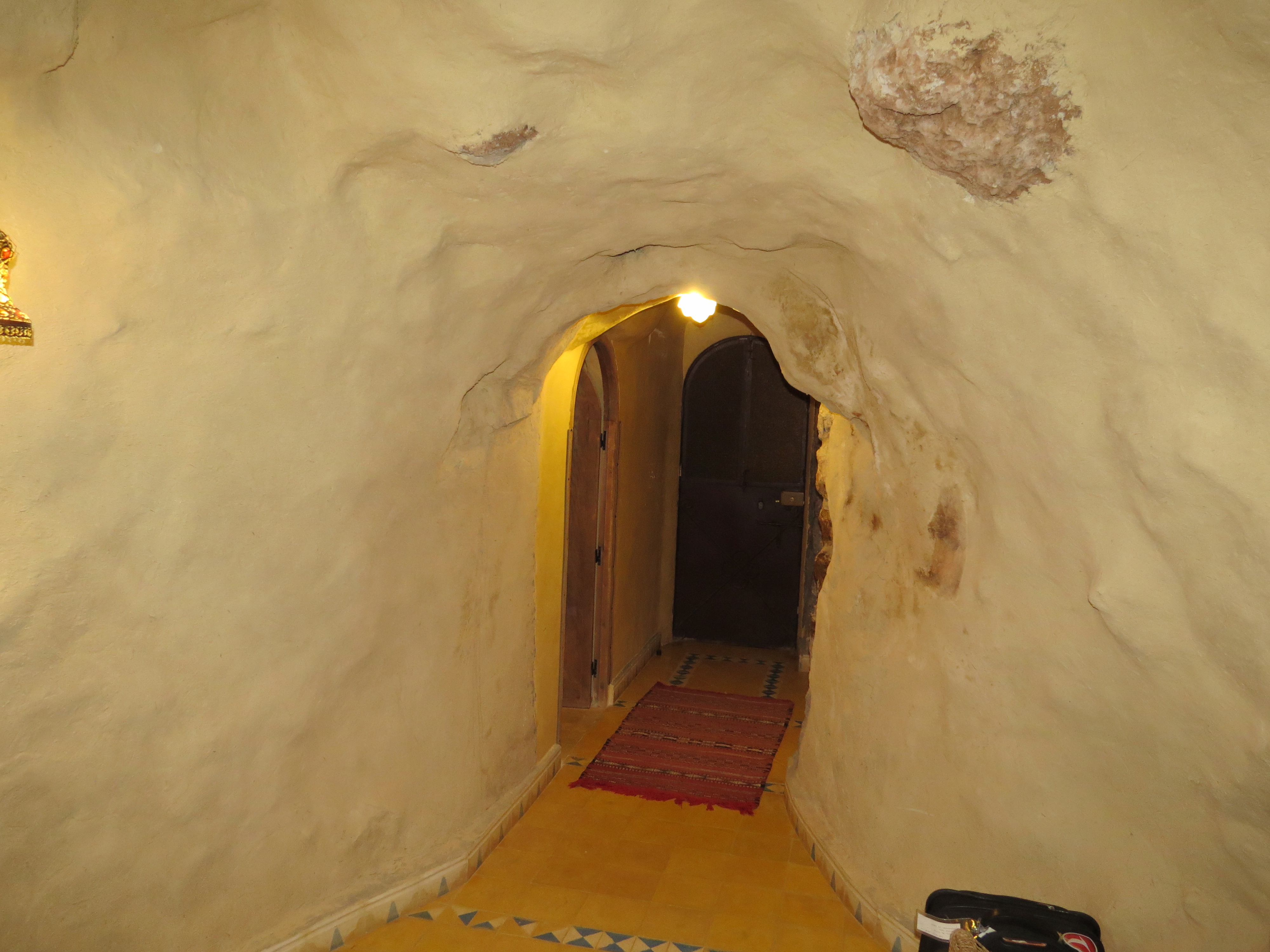
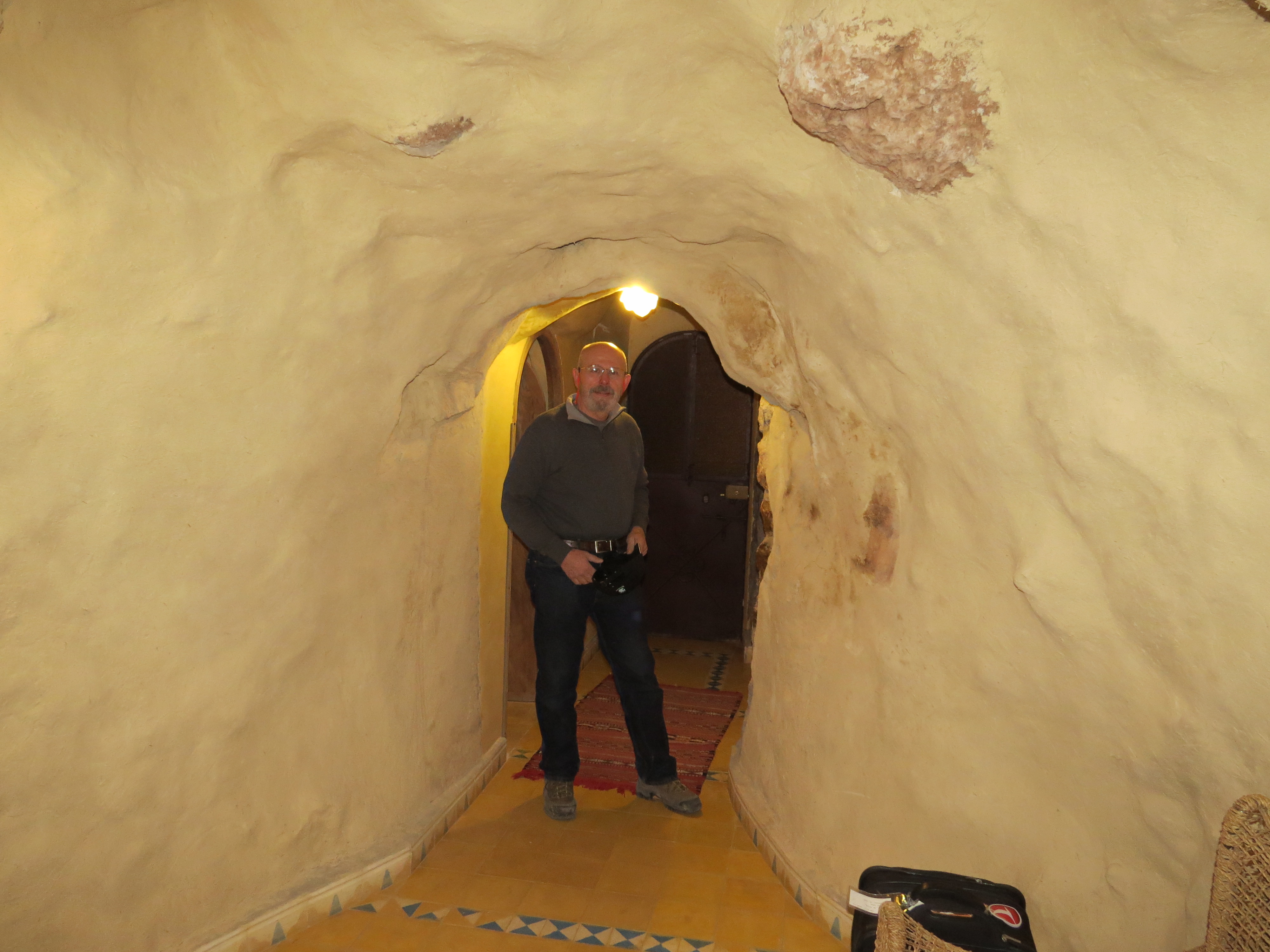
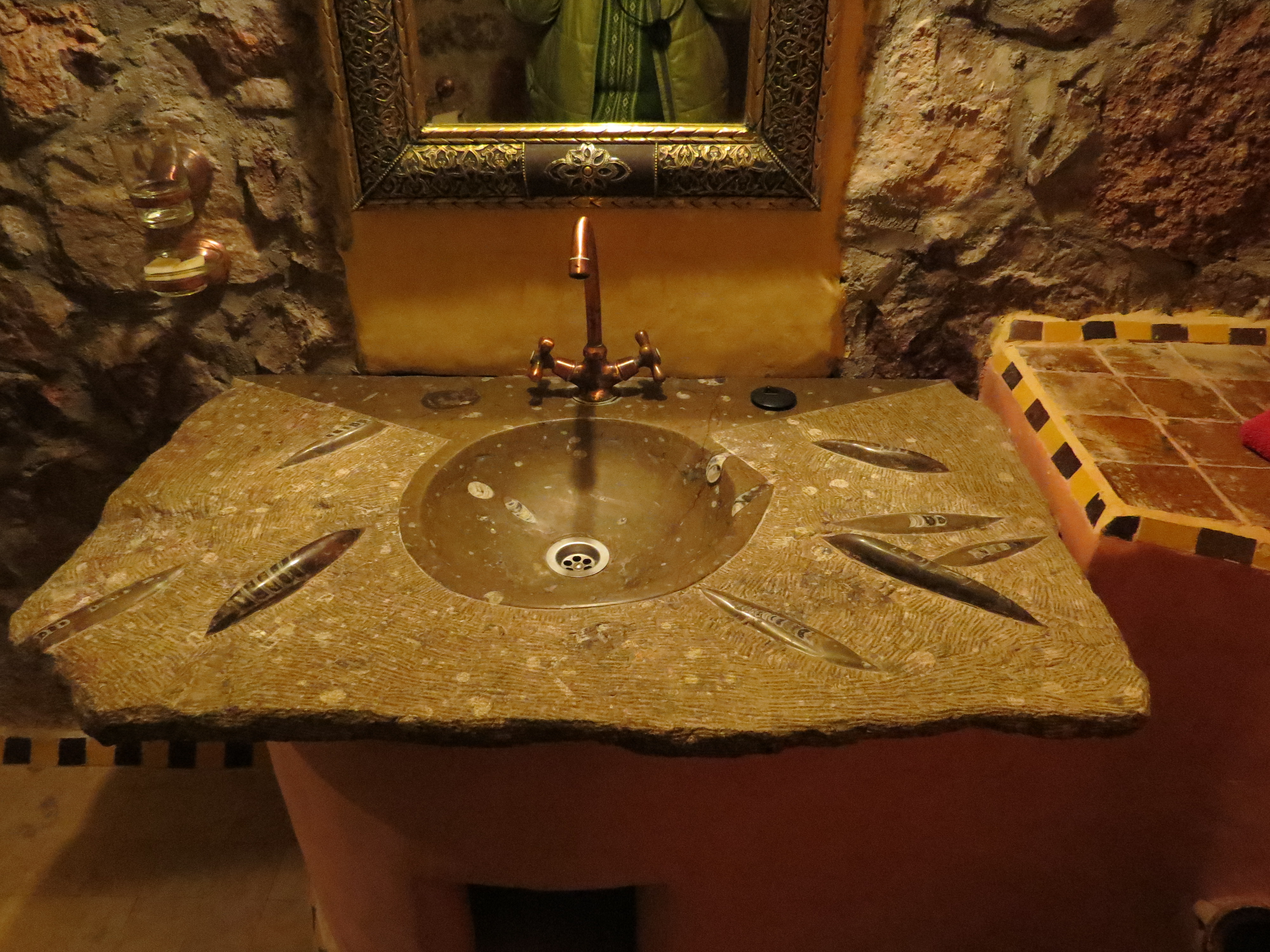
Again, I had no idea that Morocco was so geographically diverse.  We went from seaside to desert (posting those pics later this weekend) to snowy mountains to bright, sunny cities. These pics show our ride through the gorges. We stayed at a wonderful cave hotel called Auberge le Festival. Yes, that’s right – our hotel room was a windowless cave dug into the hillside.  It was absolutely elegant, and the best part was that it was toasty warm without a heater. The bathroom sink top featured wonderful fossils from the region. When we stepped outside our room to go to breakfast the next morning, we were thrilled to be greeted by a large herd of sheep and their friendly shepherd.

IMG_1369
Snug as a bug in a … cave?
IMG_1359
The front door is in the center of the photo. As you can see by the picture of Craig in the next frame, they build things on the small side.
IMG_1360
Low clearance!
IMG_1351
What an incredible vanity top!
IMG_1343
Driving through the gorges was kinda crazy. At points the road bed was flooded. I admit to a certain degree of terror.
IMG_1384
We heard tales of torrential rains that caused flash floods through the gorges. I was grateful we were there in dry season.
IMG_1382
Such a beautiful patio – it would have been nice to sit and enjoy the view, but it was about 35 degrees outside, so this was strictly a snap the pic and run occasion.
IMG_1381
Sheep.
IMG_1388
Sheep!
IMG_1391
More sheep!
IMG_1393
Sheep in profile. Noble!
IMG_1395
Clearly the patriarch of the sheep clan.
IMG_1401
Bringing up the rear was the shepherd.
IMG_1340
A view from the road.

IMG_1347 IMG_1397

This Berber shepherd was happy to chat with us, using his few words of English, and we were delighted that he allowed us to photograph him.

Fossils!

I had no idea that Morocco has significant fossils from the Jurassic period.  They are so plentiful that they are mined in quarries, and used in home decorating!  We went to a site that finishes and polished the fossils, and some of the final products were breathtaking.  I was sorely tempted to redecorate my bathrooms with a Jurassic theme.

The story that won me a trip to Fiji

My grandma always said that the women in our family were born wearing gypsy shoes, so it doesn’t surprise me that the love of travel has passed on to my children. I married a man who loves to wander, too, so in June of 2008, six of us from our blended family headed for Italy. After we visited Rome and Florence, we ended our 2 week trip with a few days on the beautiful Amalfi coast. My husband Craig and I, as well as our kids Angela, Jack, Sandra and Ian (in ascending order, ages 14-25) rented a manual transmission minivan as we were leaving Florence and headed south on the autostratas A1 and A3, into even more heat and sunshine than the country’s unusual heat wave had already afforded us.

The approach to Ravello.

After exiting the autostrata in Caiano, we found our Mapquest directions for Italy left something to be desired. Fortunately we knew that in order to reach our hotel in the little town of Ravello, we needed to head uphill.  We climbed up and over the beautiful, steep and rugged Lattani Mountain range, second gear all the way, before we then began the descent to the seacoast. Twenty-five map steps and 40 kilometers later, after too many hairpin turns to count, terrorized by speeding Vespas and wood trucks loaded with logs for the ovens of the local trattorias, we finally crossed over the mountain range. Switchback curves aren’t nearly as fun in a minivan as they are in a sports car. Take my word for it. Although the greater size of the minivan, necessary to accommodate the 6 of us with luggage for two weeks, turned out to be an advantage, as its height also provided dizzying, terrifying and absolutely spectacular views over the guardrails.
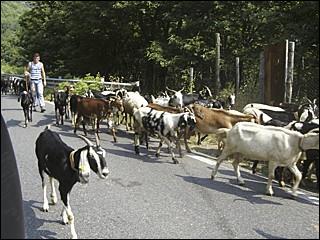
We knew we were getting close to our destination when we had to make a sudden stop in the middle of the road to yield to a herd of goats. Tourists that we are, we grabbed our cameras and hung out the windows to get the shot, while the goatherd gave us his best contemptuous stare over his designer sunglasses.Picture32

It’s very tough to choose just one pattern…

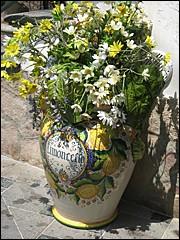
We had reserved rooms in Alborgo Torello, a lovely small hotel in Ravello. (http://www.alborgotorello.com – “Al Borgo Torello is a completely renovated building enchanting position where our guests can admire the incomparable view of the Amalfi Coast, from the peacefulness of our garden.”) Finding it online wasn’t nearly as challenging as finding it in real life. After several stops to ask for help, we ended up dead-ending on a very narrow farm road. The farmer, his daughter and son-in-law were nice enough to help us through a 15 point turn maneuver without landing us in a ditch, or crunching the fenders on that beast of a van. We finally found the entrance with the help of a local teenage girl, who simply looked up from where she was standing, pointed at the building on the hill right in front of us, and said, “There.” Oh, no wonder we didn’t recognize it! It really isn’t a hotel as such; it is a renovated home that dates back centuries, and it is now a 4 room inn with spectacular views of the coastal village of Minori. Roberto, the most congenial owner, has decorated the interior of his alborgo with beautiful ceramics from Ceramiche D’Arte, the business owned by his brother-in-law Pascal. If you go to one of their shops in Ravello and say, “Roberto sent me” you get a big welcome and a very fair deal on their gorgeous ceramics. Yes, of course we bought some! (Ravello Limoni Blue, in case you’re curious.) http://www.ceramichedarte.com/
After a day of hair-raising driving adventures, we were eager to get out of that van and into our hotel. Alas, in a simple parallel parking maneuver, Craig introduced the rear fender of the van to the neighbor’s stone wall. I then became the designated driver for the remainder of the trip, since I have been driving manual transmission vehicles since I was a pup. (Thanks, Dad.) The first order of business, after hauling our bags up the 18 irregular stone steps to the front door, was to cool off for a few minutes in the highly efficient air conditioning, and then head to the town center of Ravello, and the Piazza Duomo.

Picture31
The piazza in Ravello.

We visited Ravello just days before the town’s famous Music Festival, and we were able to watch some of the preparations while avoiding the crowds. The soundstage was being erected at Villa Rufulo one night as we were having dinner at The Garden Hotel’s restaurant, an outdoor cafe that overlooked the concert site. The stage actually hung off the cliff, providing concert-goers with a fantastic visual backdrop of the Mediterranean Ocean to complement the music. We enjoyed a delightful dinner with lots of fresh seafood, and the waiter presented our check accompanied by glasses of limoncello liqueur for everyone. Don’t let the stuff fool you – it’s not the innocent glass of lemonade it seems. There was a lot of giggling at the table once we all polished off those drinks.
On other visits to the village, we strolled about the piazza mingling with the local families, and eavesdropped on brides planning destination weddings in Amalfi. We agonized over which ceramics pattern to buy. We explored every little alley, footpath, and stairway we could find, and were rewarded with spectacular views, hidden gardens, vineyards, and ancient churches.
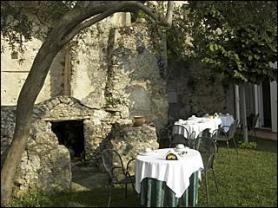
Each night we straggled back to the inn, a mere shadow of the enthusiastic party that had departed that morning. Then after a good night’s sleep, we reassembled in the garden for a fabulous breakfast, served by the unfailingly charming Roberto. He provided cup after cup of cappuccino, which was a delicious accompaniment to the fresh croissants, fruit, cheese, coffeecake, and yogurt unlike anything we had ever eaten in America. As we enjoyed our meal each morning, shaded by an ancient olive tree, we admired the view of the village of Torello, and the surrounding lemon groves.

The breakfast spot was so beautiful, it was hard to leave!
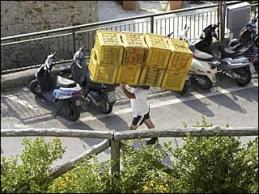
The crates for the lemons, being carried the old fashioned way.
Donkey trains carrying construction debris.

We appreciated the fact that we were staying in a neighborhood, rather than a more touristy place, as it afforded us a chance to observe daily life. One morning the harvesters were out in full force, picking the huge lemons, piling them into large plastic crates, and then hauling them out of the groves on their backs with only pieces of foam to cushion their muscles. Another morning, we heard an odd clip-clopping sound, and hurried to the garden rail to discover its source. We were amazed to see a small mule train descending the steps on the hillside just below our garden. Each animal was carrying metal saddlebags loaded with renovation debris. The builders used mules since large construction vehicles would not have been able to pass through the narrow passageways. This struck us as such a contrast to the tower cranes being used to erect high-rise buildings, less than a mile away.
On our adventure trips back and forth to Amalfi, we quickly learned that the traffic signals seemingly without reason in the middle of nowhere indicated when the road became a one way. If the light turned red in our direction, that meant that several dozen compact cars, buses and scooters piloted by hell-bent-for-leather drivers were headed our way on the narrow road, so we needed to stay put until we got the green signal. This could take a while, as we learned when the truckful of workers in front of us unloaded, and stretched out on the grass for a cigarette and cellphone break.

“Due pagnotte di pane, per favore!”

Amalfi is a sparkling, very popular resort town, and 95 degree temperatures didn’t keep the crowds away. There were hordes of smiling tourists strolling, shopping, eating, lounging, sweating, picture-taking, sunbathing. We parked the kids at the beach for only 10 euros per person per day, umbrella and lounge chair included, and headed into town to explore. Craig is really good with directions, so I trudged along after him, whining and threatening heatstroke, as we hiked through streets filled with shops and churches. The side streets were purposely designed in convoluted configurations, in order to confuse invading pirates in centuries past. On one of these crooked little streets, I had to stop and ask myself what century I was in, as I watched an elderly woman lower a basket on a rope from her third story window, to the bread delivery person who stood waiting below.
Picture28

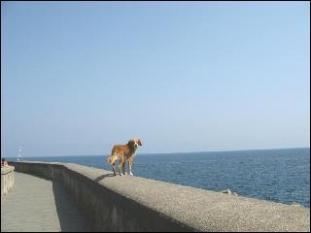
A few steps farther along, we came across a playful group of choirboys, looking angelic in their robes as they ran past. We were also joined in our walk by a friendly little dog-about-town, who kept us company for a while, graciously accepted a drink of water from the kids’ cupped hands, and escorted us back to our parking spot at the end of the afternoon.

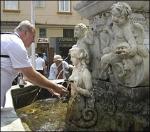
My husband’s favorite fountain.

Eventually we found ourselves in a small tunnel, which led under the Duomo di Sant’Andrea and out into the Piazza Duomo, with its many cafes and wonderful fountain. We quickly learned that fountains in Italy are meant to be used – everyone splashed some water on their faces, refilled their plastic drinking bottles, and paused for a few moments’ rest on the ledge. We drank the water from nearly every fountain we came upon, in Rome, Florence, and the Amalfi Coast, and experienced no problems with it whatsoever
Our agenda for day 3 included a boat ride. From Amalfi, one can ride the passenger ferry east to Salerno or west to Positano, Capri, and Sorrento. We opted for the half-hour ride to Positano. The short cruise offered us an opportunity to see the imposing coastline as the invaders did centuries ago. Ruins of ancient watchtowers still dot the coast, and the engineering feat of the archways and tunnels of the strada statale (state road) number 163 are visible in many places from the water.
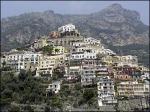
The ferry landing in Positano is in the center of town, next to the Spiaggia Grande. From the beach, the town quickly rises up the hillside. The peaks of the surrounding mountains are often hidden in the clouds.
The walking tour of each town begins in the Piazza Duomo – the cathedral plaza. Every town has one, and Positano was no exception. We quickly learned that Craig’s obsession with exploring every nook and cranny paid off in terms of finding lower prices the farther we traveled away from the beach.
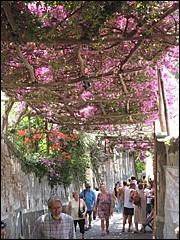
Via Del Mulini is the central shopping street in Positano, and it heads uphill, away from the beach. A lovely stretch of this narrow walled street is shaded by a trellis of bright pink bougainvillea, and both sides are lined with vendors selling handcrafted jewelry, artwork, and snacks.Picture29
We explored a side alley filled with restaurants, little clothing shops, and shoemaker stalls as small as closets. Here the leatherworkers sit out front, making the sandals according to the measurements they have just taken from the customer who was walking by. At the top of the lane, we refreshed ourselves with the best Italian ice in existence, purchased from a vendor with a pushcart, who made our treat fresh on the spot using the local lemons.
From this point, the faint of heart (or weary of feet) can catch a bus back to Amalfi, instead of the ferry. The bus stops briefly, so the tourist who hesitates is left behind.
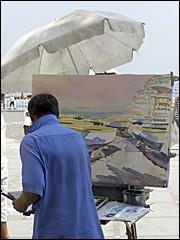
The beachfront is lined with outdoor restaurants, and the air is filled with delicious smells. Frequent refreshment stops are mandatory, especially when traveling with four young people. We enjoyed a fabulous seafood pizza, and the kids discovered the delight of caffe fredo, strong, sweet iced coffee. The beachfront is also a popular spot for local artists to set up their easels to capture the beautiful surroundings.Picture30
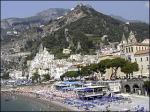
By mid-afternoon, our entire party was sweaty and exhausted, so we headed back to Amalfi. The ferry ride was refreshing, but it didn’t take much walking to get overheated again. So Jack and I decided to get the van, while the others stopped for a quick swim at the beach favored by the locals. This was a simple pebbly beach, without an admission charge, where you swam amidst the boats and luxury yachts moored in the harbor. Craig and a couple of the kids stayed behind at the beach, thereby missing the epic battle of the parking gate and the faulty token.
When we had arrived in Amalfi, we parked at the wharf area, in a pay parking lot. When we entered, we received a token. Upon exit, we needed to first drop the token into the payment machine, and pay the exorbitant fee demanded. We would then receive another token, to be deposited into the machine at the exit. This would signal the gate to rise, and we could then roll merrily along toward home. Except things didn’t go quite according to plan.
Maybe it was because the token sat in the hot car all day, and it was overcooked. Maybe it was because Jack dropped the token, and I had to move the car so he could retrieve it without melting his kneecaps. Whatever the reason, that payment machine deemed my particular token as unacceptable. No matter how many times we dropped it in the slot, no matter how much spin we put on it, or how hard we smacked it into that machine, it wouldn’t register. Instead of connecting with the inner workings that would then announce the precise total of arms and legs we owed for a day’s parking fee, my token instead fell uselessly into the coin return slot time and again.
Something that must be understood regarding small town life in Italy: every happening is a community event. Therefore, every passer-by or driver waiting to use the machine after us felt compelled to offer advice or condolences on our dilemma. Finally the two gentlemen seated just past the obstinately unmoving exit gate decided it was time for them to weigh in. They had nothing to do with the parking concession; they owned the little alimentari right next door. But they were clearly more experienced with this accursed machine than Jack and I were, so we let them have the obligatory seventeen tries at getting the token to perform properly. No luck.
They helpfully suggested that we call the help number posted on the machine. Great idea, except we had no cell phone. Besides, we doubted our conversational Italian would cover this particular topic. Reluctantly, our rescuers used their phone to make the call. Ah, someone would be along presently.
Twenty minutes later, our rescuers had not yet arrived. Craig and the girls had, however, wondering why we had failed to meet them as arranged. Craig’s refreshing swim was soon a distant memory as we continued to wait in the baking hot parking lot. Our heroes made another phone call to the rescue crew. Soon, soon. We continued to melt.
After another eternity, a couple of guys wearing municipal-logo shirts zoomed up on a scooter. They too tried their hand at the token game, and then after a lengthy discussion with our champions, the deli guys, who insisted we not be charged for parking because of the grievous inconvenience we had suffered in the parking inferno, the officials used their override gizmo to raise the gate, and waved us through with a flourish.

There are beautiful ceramics everywhere you turn.

Back to the alborgo, and the beds placed so invitingly in front of the air conditioners. Had we been at home, we would at this point have refused to budge from the comfort of our cool room and crisp sheets. But this was Italy – who could waste time resting? We could rest when we got old. Back into the van, back to the piazza in Ravello. There were parking machines to battle with, side streets to be explored, cafes at which to linger. La dolce vita awaited – andiamo!