Up on the roof

Today brings our Moroccan sojourn to a close. For our final day in Marrakech, we decided to wander through the medina, and pay a last visit to the main square, Jemaa el-Fna. For color, sights, sounds and oddities, it didn’t disappoint! Here’s a panoramic overview, taken from a cafe balcony.

IMG_5217

And a few close-ups as well. Remember, I am three stories above the pavement, hundreds of feet away from the chaos, using a really good telephoto lens to get close to the action.

<img src=

IMG_3653

IMG_3669

IMG_3640

I think Doylestown needs a few terrace cafes. It is so lovely to rise above the noise and the crowds, and to sit back and enjoy the view. It’s another world up there, and after you sit for a while you are sufficiently re-energized to get back into the fray.

IMG_3751

IMG_3758-0

Marrakech

We are winding up our three weeks in Morocco with a few days in Marrakech. I’m glad we didn’t begin our trip here, because it would have been rather overwhelming. Marrakech is crowded, busy, and sprawling. We like to stay in the medina, the old part of the cities we visit, so our hotel here, Riad Raphaele, is just a short walk from the ancient district.
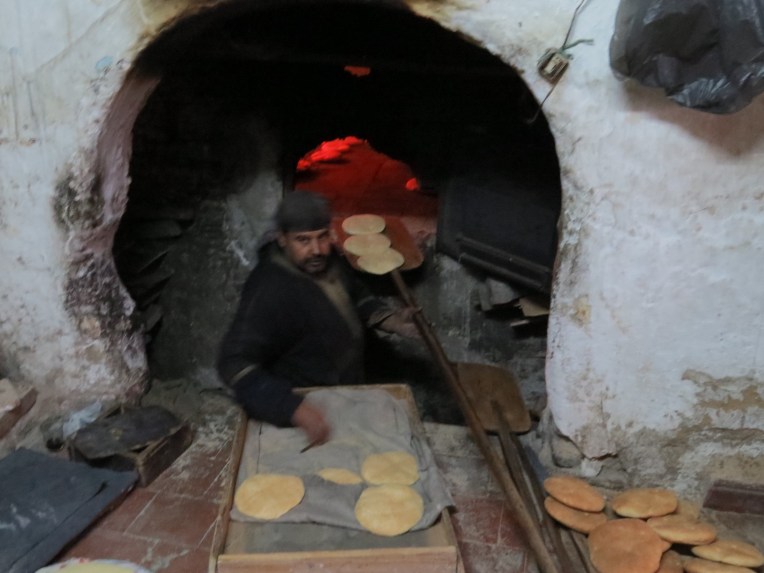
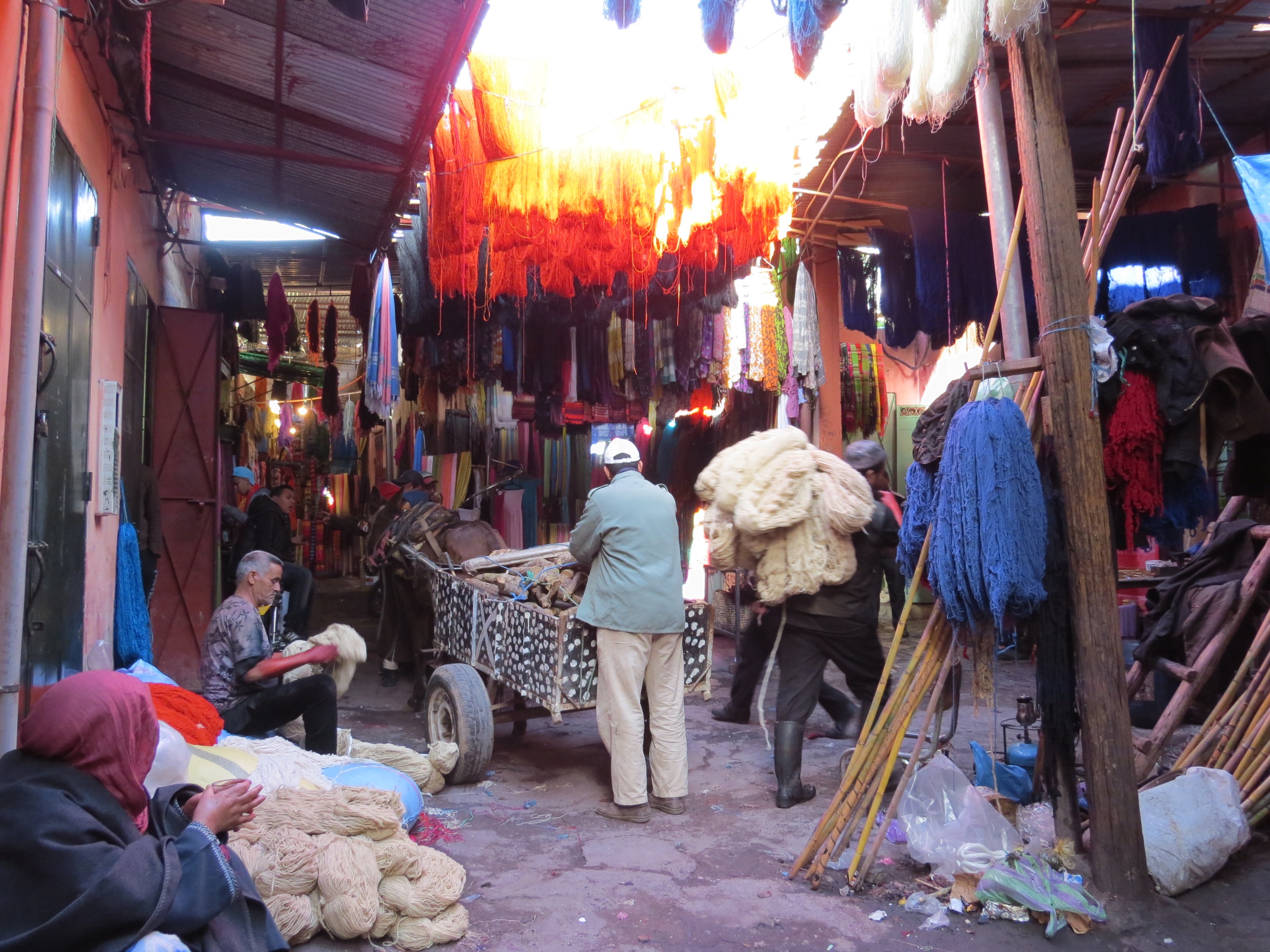
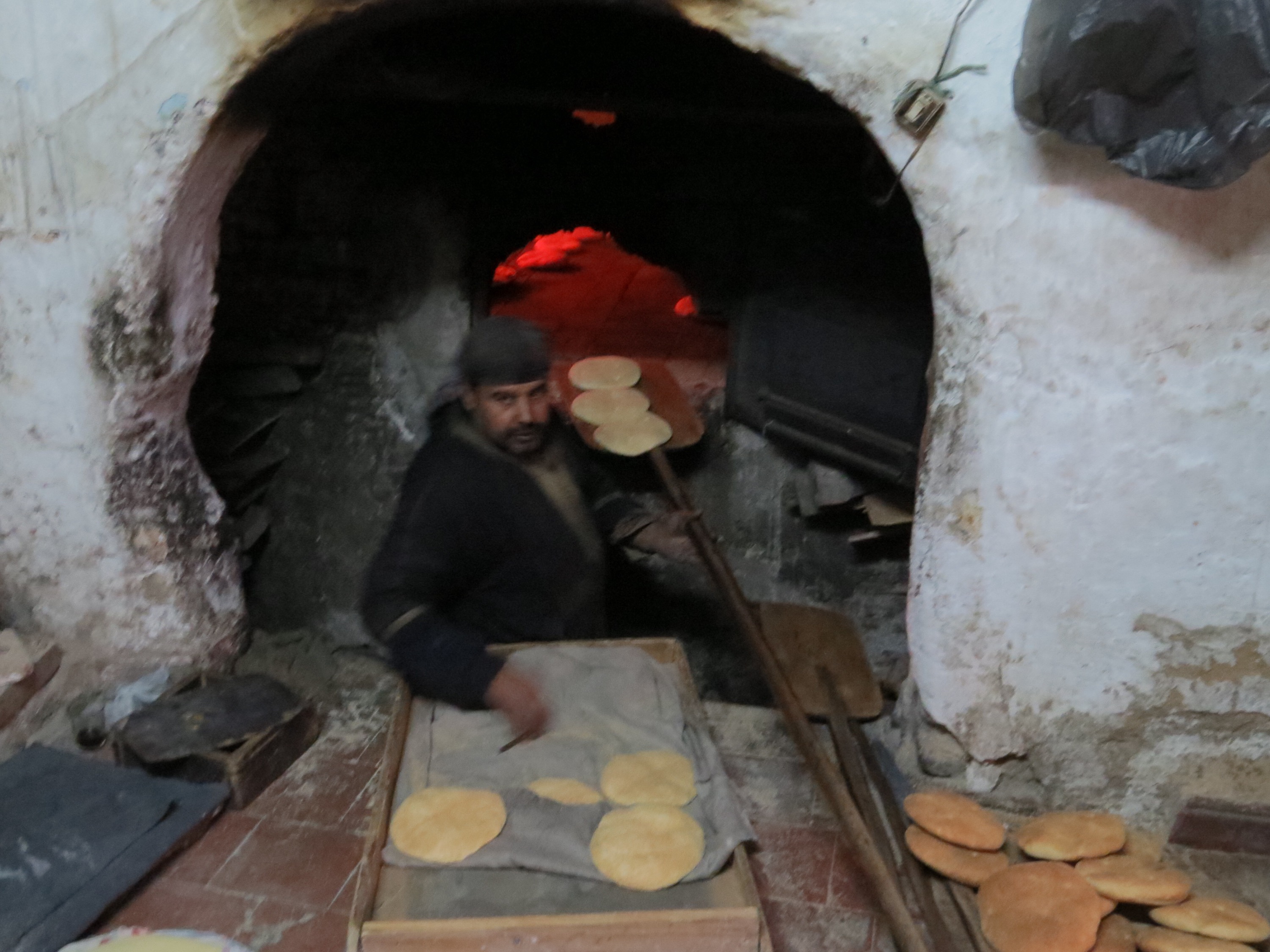
We hired private local guides for two separate day tours, and they showed us fascinating places while narrating the history of the area. Additionally, both Kdijah and Yder have lived in and guided in Marrakech for decades, so they seemed to know every craftsman and vendor we passed. Each of them showed us wonderful rooftop cafes, where we could rise above the chaos and relax. They introduced us to local customs and brought us inside the little shops and workplaces. We learned that every neighborhood has a baker. The area is electrified but judging by how tiny the houses are, I doubt there are modern stoves or ovens in them. So the woman of the house makes her bread at home, then sends it to the baker, who cooks it for her using his wood-fired oven, and an eight foot long paddle to reach the loaves inside.
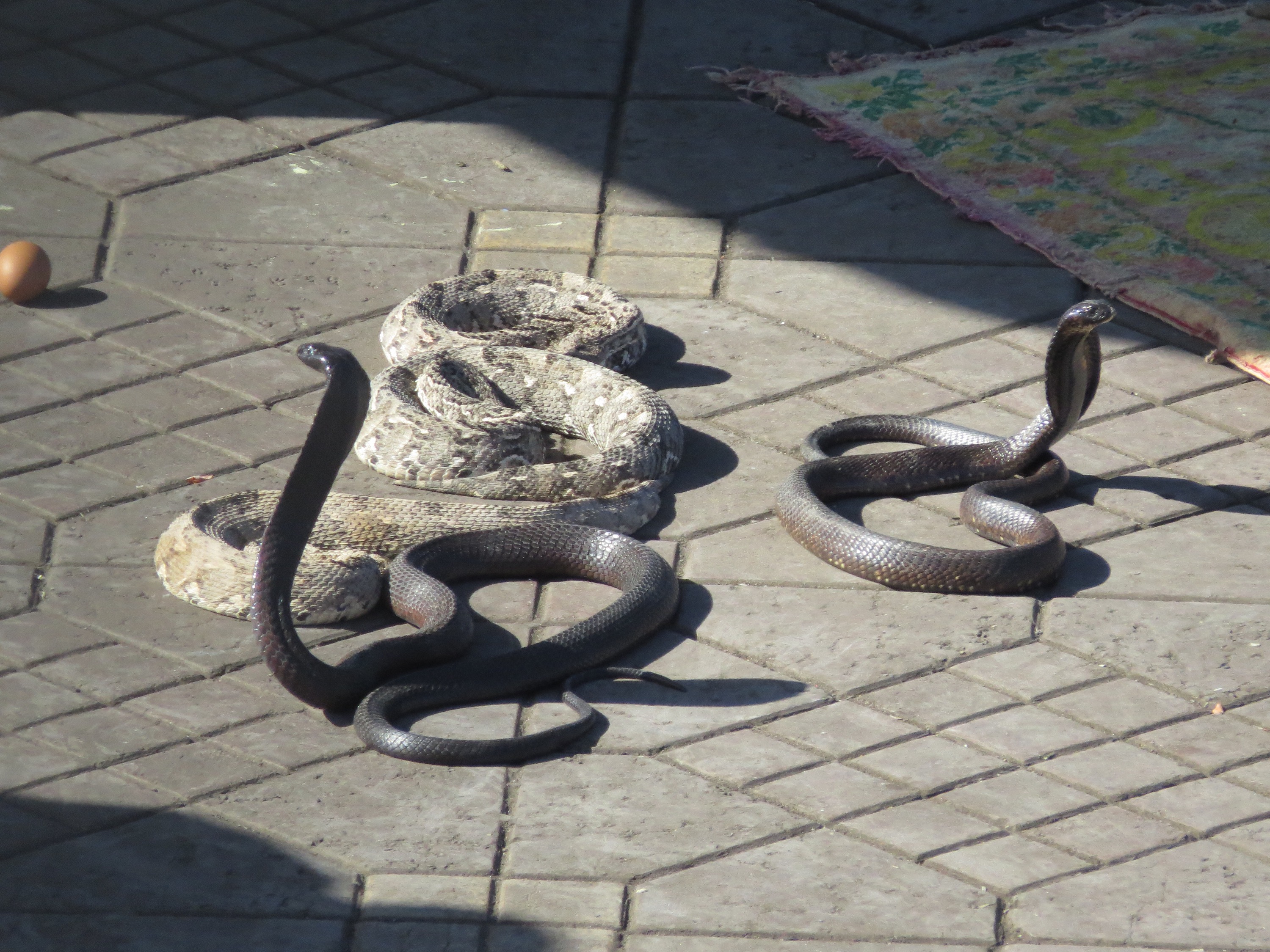
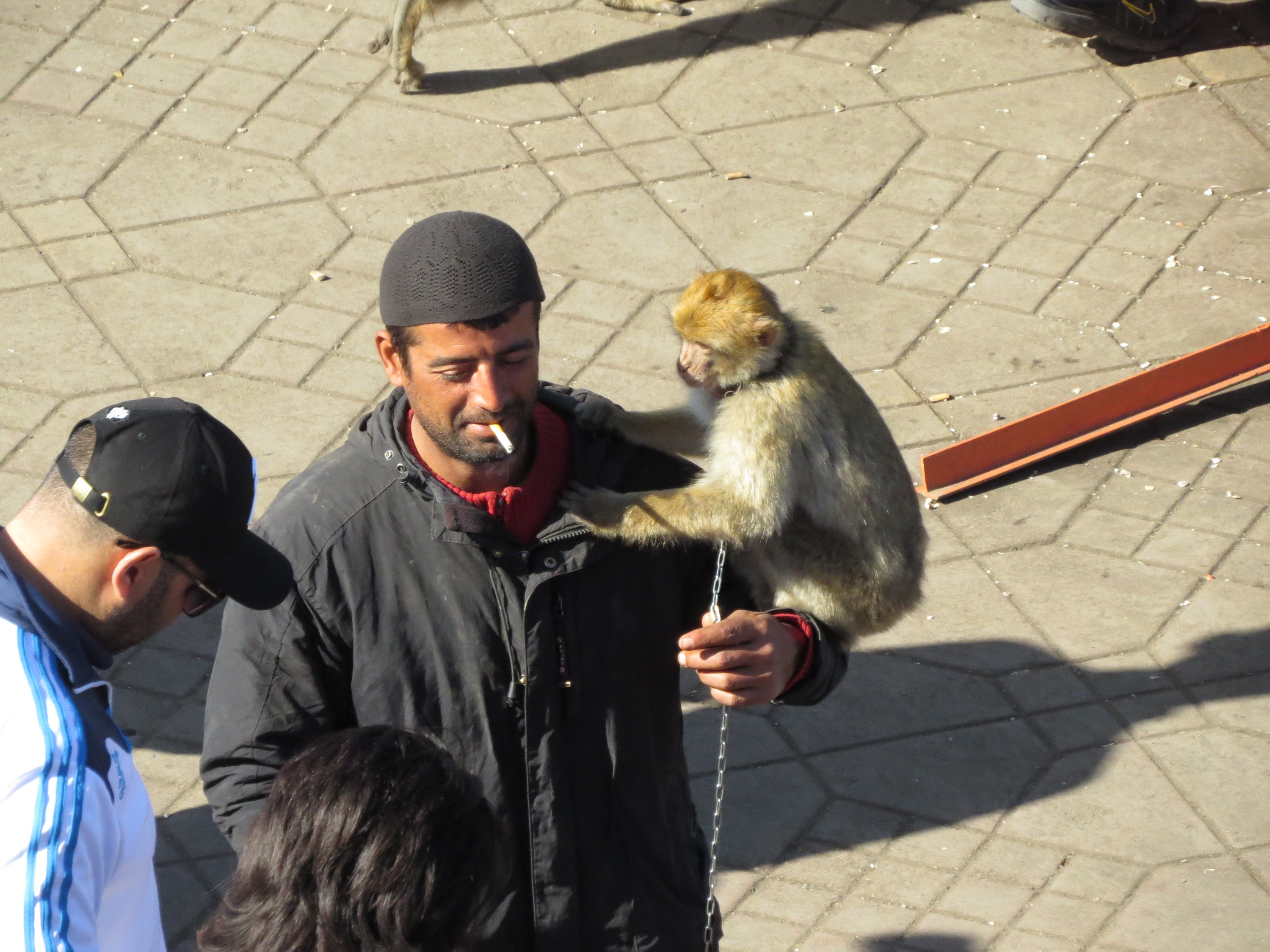
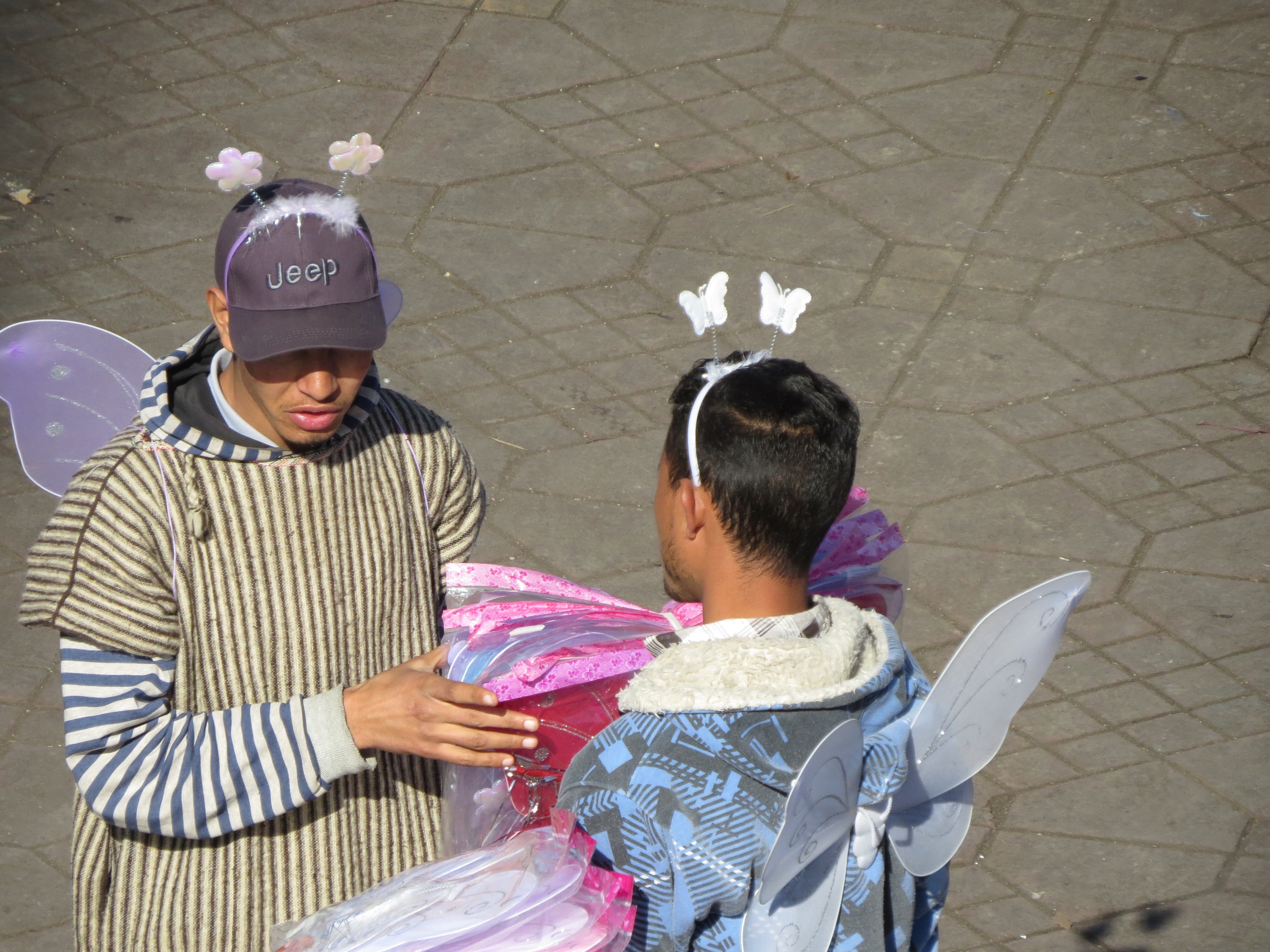
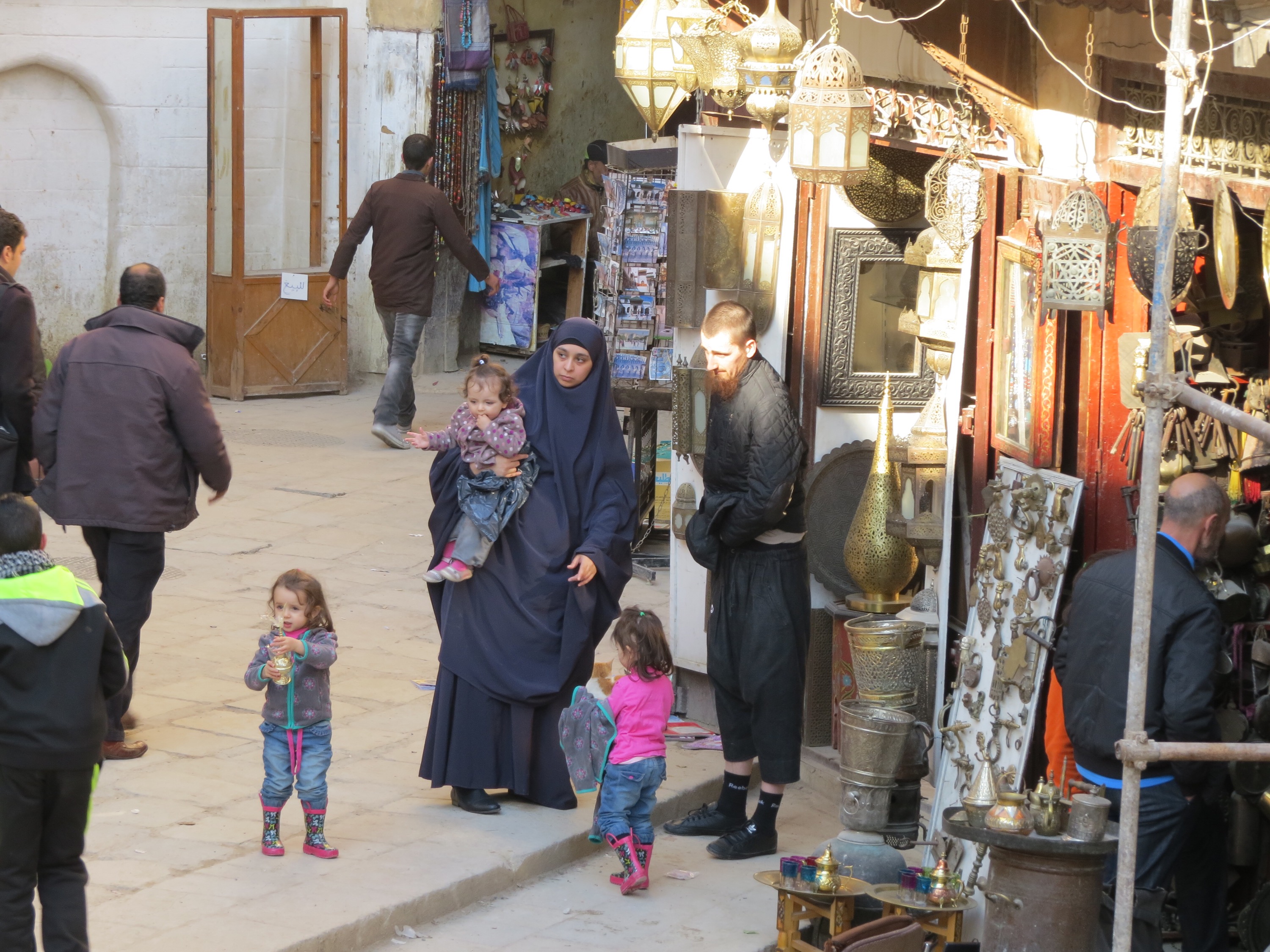
Today we braved the crowds at Jemaa el-Fna, the pulsating square which is the heart of the old medina. Here you can find everything from fresh fruit vendors to small flea markets. Young men blast out bubbles from a pistol-type toy, in order to attract attention to the little wind-up animals, no doubt made in China, that they are hawking. And yes, there are snake charmers, and young fellows crazy enough to pose for a picture while wearing a cobra necklace. No thank you!
After about an hour of the hustle and bustle, we needed a break. Three flights up, we relaxed on a beautiful terrace and watched the chaos continue below us. Half an hour of peace and quiet, two cups of cafe au lait, and free wifi, all for less than four bucks. Can’t beat that.
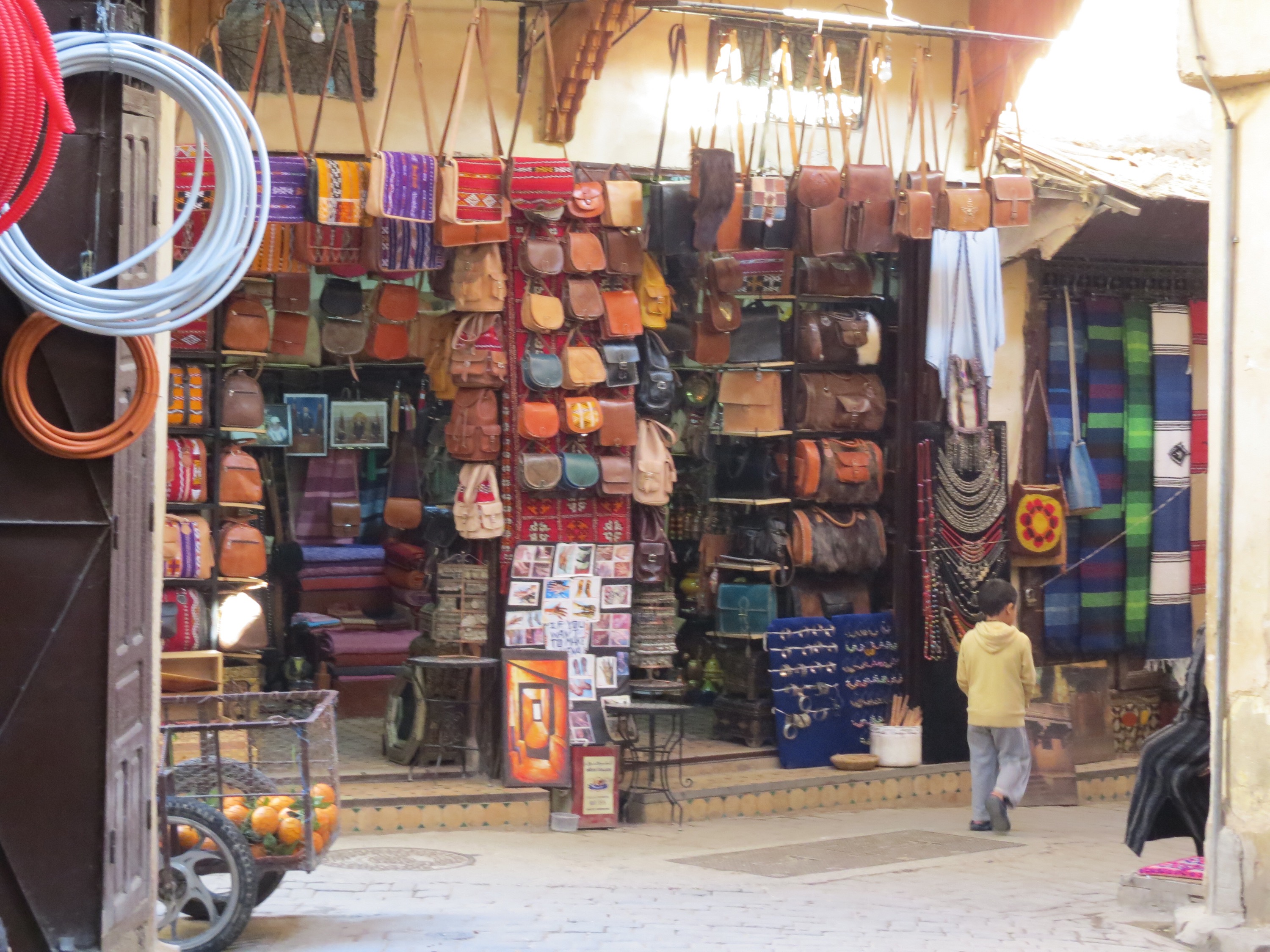
Back into the fray for a little shopping. I decided that today was the day to purchase a Berber style candleholder made of goatskin. The artisan showed me the parchment-like leather he uses, and tried very hard to convince me that a large lamp would fit nicely in my suitcase, but reason prevailed and I purchased a petite version.
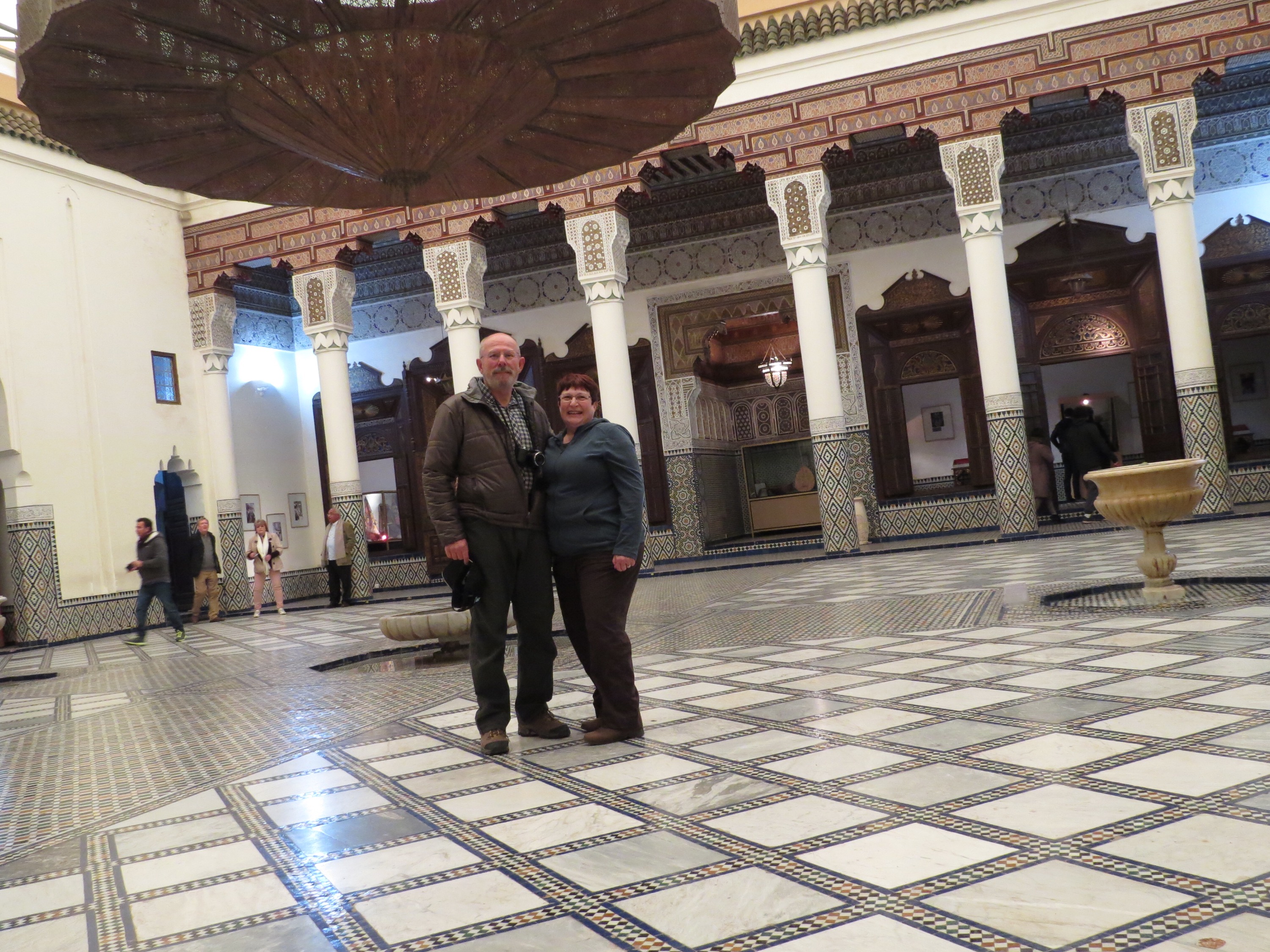
As we headed back to our riad , we decided to detour into a little museum we had passed yesterday. It didn’t look like much from the outside, but we gambled the price of admission, and bought our tickets at the little shack just inside the gate. We stepped through the front door and discovered a breathtakingly beautiful space. Really, it is a museum within a museum – the building itself is a showpiece, plus it is filled with various examples of ancient and contemporary Moroccan art. In a little nook toward the rear of the museum is a calligrapher, who will write your name in Arabic script for a very small fee. We selected a couple of his pieces, plus a contemporary triptych depicting Moroccan women creating handcrafts, done in bright colors and meticulously detailed, painted by a local female artist.
Craig fortunately has a great sense of direction, but even he was stymied by the twists and turns of the souks. And of course, if you show a moment’s hesitation, or pause to get your bearings, you are pounced upon by a local who will get in your face demanding, “Where you want to go? Tannery? Tannery this way.” It doesn’t matter that you’ve given no indication that you’re interested in seeing the tannery – you’re obviously a tourist, so you must want to go there. And naturally, he expects payment for this helpful advice.
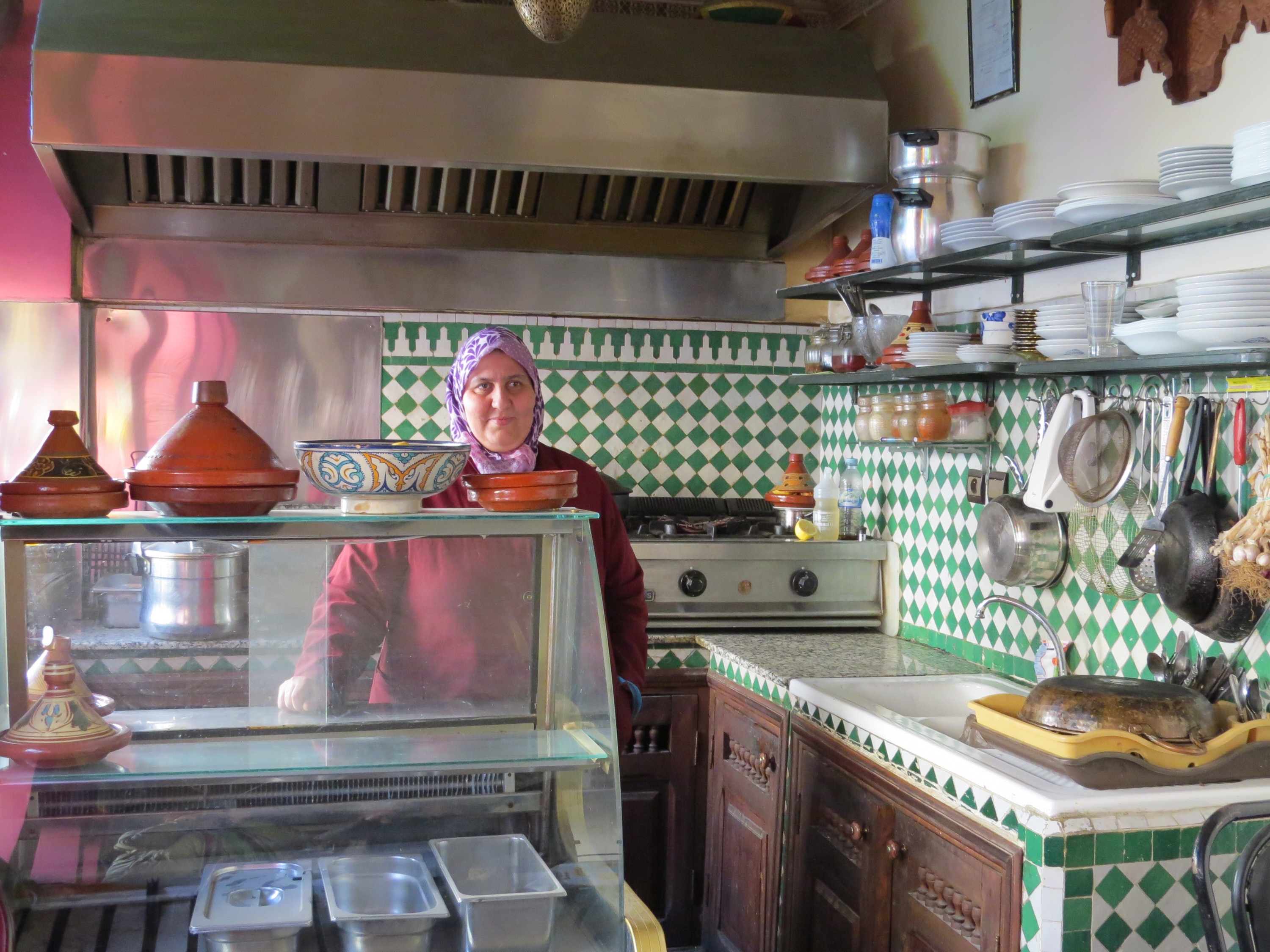
About 6 pm, we spotted a lovely little restaurant with a welcoming fire crackling inside. Although there were no other customers, the menu looked good and the place was spotlessly clean, so in we went. After a delicious lamb tagine and a yummy slice of lemon meringue tart, we struggled out of our chairs and staggered off homeward, which was fortunately only a short walk away.
And that’s how I spent my Super Bowl Sunday!

IMG_3439-0

IMG_3471

IMG_3504

IMG_3521

IMG_3436

IMG_3499

I forgot the tannery!

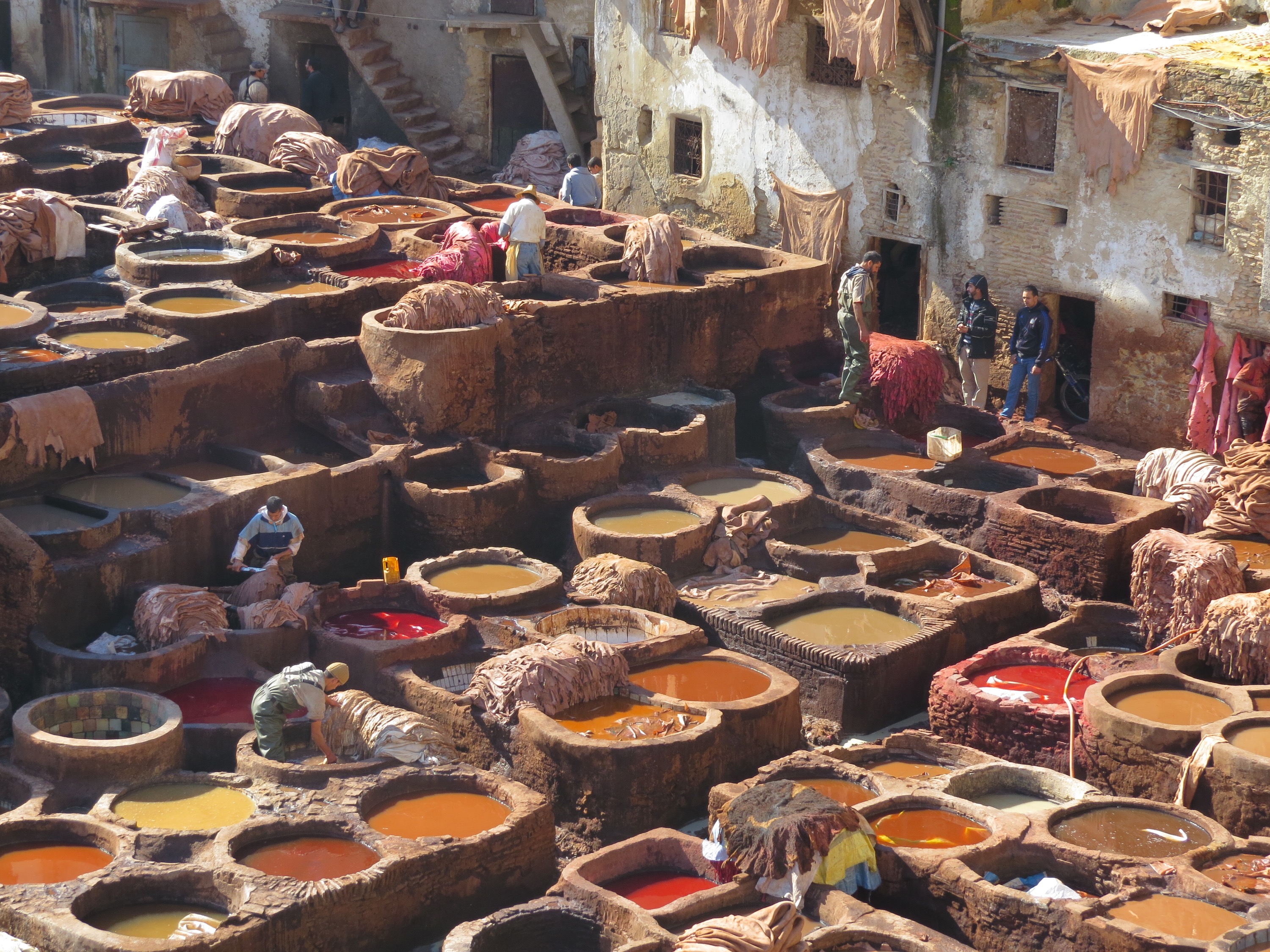
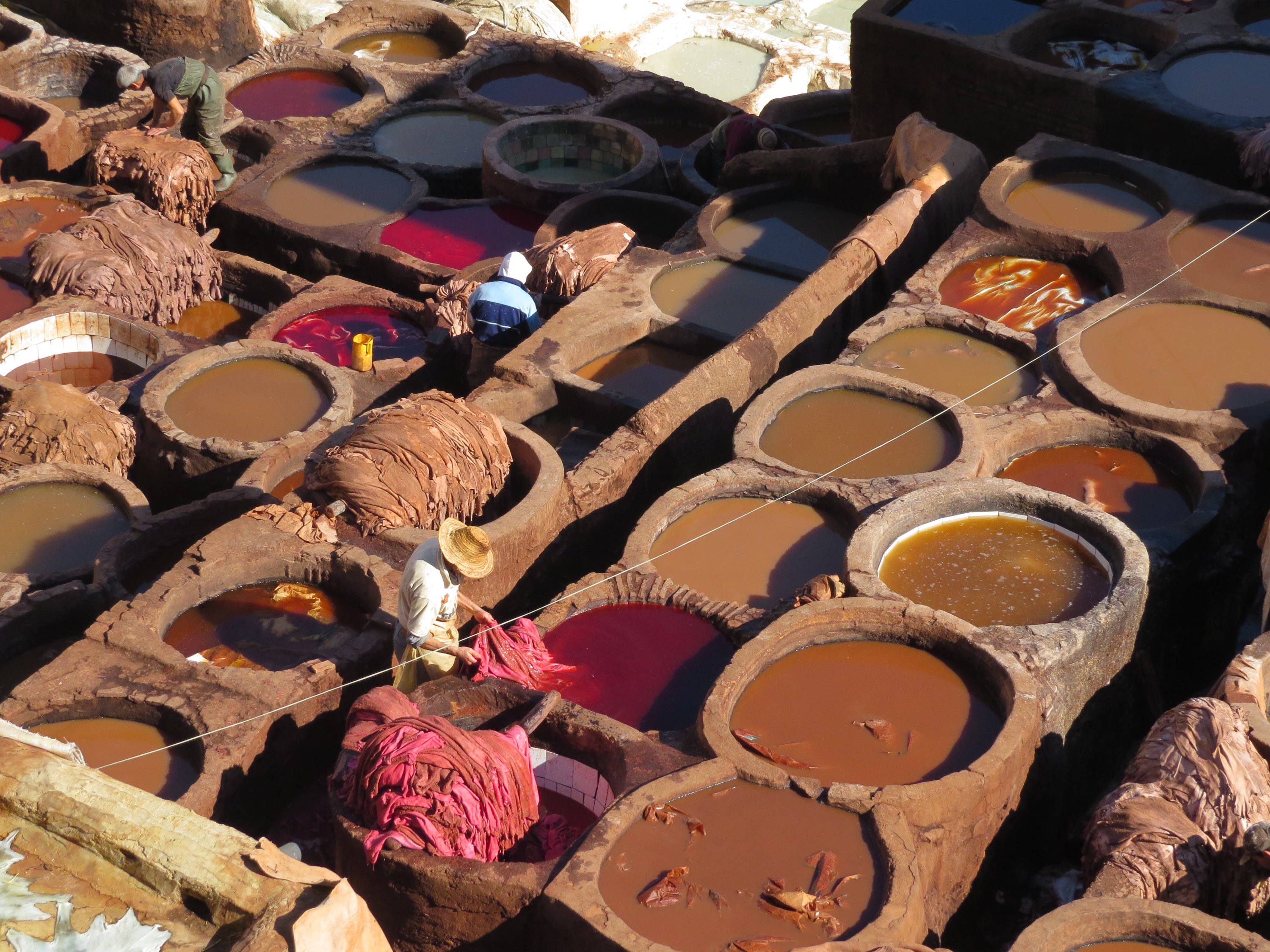
The ancient tanneries are a major attraction in Fez, and we visited them yesterday as part of our walking tour. They have used the same tanning methods for hundreds of years, involving the water from the river than runs through town, as well as natural pigments and lots of pigeon guano for its acidic effect. There are no chemicals used at all in the process.
When we entered the area of the tannery, a man stationed at the doorway handed each of us a sprig of mint. I looked confused, so he mimed holding it under his nose and inhaling the fresh scent. Uh oh. Reality began to dawn. As we ascended the stairs, the smell became stronger. At level three, Sadiki left us in the hands of a tannery worker, and we continued to climb. As I crushed the mint in order to mask the smell of death, I was reminded of the children’s nursery rhyme, Ring Around the Rosy. I clenched my pocket full of posy, but to no avail. The view was spectacular when we reached the terrace, but the stench was overwhelming. I snapped my photos as quickly as possible, held my breath as long as I could, and just at the point of retching, I ran for the exit. Craig, meanwhile, smelled almost nothing.
I abandoned Craig to his photos, and went in search of clean air. What I found instead was an incredible array of leather products. Unerringly, I headed straight for the most expensive product line: lamb skin jackets in all shades of butter-soft suede. By now, we have gotten quite good at bargaining, so by the time Craig remembered that I was shopping unchaperoned, I had gotten the price down about 20%. I let my son-of-a-Berber husband move in for the kill.
We left the shop and traveled down another flight of stairs, with the salesman trailing us, saying hopefully, “We take credit cards!” Just before we exited, he cracked and agreed to our lowest offer, 40% less than the original asking price. To show that he was a good sport, he threw in a little change purse for free.
I thought I was safe from the revolting smell of the tannery as we resumed our walk, but unfortunately there is another set of vats, with yet another opportunity for stunning photos. More mint leaves, more gag reflex kicking in. More therapeutic shopping, this time a beautiful hand-stitched goatskin purse. It is good that Craig realizes he must sacrifice for his art.
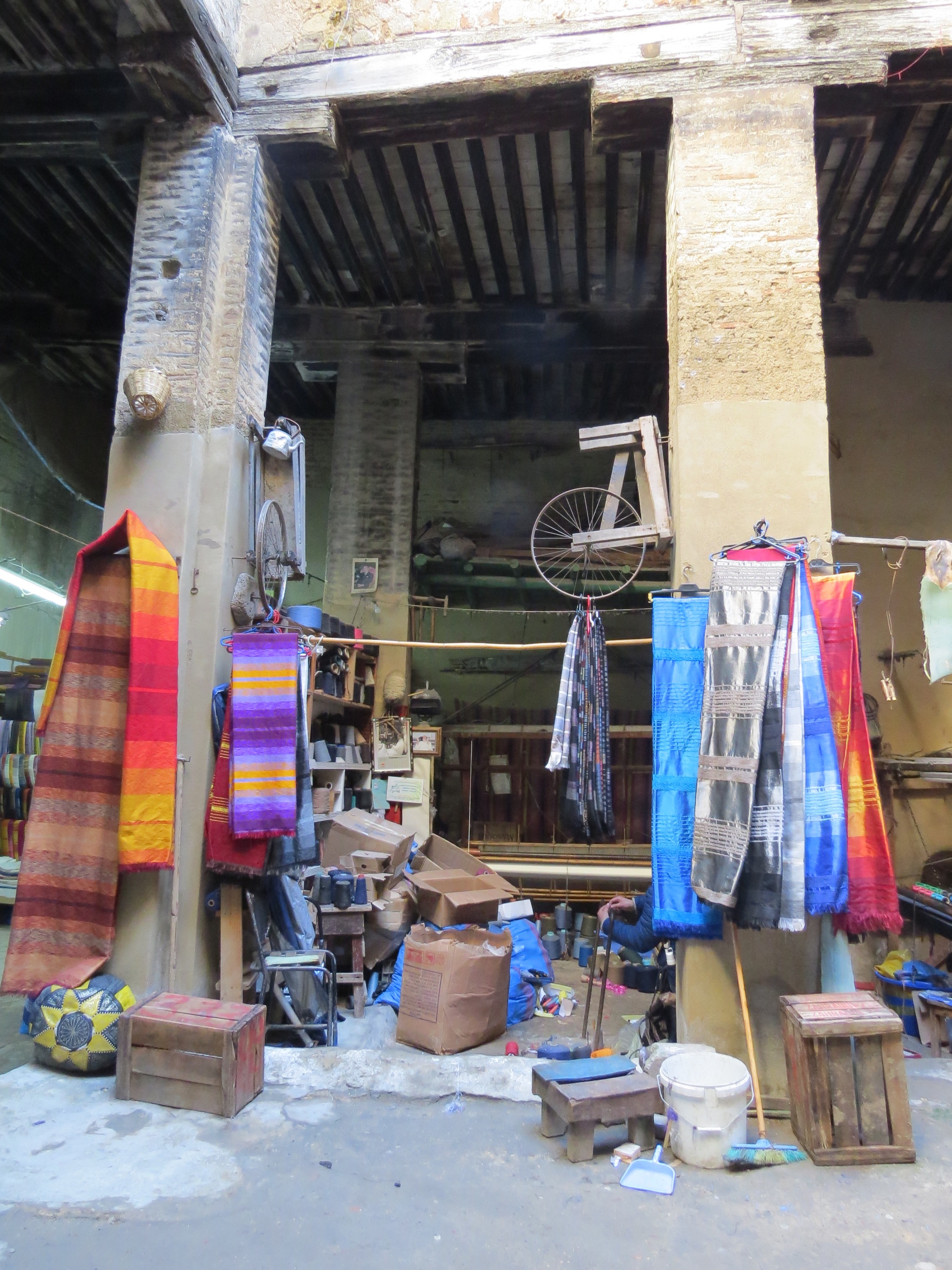
We also visited the shop of a family of weavers, who have four looms set up in a former merchants’ inn on the caravan road. Because the Muslim faith forbids any representation of living beings, all the patterns are stripes or geometrics. They work with cotton, wool, and vegetable silk, which is a fiber extracted from agave cactuses. Again, all the pigments are natural and made from such elements as saffron, indigo, and snails.
In talking with the weavers, we learned that an intricate pattern of various colored stripes can take the weaver two full days to create one meter of cloth. Considering how labor-intensive the work is, by American standards they were giving away their fabrics.
We were happy to help support this dying art, and purchased a stunning piece of cotton/silk fabric in blue, rust, gold, and other earth tones. We’re looking forward to putting it to use at home, to remind us of our wonderful trip to Fez.

IMG_2693

IMG_2729

IMG_2699

Inside the old city of fez

We took a private car from Chefchaouen to Fez, a ride that normally takes four hours. Our driver Mohammed was the most aggressive motorist I have ever ridden with, and we completed the white knuckle ride in less than three hours. We were only too glad to climb out of that old Mercedes alive.
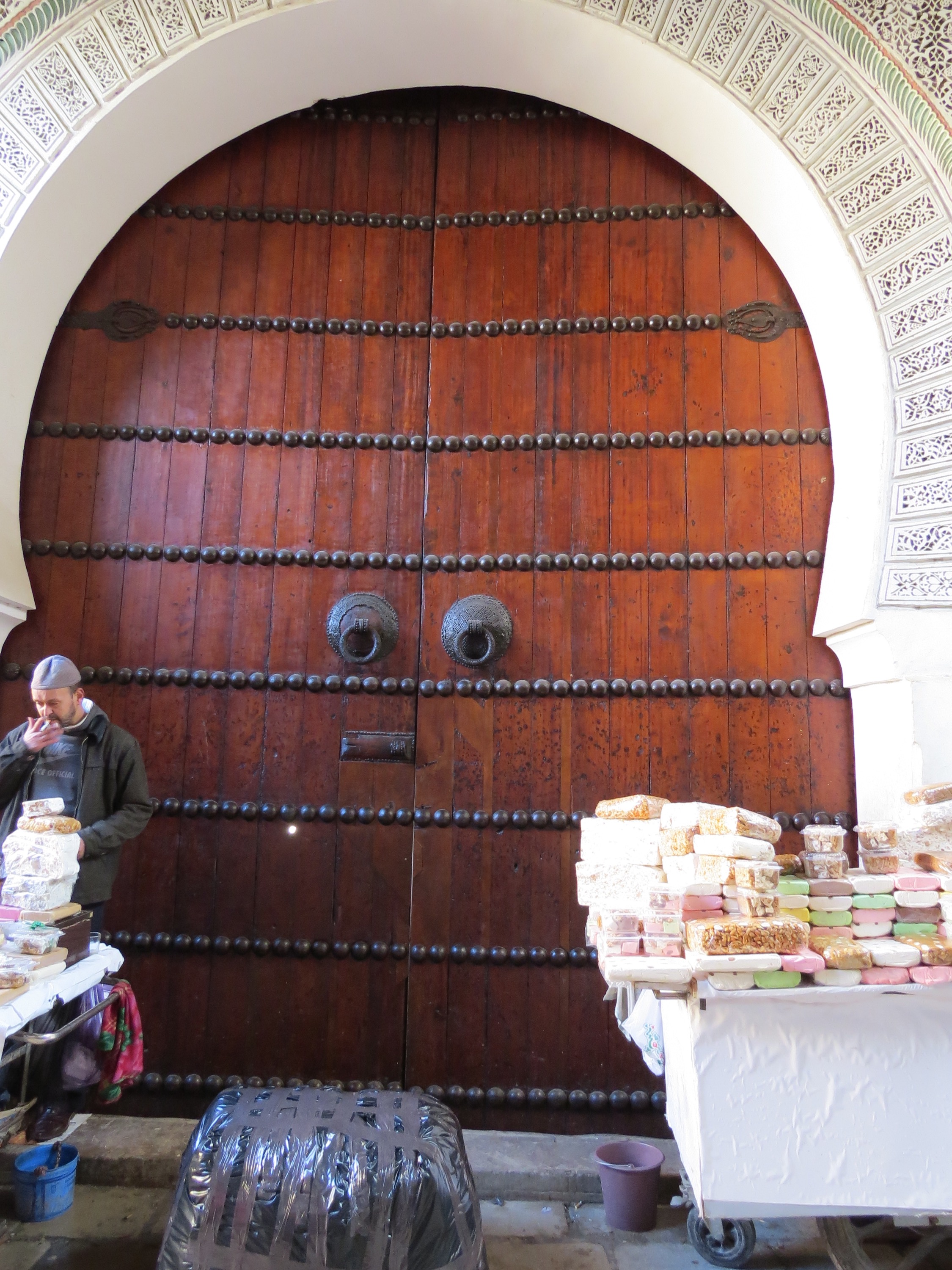
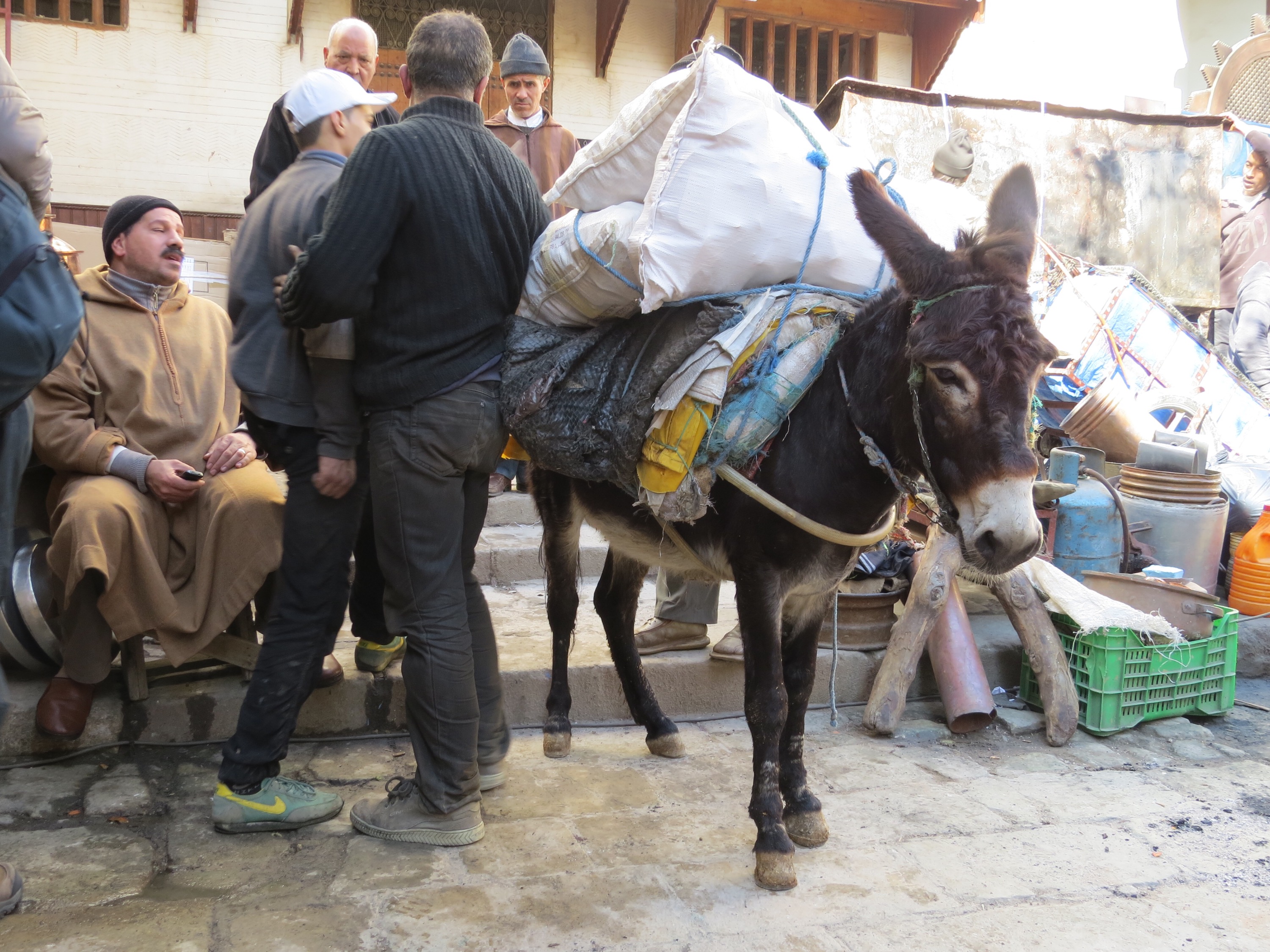
A young man from our hotel came out to the car park to meet us, because motor vehicles are not permitted inside the walls of the old city. He hailed another fellow with a wheelbarrow-type cart, and piled our luggage into it. Off we went, a little parade, chasing after our bags down the crooked dim alleys. At one point the passage narrowed so much that the cart would no longer fit, and the porter and Craig valiantly hauled the stuff by hand. (Remember, by this time I have been shopping for two weeks. Things were getting heavy.) Then he turned into such a dark alley that I thought, this is it. We are about to become the subject of one of those tourist horror stories. A few yards farther, the porter pulled out a set of keys, and unlocked a massive door that magically opened into a sunny courtyard with a lovely seating area lined with orange trees laden with fruit. It was a magical transformation.
Dar Saffarine is a 700 year old structure that was vacant and abandoned for twenty-five years before Alaa, the current owner, began the three year renovation that brought it to its present glory. We had reserved a room off the main courtyard, but Alaa informed us that since we were the only guests that night, he had upgraded us to the suite. “Please consider this your palace, and you are the king and queen,” our gracious host smiled.
Dar Saffarine is breathtaking. The ceilings in the bedrooms must be twenty feet high, and the center courtyard opens to the roof, at least fifty feet above. The original woodwork and mosaics have been meticulously restored to their former glory. Alaa has furnished his home with beautiful pieces of intricately carved furniture: shelves, mirrors, arm chairs, and occasional tables. Finely woven rugs help warm the chilly tile floors, and finely worked, colorful embroidery decorates the sheets, pillow covers, and drapes. The bathrooms have modern amenities, and hot water, much to our relief. (That is something not taken for granted in many of the places we have visited.)
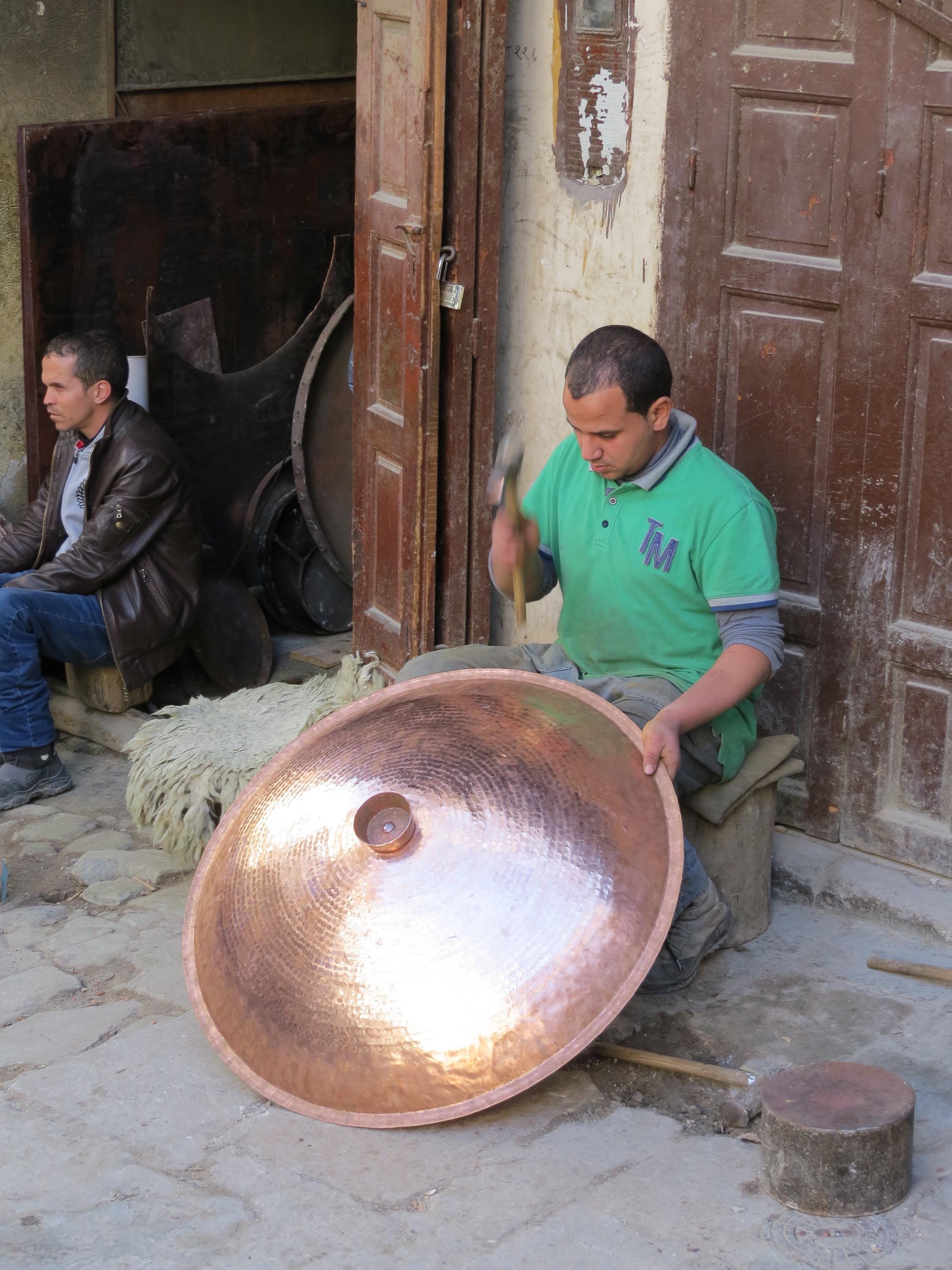
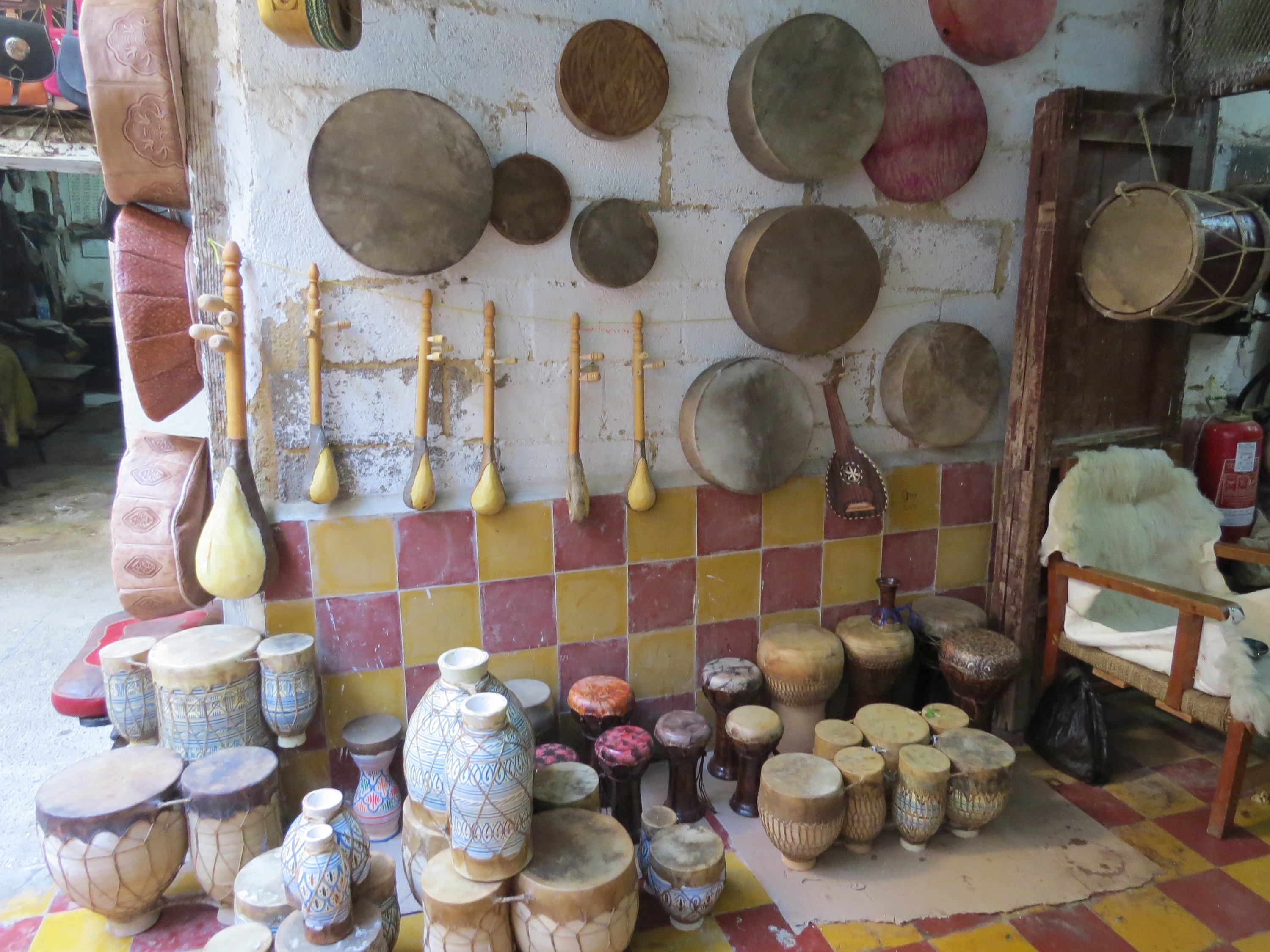
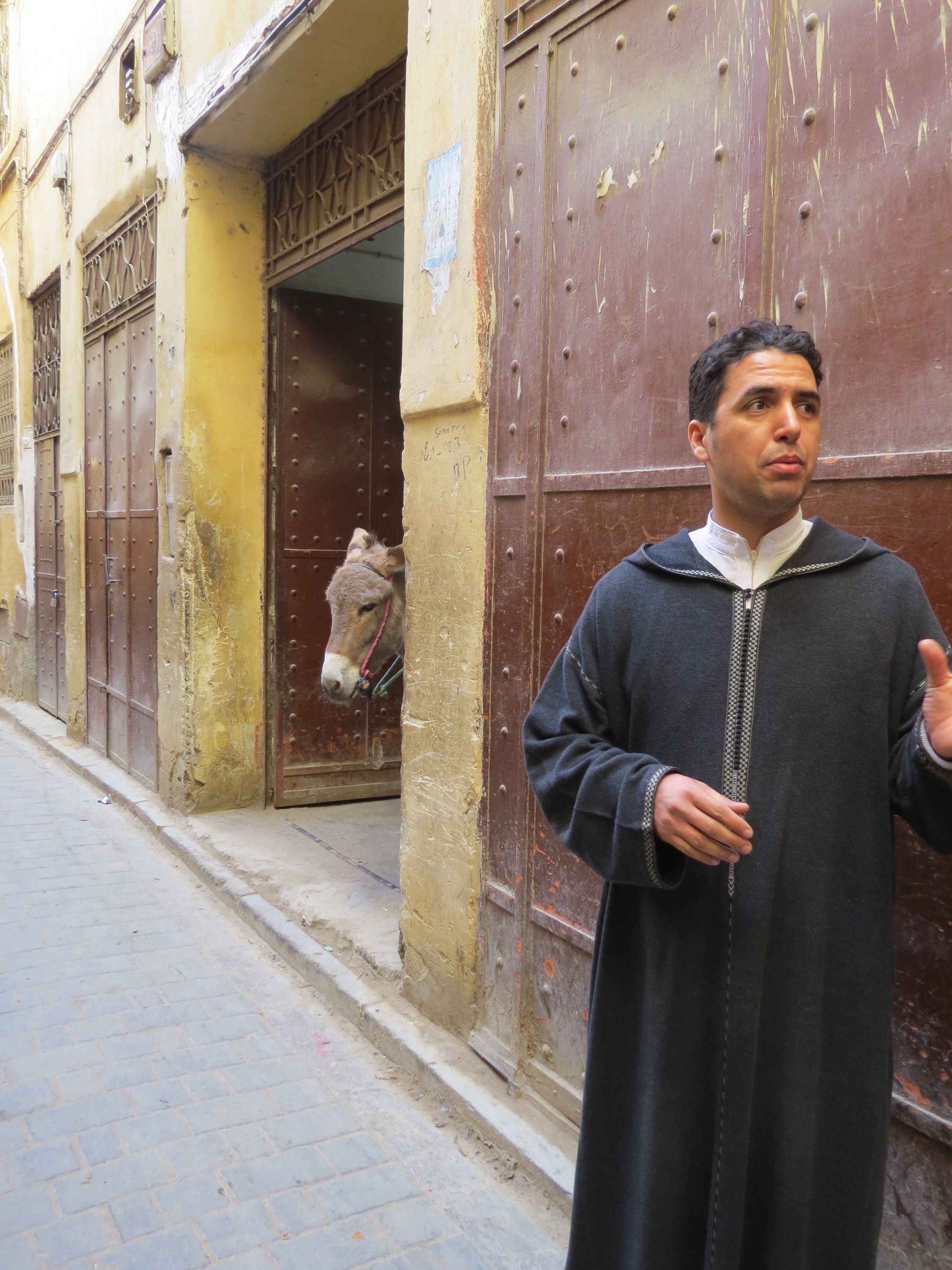
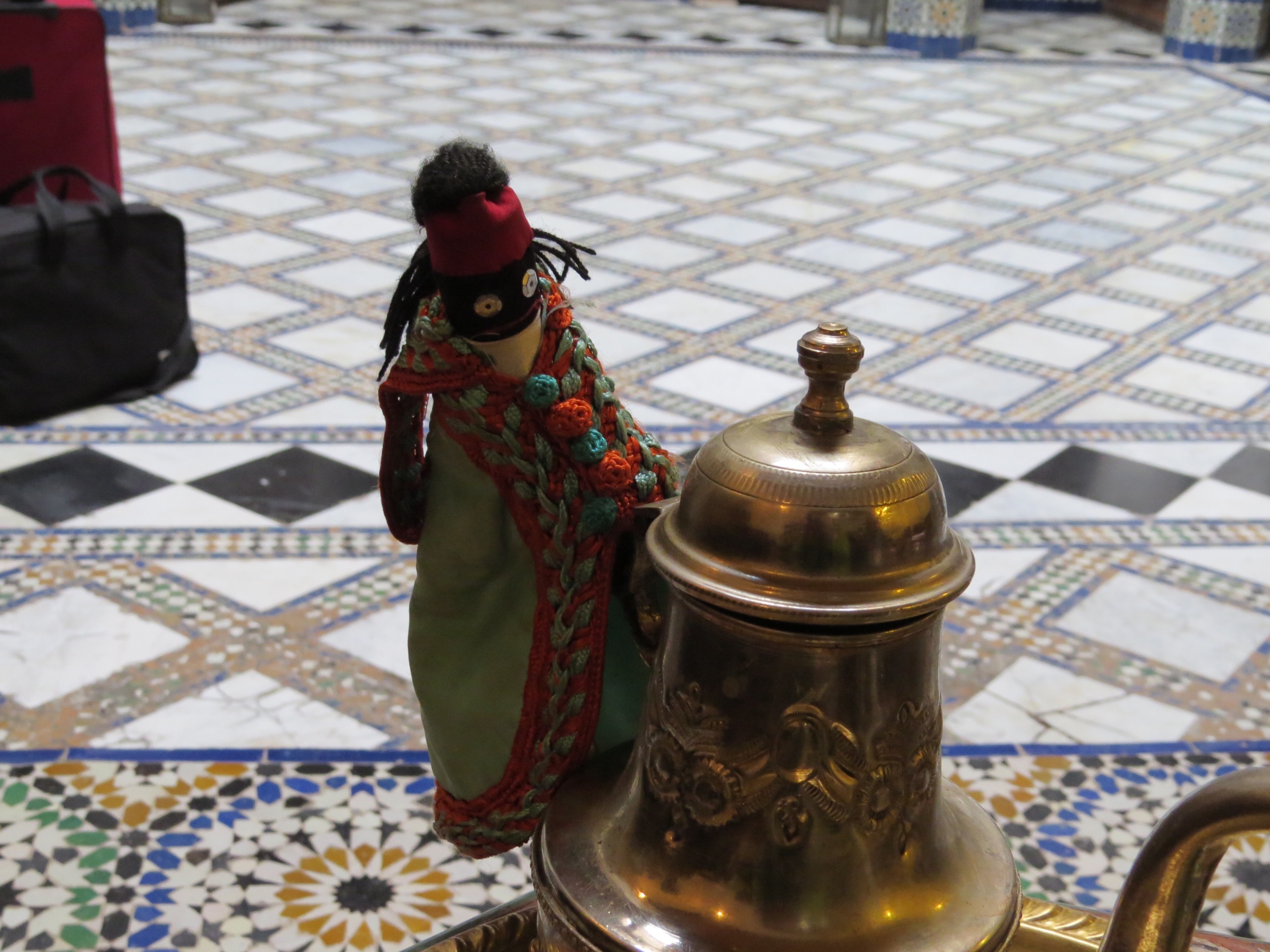
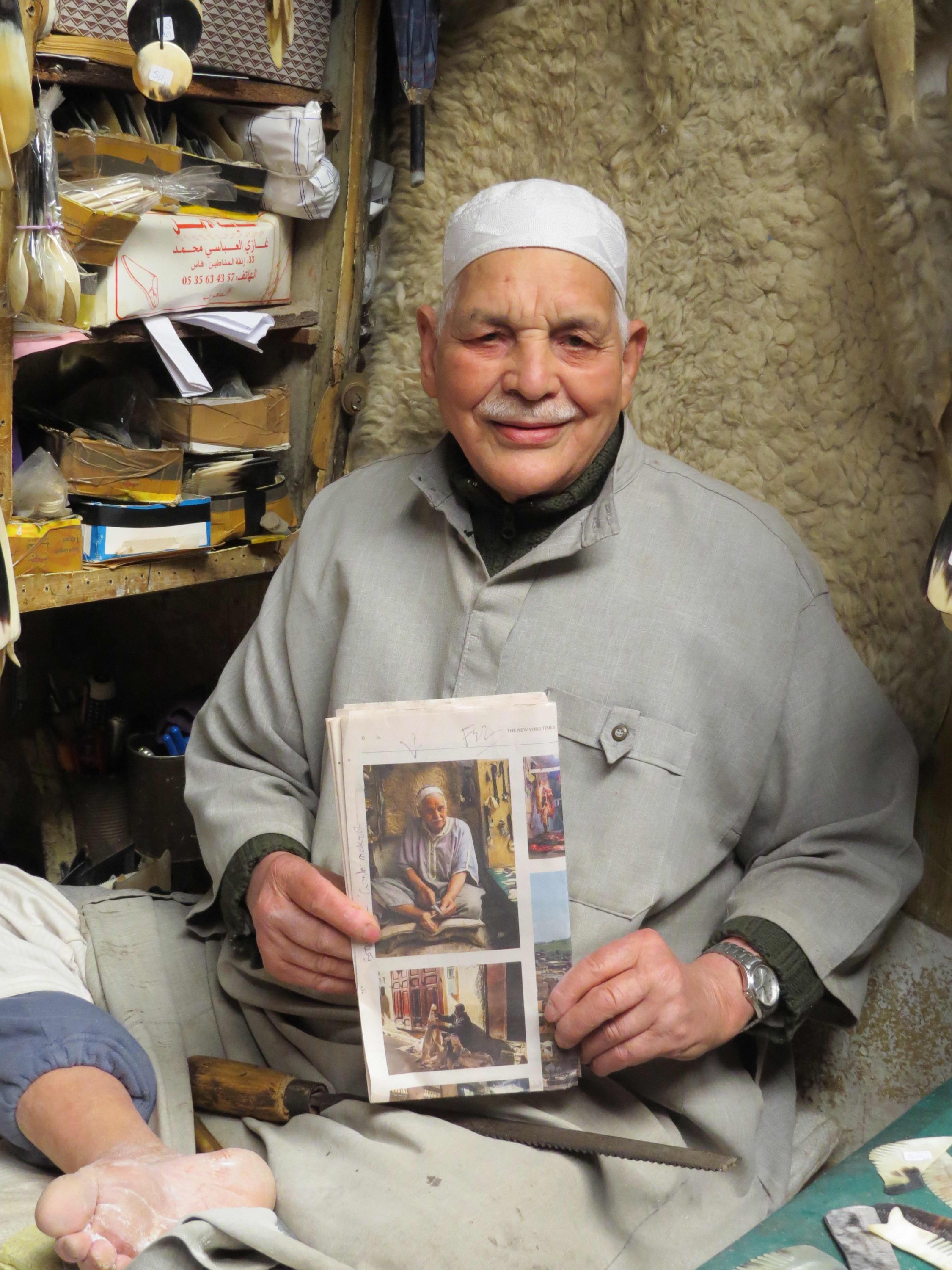
We have spent our days in Fez wandering the medina, both with a guide and on our own. We spent day one with a wonderful guide, Sadiki, who gave us an excellent orientation to the various traditional crafts that still exist in Fez, although just barely. The streets and squares are named after the craftsmen who practice their trade. So for example, our hotel, Dar Saffarine, is just off Saffarine Square, which is the neighborhood of the metal workers. Silver, copper, and brass objects abound here, and the name Saffarine, or saffron, refers to the yellow color of the brass. There are still a good number of metal workers, because everyone must have a tea pot, or copper pots and pans. However, the comb maker is the last of his kind.
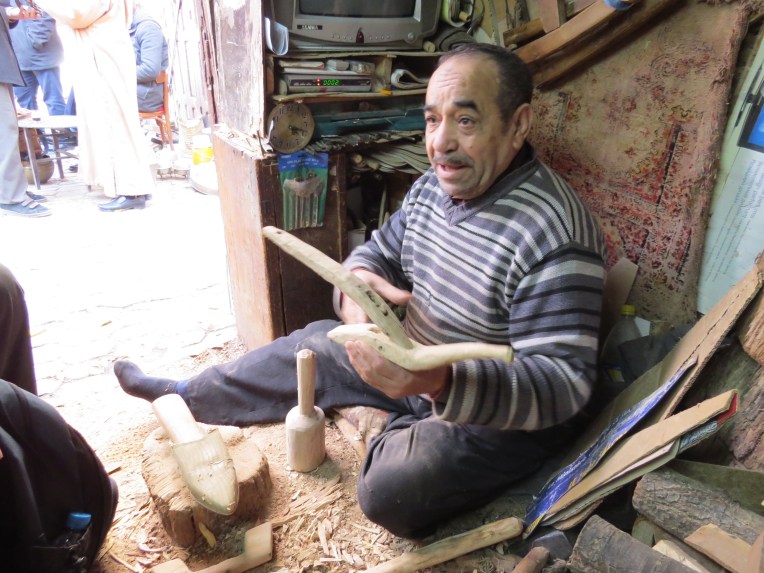
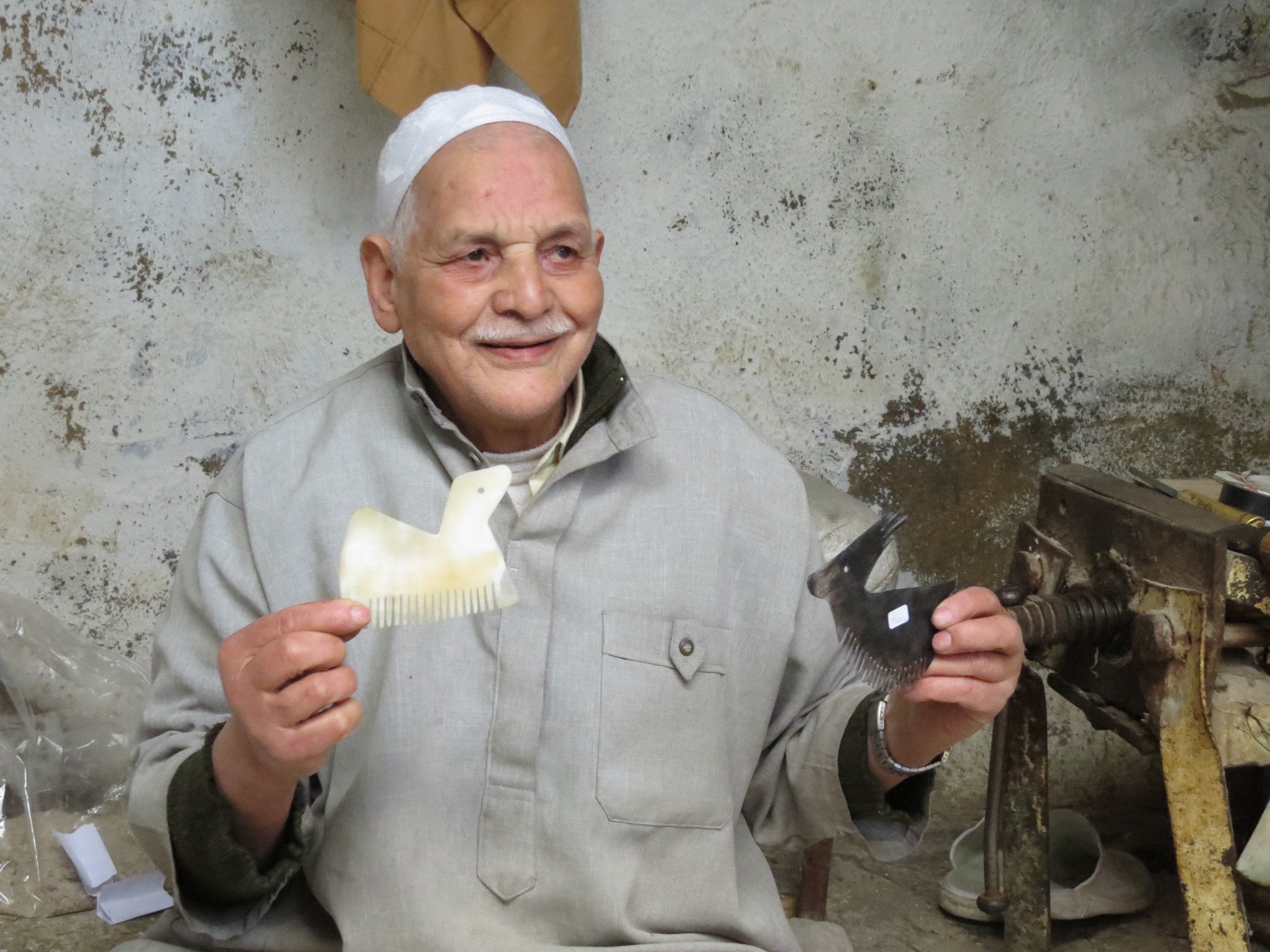
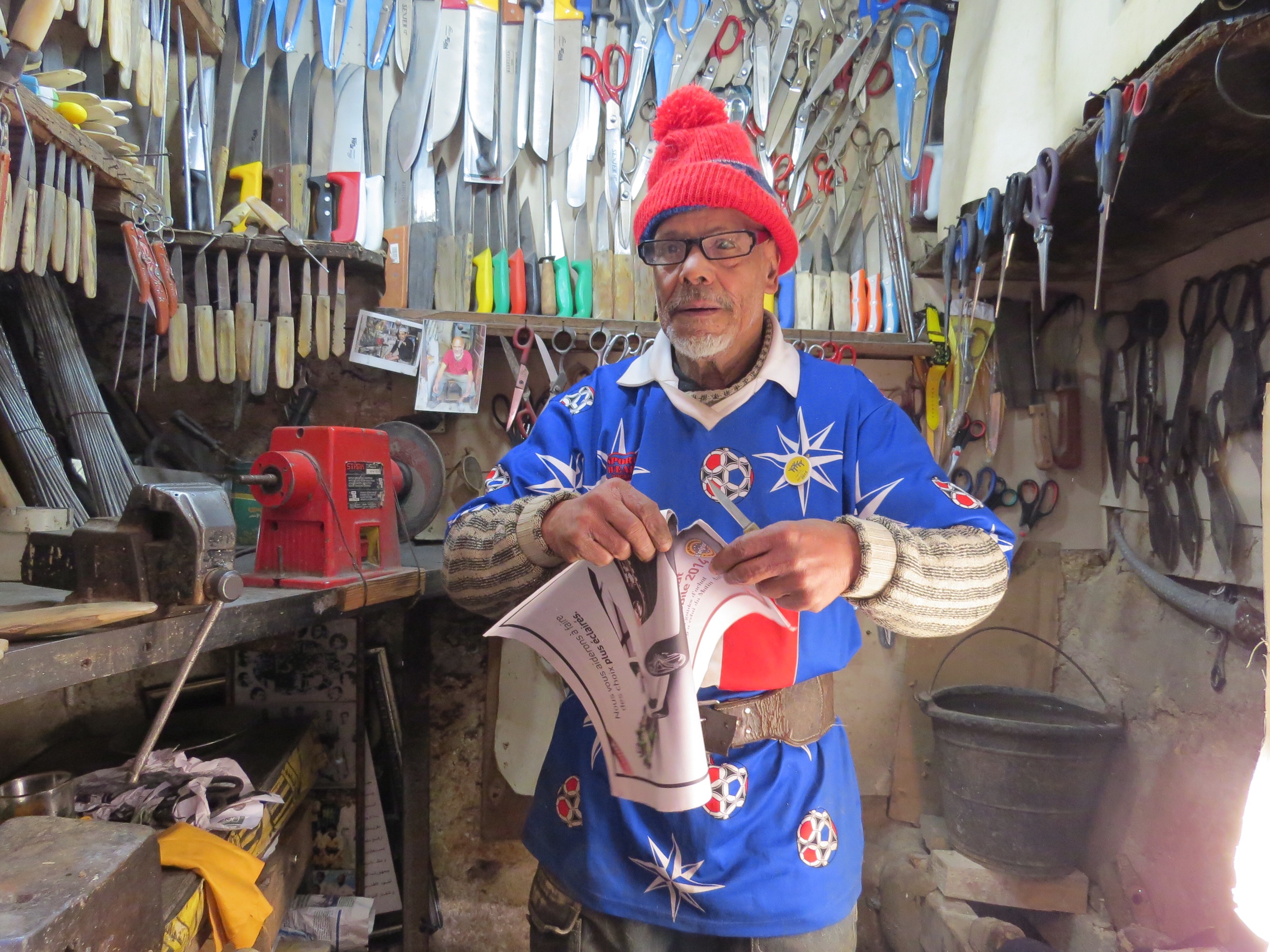
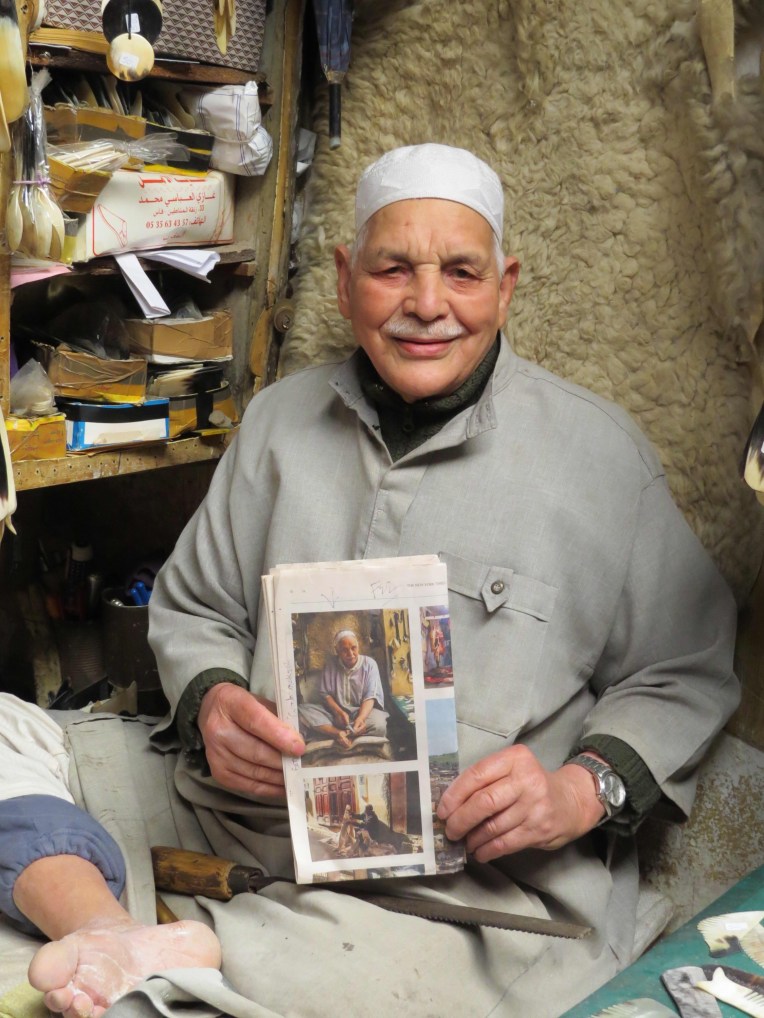
At 85 years old, he has no wish to retire, and in fact he still goes to the slaughterhouse to choose the cow horns he uses, sometimes selecting specimens still attached to their owners. He then makes little bottles out of the tips, to hold kohl eyeliner popular with the women here. The large part of the horn is cut open, heated, and flattened in a vise. The comb maker creates hair ornaments too, and his comb handles are whimsically shaped rabbits, camels, and fish. In 2013, he was interviewed for a NY Times article, which we happened to have with us. When we gave him the paper with his picture, he was delighted. When he is no longer in business, the street will be renamed to reflect the end of an era.
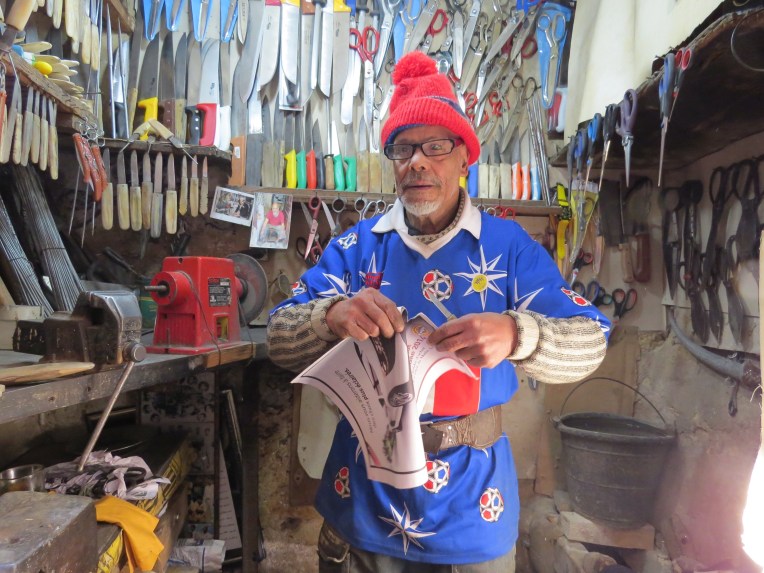
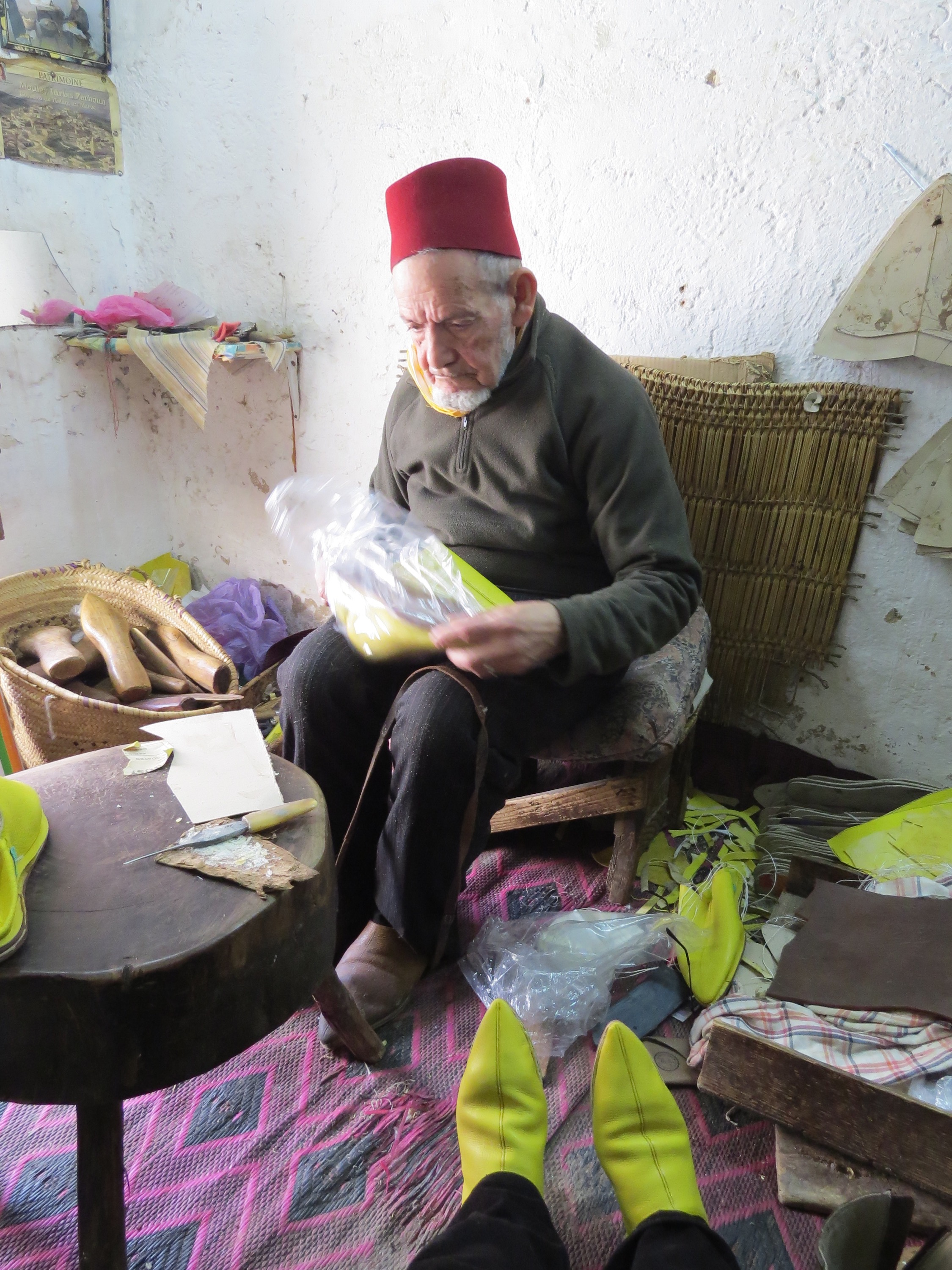
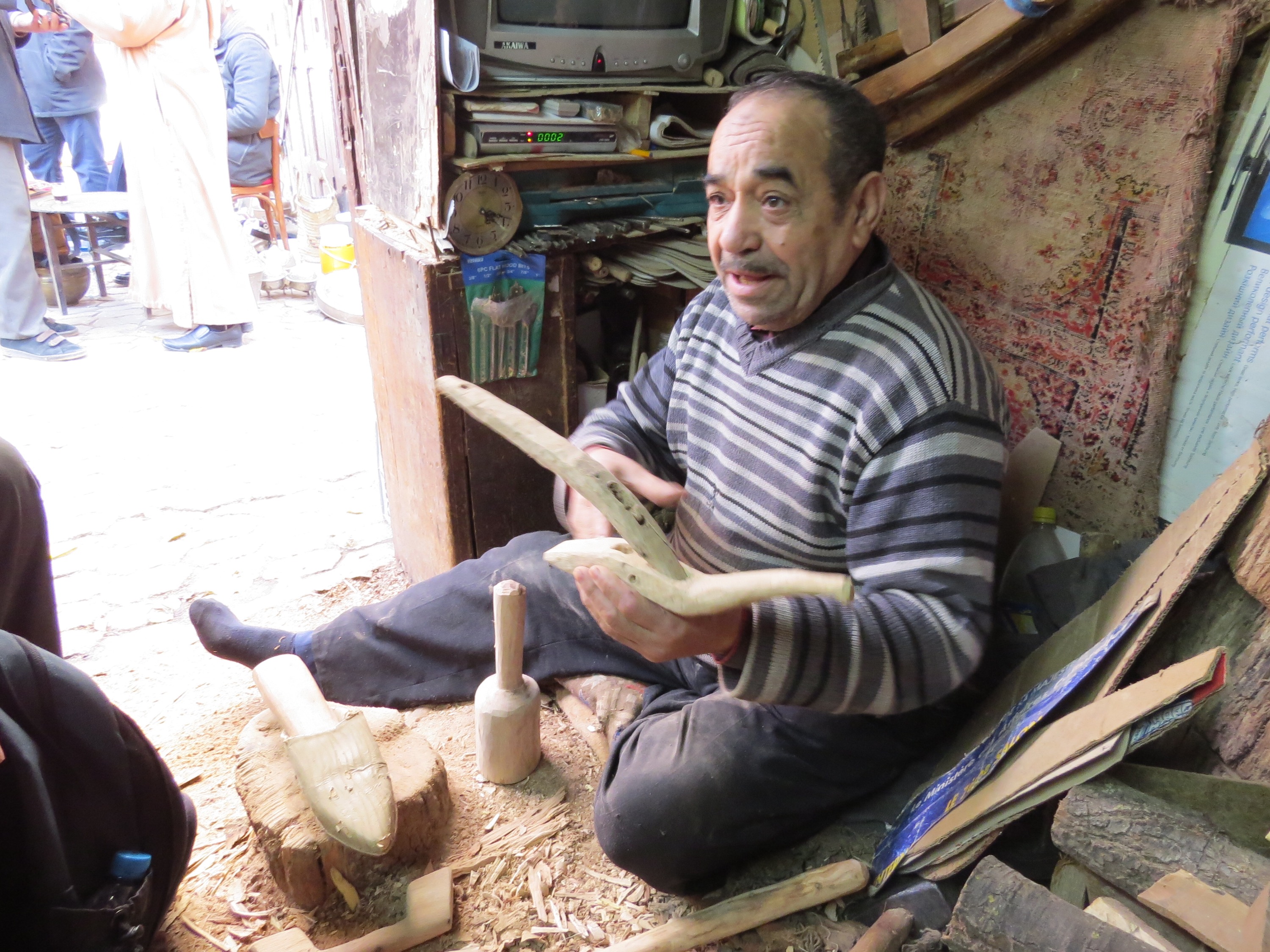
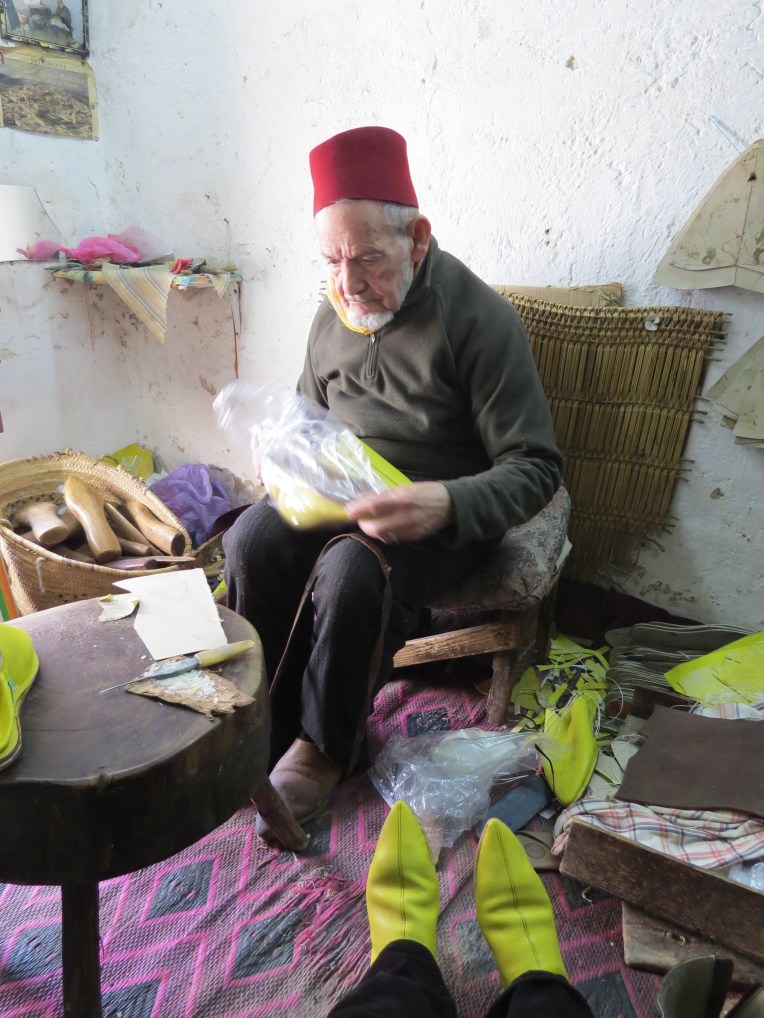
Our guide Sadiki showed us the inter-relatedness of the craftsmen. The sharpener keeps everyone’s tools sharp with his grinding stone. The woodworker makes handles for everyone’s tools, and stools that the workmen sit on. The metal smith makes the blades for the tools. As we visited the tiny workshops, people continuously popped in and out to purchase the service that they required. The stores were no more than small caves, or cutouts in the wall of a building. It seemed inconceivable that someone would spend the entire day in such a confined space, never mind fifty or sixty years. Sadiki joked with the shoemaker about having a room with a view – his was the only shop we saw that boasted a window. He was busily making the traditional pointed-toe slippers that most Moroccans wear, in sunshine yellow leather. He was working on a large order of this color, because all the government cabinet ministers wore yellow slippers with their formal white robes. He reached for a pair he had just finished, and told me to try them on. They fit like a glove, so for 200 dirhams I bought my first pair of handmade shoes. It probably took him the better part of the day to cut the uppers from goat skin, the soles from cow hide, and to stitch them together using two needles, and I purchased the fruit of that labor for 20 dollars.
On to Marrakech in the morning!
IMG_2655

IMG_2666

IMG_2608

IMG_2716

IMG_2596

IMG_2644

For Ladies Only

My sisters, I am finding that in this patriarchal, predominantly Muslim, conservative country, I am virtually invisible to the typical man on the street. If anything, I am looked at with disapproval. The only people who greet me cordially are the shopkeepers, who would like me to separate me from my money.
I have learned quickly not to make eye contact, and after a week here I now walk with my baseball cap pulled down low on my forehead to avoid people’s stares. Since at home a large part of my job is to interact with strangers, it was difficult for me to remember not to smile at people. That is, until the first few sneers and rude remarks. One man yelled “Hootchie coochie” at me – I guess that’s the love call of the Moroccan male.
Even the little kids are disrespectful. One small boy deliberately kicked his soccer ball into my leg at close range, as his three friends watched. I caught the ball and held onto it as we continued down the street, only to discover that we had reached a dead end. As we made our way back, the friends, thinking I was coming after them, quickly pointed out the culprit. I knew just enough French to tell him that was a bad thing to do, and I’m sure he could tell by my tone of voice that I was very angry. I wonder, would he have dared do that to a Moroccan woman? I doubt it very much.
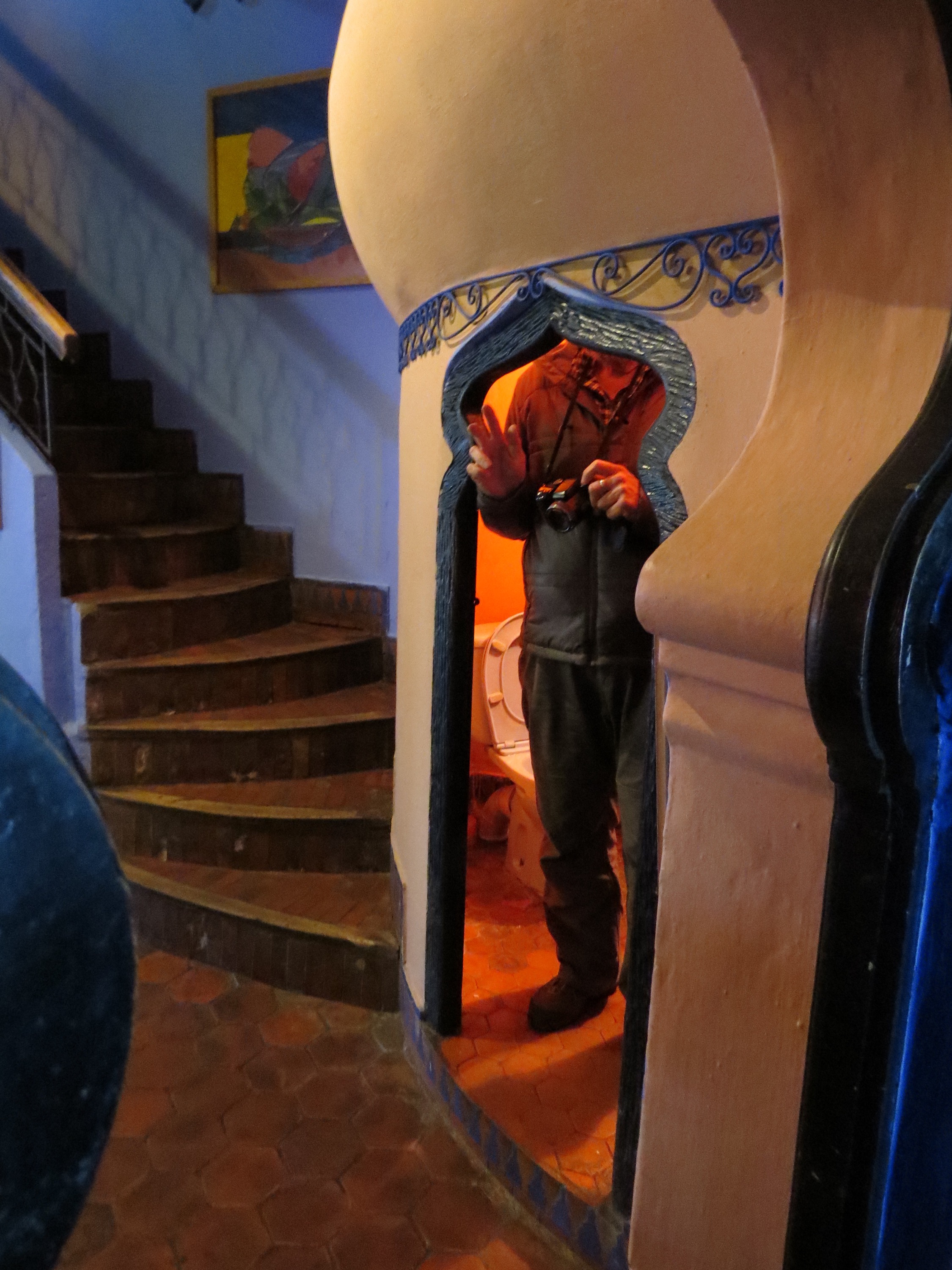
On another, related topic, girlfriends, let’s talk toilets.
Veteran travelers know not to expect American style bathroom facilities wherever they go. In Morocco, you look for the door marked Toilette or WC. What lies behind that door ranges from western-style porcelain fixtures within stalls with floor-to-ceiling doors with functioning locks, or holes in the ground with a footprint on either side. But let’s face it: sometimes you can’t be too particular about the facilities when nature calls. This is not a problem if you have come prepared. There is a very convenient item sold in travel speciality stores that can revolutionize a traveling woman’s life: it’s a little paper cone called Urinelle, and it allows a lady to avoid the necessity of coming into contact with off-putting facilities and to pee standing up, just like the boys do. Of course, one must be prepared in advance. And don’t forget the tissues. Or the hand sanitizer. Or one’s sense of humor!
2015/01/img_2204.jpg

But why are you going to Morocco?

A lot of people have asked us that question. My initial flippant response is to say, why not? But we do have some practical reasons.
All year long, we squirrel up our frequent flier miles, earning them for shopping, dining, gasoline, etc. Then we look for a destination and partner airlines that will allow us to use them, and hopefully manage to shave a few bucks off the typically exorbitant plane fares.
Another factor to consider is the exchange rate. The Moroccan monetary unit is the dirham, and the rate fluctuates between nine and ten dirhams to the US dollar. Our money goes very far here!
Hotel rooms are one of the great bargains in Morocco. The priciest place we stayed was a very elegant restored 18th century riad in Meknes, which cost $120 for a night. It was a suite with canopied double bed, sitting area, small table, and an elegant bathroom that included both a shower and claw-foot tub.
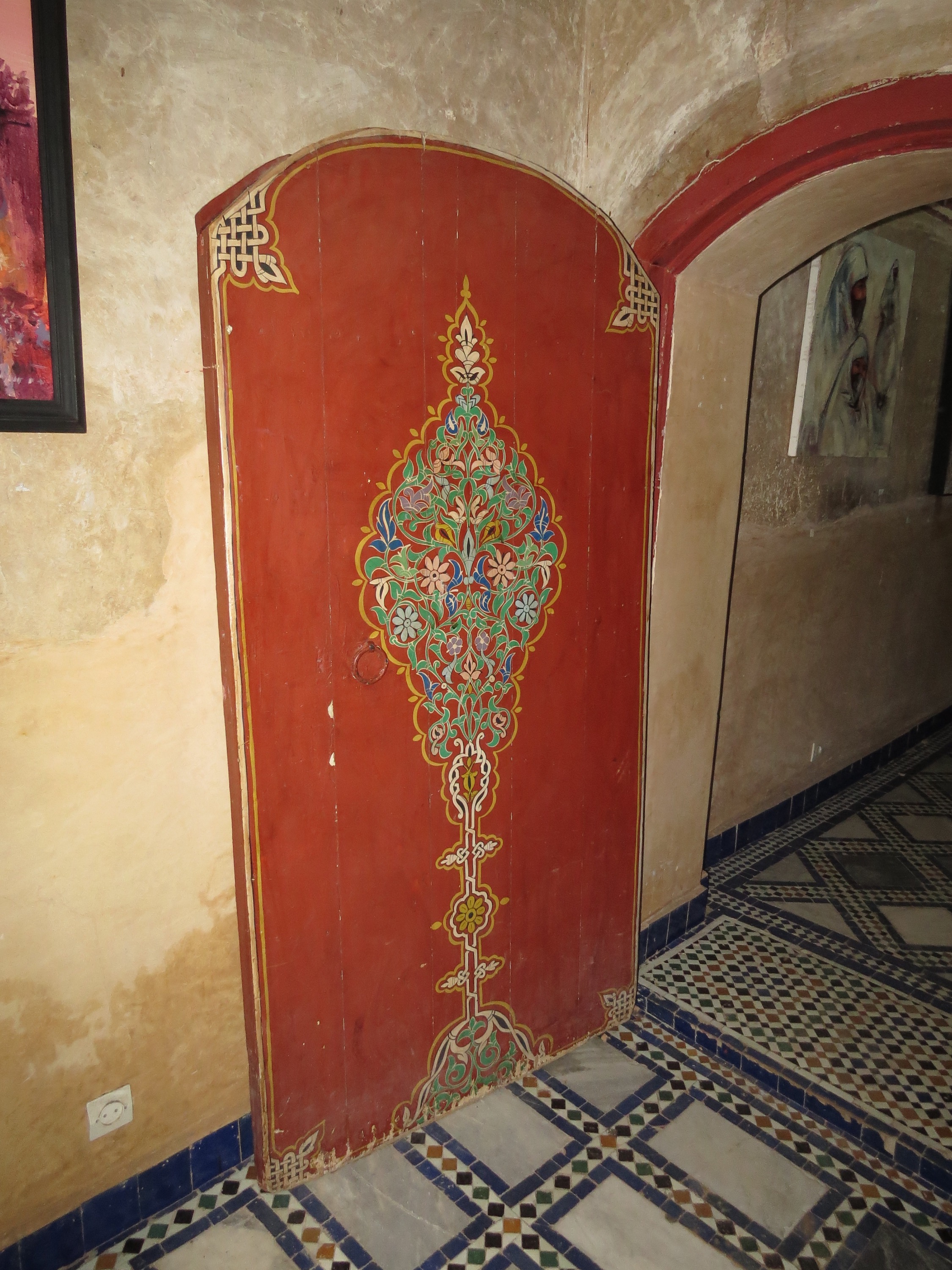
The suite in which we are currently camping costs $85 per night, including breakfast on the terrace. It is spacious and comfortable, with wooden shutters on the three windows so that we can keep out the cold night air. There’s also a large bathroom which is up to American standards. There are two couches, a small armoire, and several end tables. The woodwork throughout is painted in the colorful Moroccan style – even the high ceiling has painted trim work.
Coffee is not very popular here; the drink of choice is mint tea. This morning, after a nice walk along the river, Craig and I stopped at a little cafe for a rest. Forty-five minutes of people watching and two glasses of very sweet mint tea cost us $1.20. Tips are not expected, either, but are appreciated.
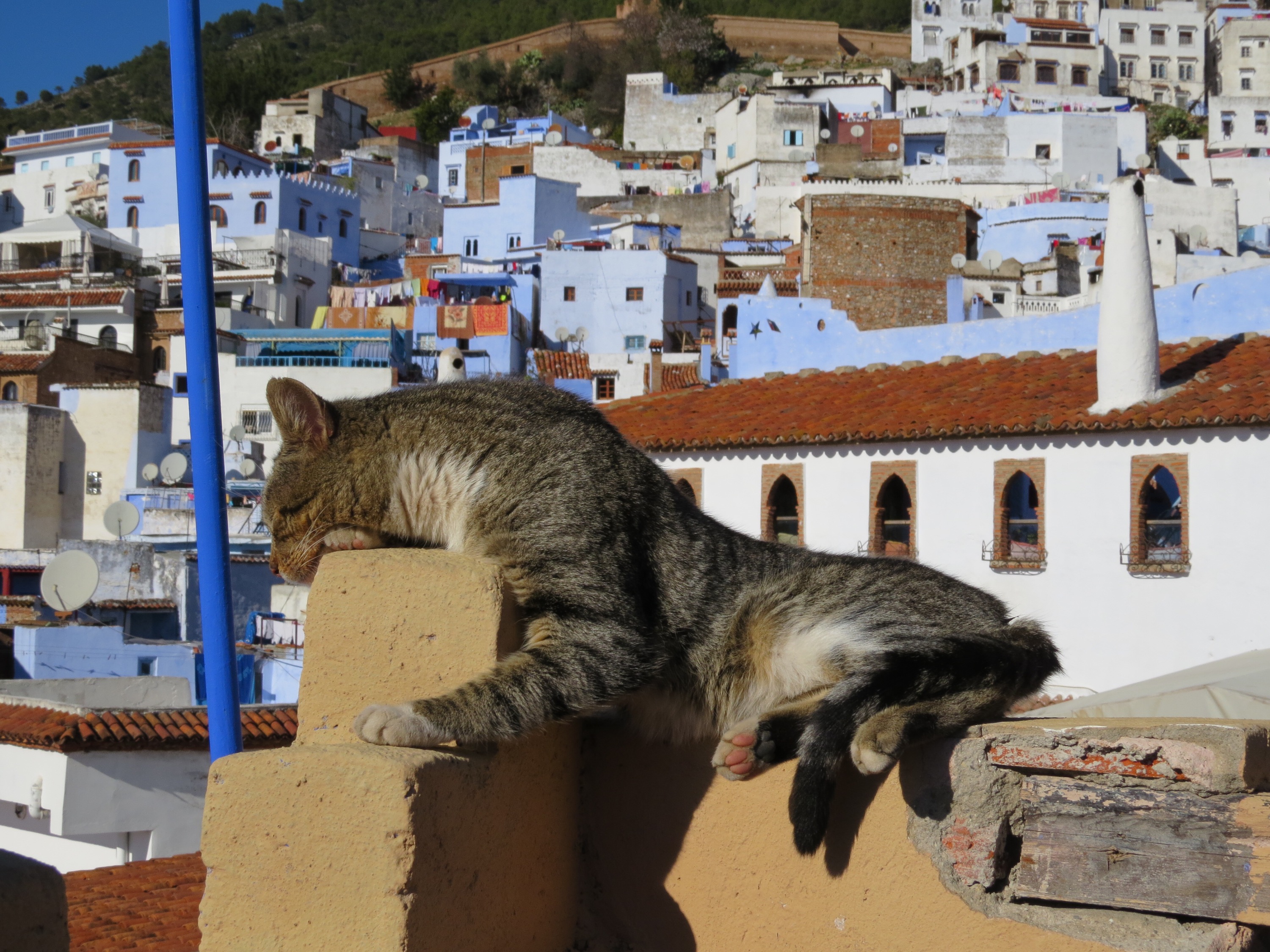
We have established a lazy rhythm to our days. Craig gets up first and heads out for a walk around town, while I slowly drag myself to consciousness. We have a late breakfast, then wander around town until we get hungry. Then we head to our favorite restaurant, Aladdin’s, which has five different floors and excellent views from each. The weather has been cooperative enough that we eat outside every day. A full meal, including Nescafé and dessert, costs from 85 – 120 dirhams (less than $12.) The waiters never rush the patrons. In fact, I’m writing this blog after another leisurely lunch on the fourth floor open air terrace. We avoid the bright sun and the cats, who are more numerous than customers today.
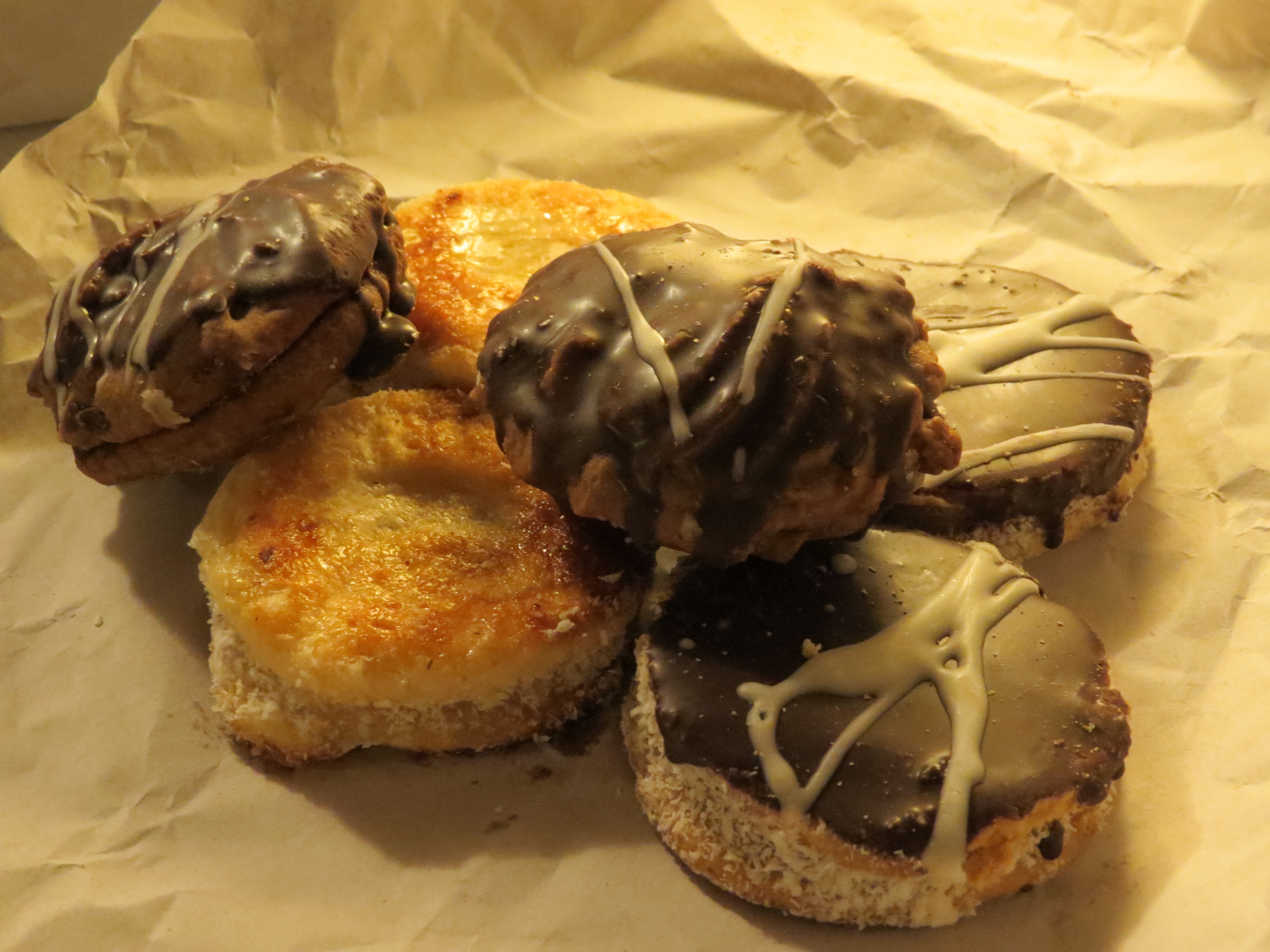
After more strolling, we usually buy a few snacks before calling it a day. When we return to our hotel, Casa Perleta, our hosts always serve us mint tea as we sit by the fireplace in the lobby to take advantage of the wifi connection. Then we head back upstairs to our rooftop room for a snack and a little reading. Six lovely pastries set me back 20 dirhams each – about 20 cents. We don’t find prices like that at Cross Roads or Maryann’s! A bottle of soda was 60 cents.
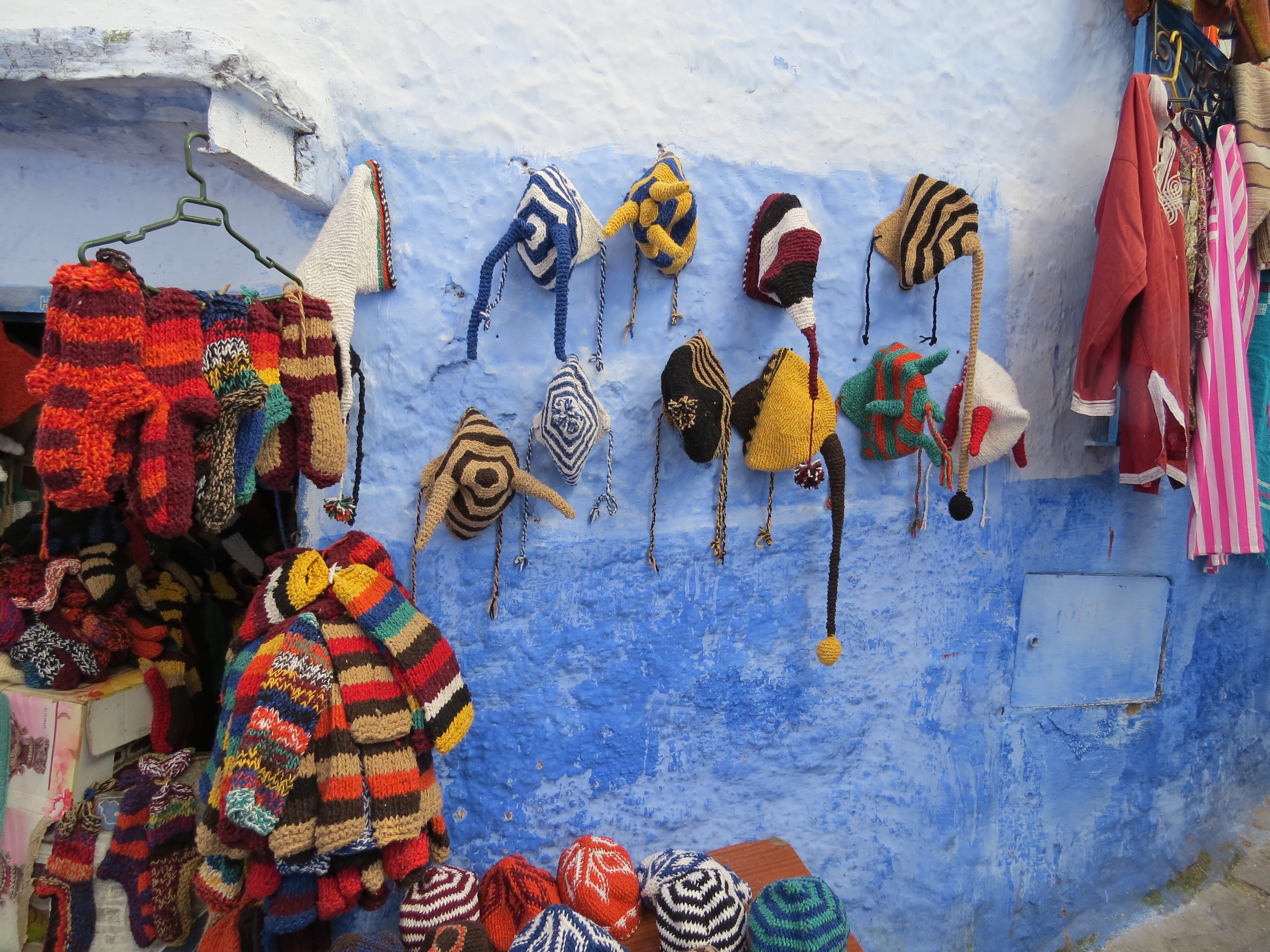
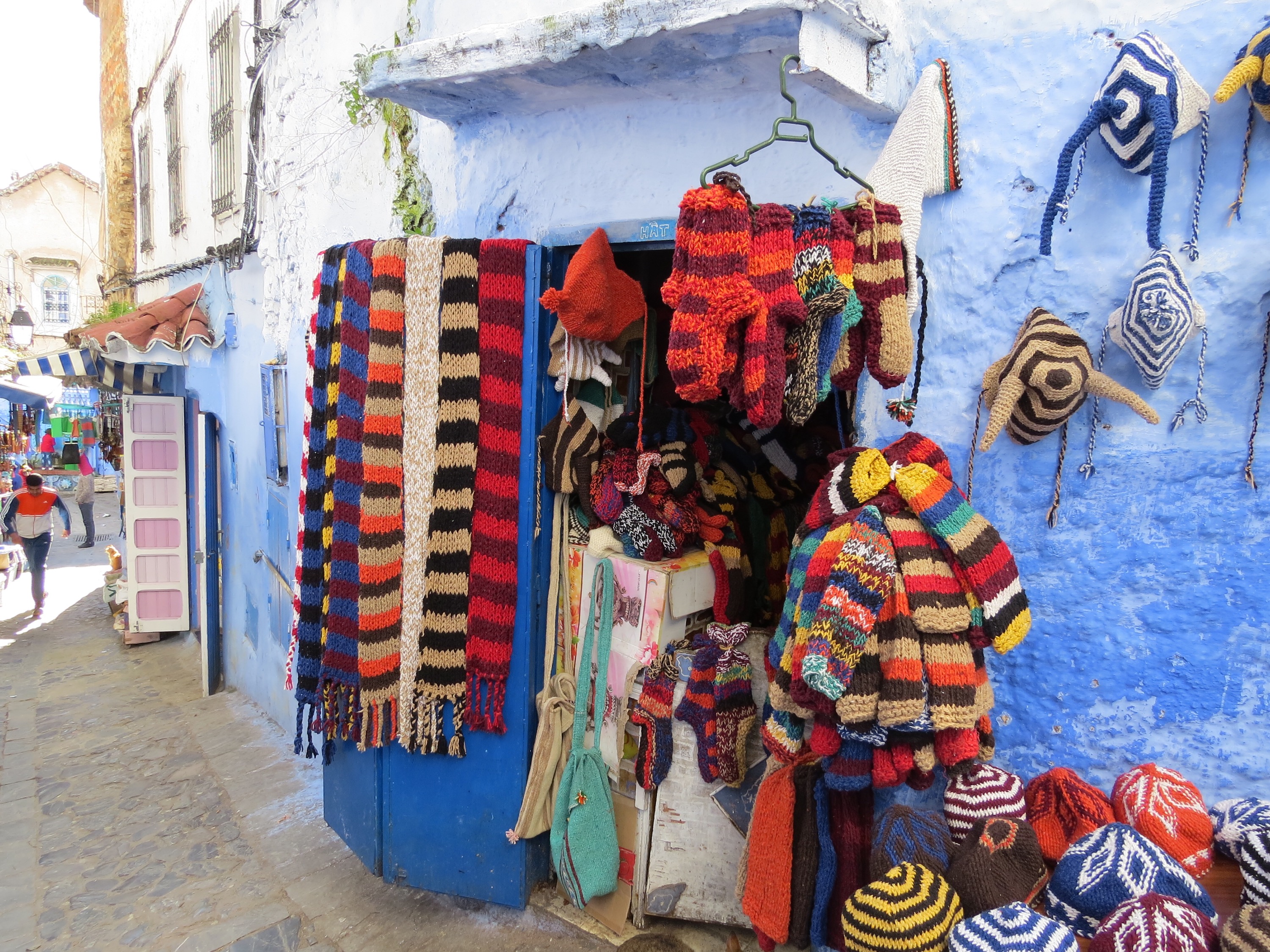
As far as shopping goes, we are holding off on leather purchases until Fes. But the hand knitted hats and socks here are irresistible. And at 25 dirhams, cheap enough to purchase in quantity. Plus, the Hat Man knocks a little off the price if you buy several pieces.

2015/01/img_2270.jpg

2015/01/img_2343.jpg

2015/01/img_2333.jpg

2015/01/img_2332.jpg